


 Once Upon a Farm Raises Nearly $198 Million in IPO, Valued at Over $724 Million
  As the Black Summer megafires neared, people rallied to save wildlife and domestic animals. But it came at a real cost
  China Extends Gold Buying Streak as Reserves Surge Despite Volatile Prices
  How ongoing deforestation is rooted in colonialism and its management practices
  Global Markets Slide as AI, Crypto, and Precious Metals Face Heightened Volatility
  Dollar Steadies Ahead of ECB and BoE Decisions as Markets Turn Risk-Off
  American Airlines CEO to Meet Pilots Union Amid Storm Response and Financial Concerns
  Tencent Shares Slide After WeChat Restricts YuanBao AI Promotional Links
  Weight-Loss Drug Ads Take Over the Super Bowl as Pharma Embraces Direct-to-Consumer Marketing
  Global PC Makers Eye Chinese Memory Chip Suppliers Amid Ongoing Supply Crunch
  Swimming in the sweet spot: how marine animals save energy on long journeys
  LA fires: Fast wildfires are more destructive and harder to contain
  An unexpected anomaly was found in the Pacific Ocean – and it could be a global time marker
  TSMC Eyes 3nm Chip Production in Japan with $17 Billion Kumamoto Investment
  Alphabet’s Massive AI Spending Surge Signals Confidence in Google’s Growth Engine
  Nvidia, ByteDance, and the U.S.-China AI Chip Standoff Over H200 Exports


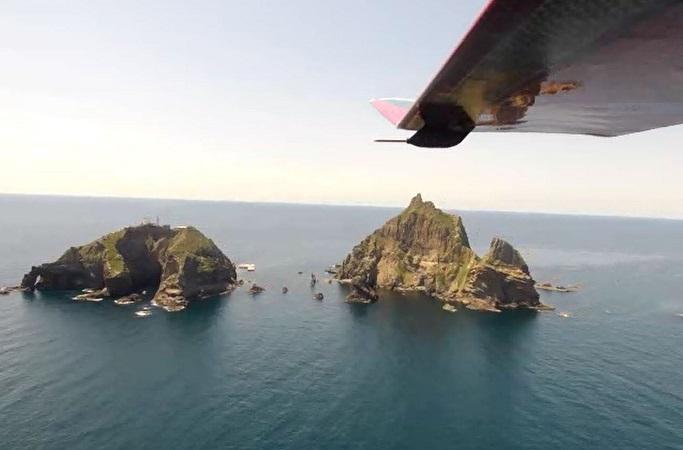
An unmanned solar-powered drone dubbed KAU-SPUAV-2019 developed by the Korea Aerospace University succeeded to fly from the mainland to the easternmost islets of Dokdo and back.
The drone returned just in time to celebrate the school’s 70th anniversary.
A research team from the school developed a mini-sized drone with a wingspan of 4.2 meters and a weight of 5.2 kilograms.
The aircraft took off at 3:30 a.m. on Monday in Uljin, North Gyeongsang Province, from Giseong Mangyang Beach.
At 11:40 a.m. On the same day, the plane flew around Dokdo before landing at 3:40 p.m. in Uljin, capping a more than 13-hour journey.
The solar-powered unmanned aerial vehicle (UAV) flew 440 kilometers, according to the university, breaking a new distance record in South Korea. Solar-powered UAVs do not require landing to recharge, allowing them to fly for longer periods of time.
In 2020, the university research team's solar-powered aircraft established a new flight record of 32 hours and 19 minutes, and in 2021, it set a new record of 56 hours and 33 minutes.













