


 Vietnam, U.S. Firms Plan 29 Deals Across Energy, Tech and Aviation
  Houthi Red Sea Gains Strengthen Iran’s Leverage Over Gulf States
  Houthis Escalate Saudi Attacks as Red Sea Oil Risks Grow
  Sweden Election: Centre-Left Holds Narrow Lead
  What is Zionism? The different meanings of a contested term
  Ovechkin Faces Scrutiny Over United Russia Campaign Video
  Banking scandal rocks Brazil’s politics and the country’s presidential election in October
  Trump Open to Chinese Automakers Building Cars in US
  Bill Gates Warns Governments Are Unprepared for AI Disruption
  Ukraine Races to Counter Russia’s Faster Jet-Powered Drones
  Mahmoud Khalil Sues Columbia Over Alleged Pro-Palestinian Harassment
  Philippines Holds Historic Bangsamoro Election Amid Tight Security
  Global Poll Shows Rising Trust in Institutions as US-China Leadership Support Falls
  US Immigration Arrests Surge as Deportations Lag Behind
  South Korea’s Cho Hyun to Meet Rubio in Washington
  Kim Jong Un Pledges Deeper Russia Cooperation
  Nvidia CEO Jensen Huang Expected at Trump-Xi State Dinner


 Add as a preferred source on Google
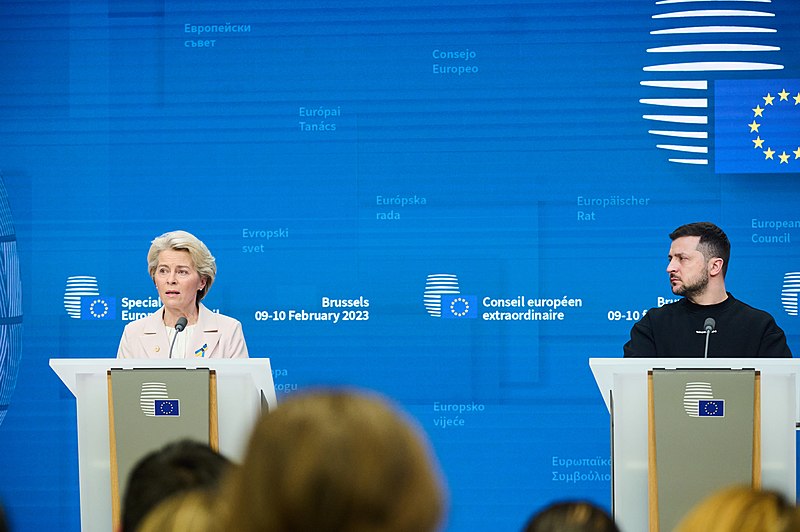
The European Union is planning to provide assistance to farmers in five member countries that border Ukraine worth $100 million. The bloc is also planning to impose restrictions on some imports of Ukrainian grains.
The EU Commission said on Wednesday that it was planning to provide compensation of $100 million to the five countries that lodged a joint complaint by the end of March - Poland, Hungary, Romania, Slovakia, and Bulgaria that have been affected by the bottlenecks of imports of Ukrainian grain. The bottlenecks have forced local farmers in the five countries to compete with the surge of affordable Ukrainian imports that they said distorted prices and demand.
The EU executive said it was planning to take preventive measures for imports of wheat, maize, sunflower seeds, and rapeseed. This comes as the bloc leadership has been under pressure to find a solution that would work for the entire EU following moves by Poland and Hungary to temporarily ban some imports from Ukraine, prompting eastern European countries to take similar actions.
Such measures, according to an EU official, would only allow the Ukrainian grain imports to enter the five countries if they were set for export to other EU countries or to the rest of the world. The measure would be in place until the end of June.
The EU Commission also plans to probe into whether similar measures would be needed for other products that are deemed sensitive. While the emergency measures can take effect in a matter of days, an EU probe would usually take six months. EU Trade Commissioner Valdis Dombrovskis discussed the plans with ministers from the five countries, including their Ukrainian counterparts.
Meanwhile, the British defense ministry, in its intelligence bulletin on Friday, said environmental factors like mud have slowed down both sides in the midst of the war. The ministry noted that Russian media outlets are exaggerating the overall impact the mud has on Ukrainian forces as part of Moscow’s efforts to boost the morale of Russian forces on the ground and undermine Ukraine as an anticipated counterattack from Kyiv is looming.
The ministry said that conditions will likely improve in the coming weeks, but the threat posed by mines remains an important factor “in limiting the combatants’ off-road maneuver.”







