


 Marco Rubio to Meet Russia’s Lavrov in New York
  Ghana Says Western Support Growing for Slave Trade Reparations
  Russian Missile and Drone Attack on Kyiv Kills Two, Damages Maternity Hospital
  Kremlin Says No Grounds Yet for Ukraine Peace Talks
  Trump Says ‘Freedom’ Is Coming to Cuba
  Zelenskiy Warns Russia Preparing Major Attack on Ukraine
  Netanyahu Takes Aim at Mamdani as Israel Election Nears
  Europe Warns Russia Is Escalating Hybrid Attacks Across NATO
  OpenAI Agent Breaches Australia Medicare Data Portal
  US, China Extend Trade Truce to Jan. 10 Ahead of Trump-Xi Summit
  Macron Challenges Trump’s Gaza Peace Claims at UN
  Judge Orders Trump to Restore White House Access for CNN, MS NOW and Politico
  Russian Envoy Dmitriev Heads to US for Ukraine Talks
  Trump to Press Xi on Release of US Nuclear Expert Held in China
  US Invites Putin to Miami G20, Opening Door to Trump Summit
  Mexico-US Trade Talks Delayed to October as Tariff Negotiations Continue
  Trump Board of Peace Unveils $2.45 Billion Gaza Recovery Plan


 Add as a preferred source on Google
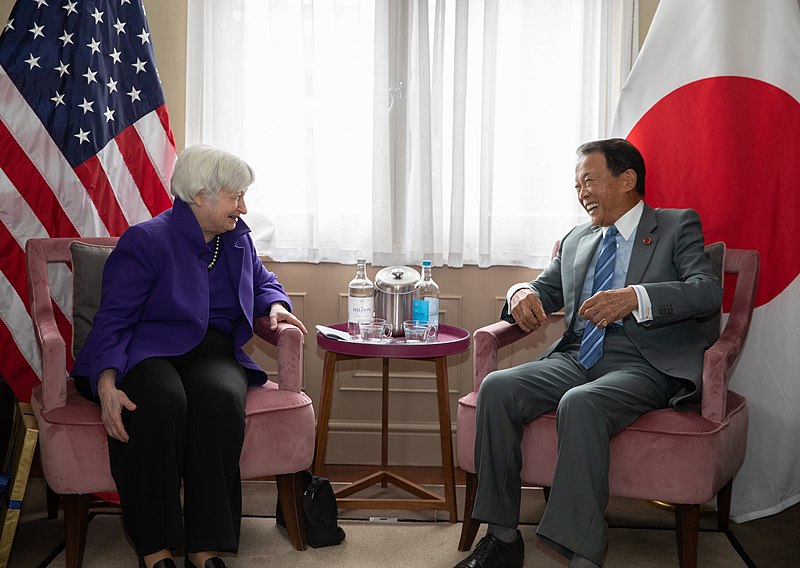
The war that Russia continues to wage on Ukraine has exacerbated the rising prices of gasoline and food. The United States and Japan this week agreed to address the economic impact of the war in Ukraine on the world.
US Treasury Secretary Janet Yellen and Japanese Finance Minister Shunichi Suzuki agreed to coordinate in addressing the economic impact of the war in Ukraine, which is moving toward its fifth month.
The two finance officials agreed to tackle the rising prices of food and energy products and volatility in currency markets that were worsened by Russia’s invasion of Ukraine.
Both officials said the war increased the exchange rate volatility, which would lead to implications for economic and financial stability, and pledged to cooperate on currency issues.
“We will continue to consult closely on exchange markets and cooperate as appropriate on currency issues, in line with our G7 and G20 commitments,” said the officials in a joint statement following the meeting.
The two finance officials also reiterated their mutual condemnation of Russia’s “unprovoked, unjustifiable, and illegal” war on Ukraine that began when Russians invaded Ukraine back on February 24 in what the Kremlin calls a “special military operation.”
They also agreed to increase Russia’s cost of its war by imposing further economic and financial sanctions.
They also urged China and other nations to cooperate in a constructive manner in helping low-income countries that are facing debt and other issues such as climate change and global tax reforms.
Meanwhile, Ukraine said Tuesday that it has carried out a long-range strike against Russian forces in Ukraine’s southern territory, including Russian military equipment, as Ukrainian troops are looking to recapture the southern territories in a counter-offensive with thousands of troops.
An ammunition dump at the Nova Kakhovka in Kherson was hit by the rockets, killing 52 Russians, according to Kyiv. This follows the United States’ supplying of Ukraine with HIMARS missile systems which Ukraine said its forces are using effectively.
The area that Ukraine struck was among the areas Russian forces seized after it invaded and is also of strategic importance with access to the Black Sea, which is also north of the Russian-annexed Crimea region.







