


 Volkswagen Shares Slide After 2026 Profit Outlook Cut
  Supertanker Orders Surge as US-Iran War Reshapes Oil Trade
  FCC Approves Foreign Investment in $110B Paramount-Warner Bros. Deal
  fnny Beta Launches With a Simple Idea: Find an Event, Show Up, Get Rewarded
  NASA, Boeing Discuss Expanding Starliner Missions
  CNN, MS NOW and Politico Sue Trump Over White House Media Ban
  SoftBank Launches $11 Billion Bond Sale to Fund OpenAI Investment
  US Northeast Airports Resume Operations After Telecom Outage Disrupts Thousands of Flights
  Volvo Cars Plans 13 New Models by 2030 to Boost Sales
  Prysmian, Rio Tinto Supply Low-Carbon Cables for Amazon Ohio Data Center
  Paramount Skydance Faces $30 Million Film Penalty in Warner Bros. Deal
  Allegro Raises 2026 Outlook as International GMV Surges
  Petrobras Joins Brazil’s New Diesel Subsidy Program
  FAA Allows Boeing to Sell 35 More 777F Freighters Beyond 2028
  Trump Plans Federal AI Force and AI Czar
  Nike Earnings at Risk as UBS Cuts Price Target to $42
  Japan, U.S. Discuss $19 Billion GlobalFoundries Chip Plant


 Add as a preferred source on Google
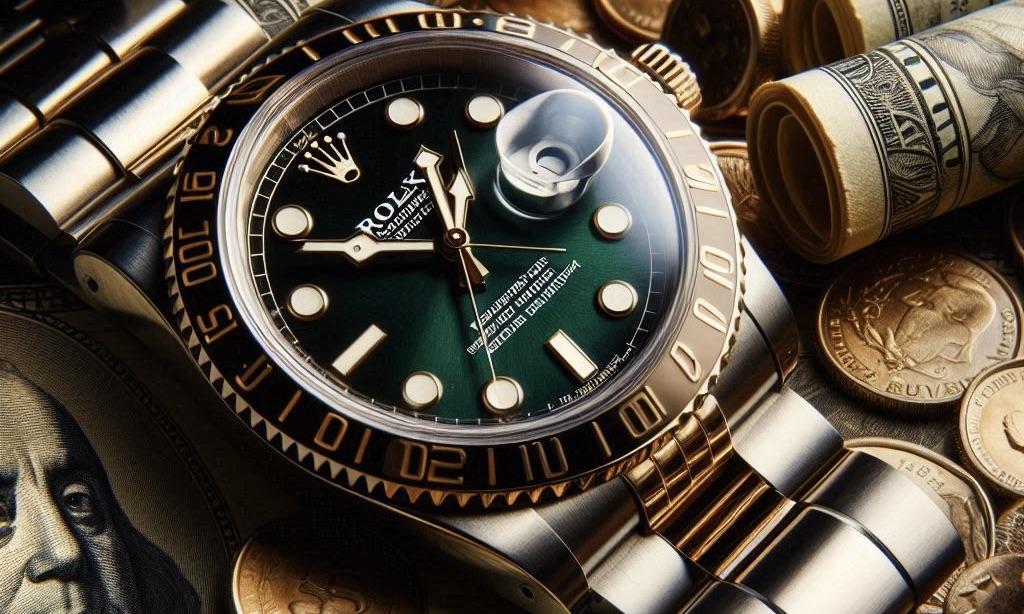
New data reveals a continued decline in secondhand Rolex watch prices and increased supply. This trend is advantageous for consumers facing lengthy waitlists and shortages but poses concerns for investors in high-end timepieces.
Rolex Prices Plummet in Secondhand Market, Offering Relief for Consumers Amid Rising Supply
Recent data suggest that investors in Swiss watch brands and all high-end timepieces should be concerned about the ongoing price declines in the secondhand, or used, market.
This is particularly advantageous for consumers of Rolex watches, which have been notorious for their lengthy waitlists and severe supply shortages.
The WatchCharts Overall Market Index, which monitors a basket of 60 luxury Swiss watches across ten brands in the secondhand market, experienced its ninth consecutive quarterly decline in the second quarter ending June 30, according to a recent note from Morgan Stanley to clients.
According to Yahoo Finance, prices have decreased since the pandemic's apex in the first quarter of 2022. In the second quarter, current prices declined by 2.1% sequentially and by 1.2% year over year compared to the first quarter.
“The secondary market decline remains broad-based, with few brands seeing positive performance in the second quarter,” Morgan Stanley analysts wrote in the report.
Morgan Stanley anticipates the downward pressure on prices will persist for the year.
Only five brands experienced price increases year over year in the secondary market. Montblanc and Hamilton were among the fortunate few to experience a 2.4% and 2.2% increase, respectively. High-end brands such as A. Lange & Söhne (-5.3%), Breitling (-5.9%), Omega (-6.8%), Rolex (-7.2%), and Audemars Piguet (-12.5%) were among the worst performers.
Secondhand prices are significant beyond their function as a value metric for particular timepieces. In the primary market, where new watches are sold by authorized vendors (ADs), they can influence the prices paid.
Rolex Faces Declining Prices and Increased Supply, Challenging Market for Resellers and Flippers
Rolex, the sole brand that appeared impervious to price and sales constraints, is beginning to experience the consequences. This is potentially the most intriguing trend to emerge from the report.
Rolex watch "flippers," merchants who purchase new watches and resell them in a higher-price market, are encountering challenges. Morgan Stanley predicts this will increase the supply of new Rolex watches to consumers at the primary, or AD, level.
Morgan Stanley used the size of the "gray market," defined as current-production watches listed on the secondary market in brand-new condition, and the wait periods for specific Rolex watches at ADs to determine whether speculation in Rolex watches was on the decline.
The analysis revealed that the quantity of Rolex watches in the gray market has decreased. The bank attributed the decrease in gray market supply to the increasing retail prices of Rolex watches and the reduced prices paid for gray market watches, which rendered the flipping watches less profitable.
As a second step, Morgan Stanley and WatchCharts examined the wait times for prominent Rolex models. WatchCharts utilized data from the Rolex community on a subreddit to calculate wait times, as wait times are difficult to tabulate and scarce.
Rolex Sports Watches See Shorter Wait Times as Supply Increases and Speculation Decreases
The analysis discovered that certain Rolex sports watches experienced improved wait times, except the Rolex Daytona clock, which was excluded due to its tiny sample size. "The analysis results suggest that the Submariner, GMT-Master II, and Explorer collections have all experienced a decrease in waiting times this year in comparison to 2023." The report also indicated that the GMTMaster II and Explorer waiting periods have decreased since 2022. The graph above illustrates the wait periods for those models.
In summary, speculation in Rolex sports watches is decreasing due to improved wait periods for popular models and reduced gray market supply on the secondary market. Additionally, this announcement may prove advantageous for the primary market. It also implies that the demand from Rolex enthusiasts may decrease due to the years of insufficient supply that have resulted in purchasers being denied access.
"We think there is generally greater [Rolex] availability on the primary market, and that primary market demand is waning as a result of both decreased speculative purchasing and decreased organic demand,"WatchCharts founder and CEO Charles Tian said to Yahoo Finance.
This implies that more Rolex watches are available at the AD level for regular consumers. Finally, it may be feasible for Rolex enthusiasts who are not resellers to acquire the 2024 Rolex Submariner shortly.







