


 Citi Raises TSMC Price Target as AI Chip Demand Strengthens Growth Outlook
  Goldman Sachs Raises USD/JPY Forecast, Sees Yen Weakness Persist Through 2027
  In a rebuke to Trump, the Supreme Court rules that birthright citizenship is the law of the land
  State of emergency in Crimea as Ukraine focuses pressure on ‘jewel in Putin’s crown’
  Gold Surges Past $4150 on Dovish Fed Signals and Weak Jobs Data; Bullish Outlook Prevails
  Gold Pulls Back After Hitting $4,180 as Geopolitical Risk Sends Crude Higher
  JPMorgan Cuts Gold Price Forecast, Sees Bullion Reaching $4,500 by End of 2026
  Smartphones are helping filmmakers tell the stories the movie industry overlooks
  Vietnam’s population hit the 100 million milestone. Where’s it headed?


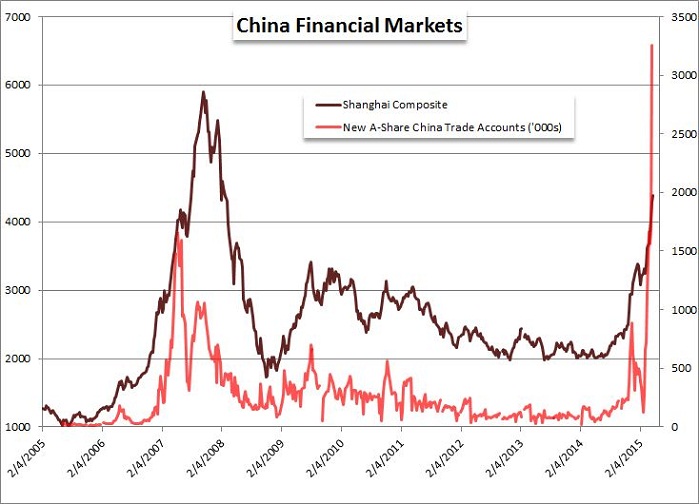
China's benchmark equity index rose to new post crisis high, however was down -0.47% in the closing. Neither weak economic data, nor global risk aversion is succeeding to break the bulls or rather say Chinese Dragon.
It is clear buying pressure from the domestic market is pushing shares up, however it IS not very clear, what might driving the bulls fundamentally speaking.
Many market participants and analyst including us has called the rally to be very much speculative. As of now, few might have any idea, where this rally might actually end.
Key fundamental highlights from China -
- Economic outlook remains gloomy, with latest HSBC PMI yesterday printing 49.2, lowest level at least in a year. GDP hit lowest level since crisis at 7%.
However some positive developments are on the horizon.
- China set up Asian Infrastructure Investment Bank (AIIB), which is expected to be supportive of Chinese economy, if successful.
- It will provide a clear boost to Chinese economy via Yuan, should IMF decides to include Yuan in SDR currency basket this year.
Speculation and volatility remains rampant.
- Last week, Chinese brokers opened new 3.2 million A shares account, highest on record.
- 5 day average of weekly and daily realized volatility stands at 4% and 1.7%.
Historically speaking rise in Chinese stocks, has been similar to recent move. As seen in the chart from John Kicklighter, eminent analyst at dailyfx shows Shanghai composite during 2008 crisis rose almost 500% in a span of 2.5 years.







