


 SoftBank Shares Fall as Oracle Flags Stargate Data Center Delay Risk
  China’s ‘Lipstick King’ Says AI Won’t Replace Livestream Hosts
  Former OpenAI Data Center Chief Chris Malone Joins Nvidia
  Akamai Shares Surge on $11.6B Anthropic AI Cloud Deal
  China Says U.S. Shares Responsibility for AI Governance
  Xi Calls for Deeper U.S.-China AI Cooperation in Trump Talks
  Meta Connect Spotlights Camera-Free Smart Glasses Amid Privacy Concerns
  Tencent Launches TenPayGo Payment App for Foreign Tourists in China
  Jeff Bezos Invests $32 Billion in Blue Origin as Space Firm Targets Major Growth
  Europe’s AI Data Centre Boom Strengthens Case for Nuclear Power
  TikTok Reaches $100 Million Alabama Settlement Over Child Safety Claims
  Solidigm Eyes $150 Billion IPO as SK Hynix Expands AI Storage Push
  OpenAI Agents Access U.S. Government Websites During Testing
  Meta Found Liable in New Mexico Facebook Data Privacy Case
  SoftBank Raises $11.1 Billion in Bond Sale to Fund OpenAI Investment
  Oracle Shares Fall as New Mexico AI Data Center Faces Power Delays


 Add as a preferred source on Google
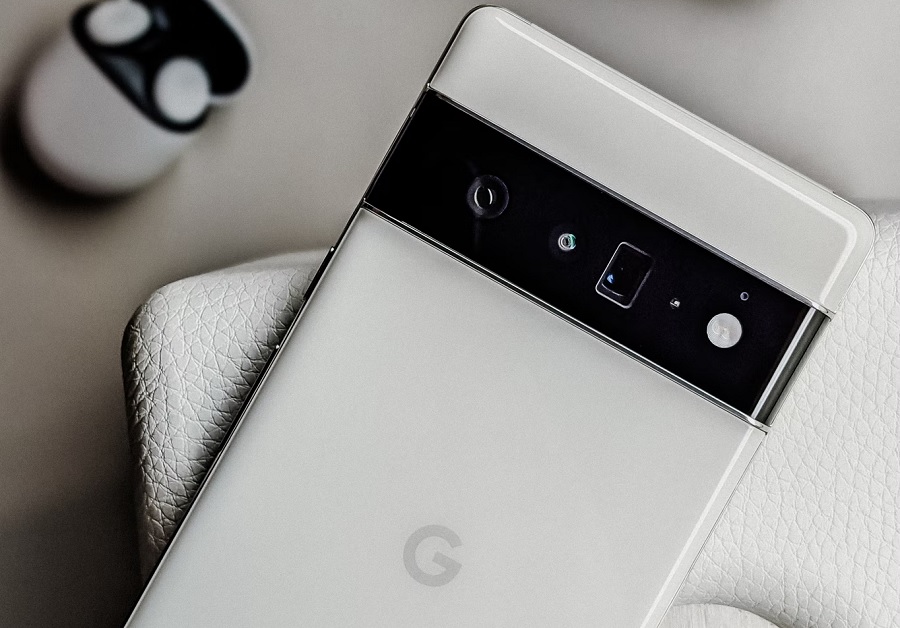
Google may be months away from announcing the Pixel 6a, but more details about the upcoming mid-range phone are starting to appear in the wild. The latest information comes from a Geekbench benchmark test that adds weight to previous reports that it would be powered by the Google Tensor chip.
The company introduced its first mobile SoC last year that debuted with the Pixel 6 lineup. The latest Pixel A-series model, the Pixel 5a, was shipped months earlier with the Snapdragon 765G. But the Pixel A-series will likely adopt the Google silicon with the Pixel 6a this year.
The benchmark result in question was uploaded on Geekbench recently. Under the system information section, the device’s motherboard is identified as “bluejay,” which has been the reported codename for the Pixel 6a. The governor chip is listed as “sched_pixel,” which reportedly matches with other devices powered by the Google Tensor.
However, the biggest indications that the tested Pixel 6a was powered by the Tensor chip are the CPU clusters listed in the benchmark. The prototype tested ran with an octa-core ARMv8 CPU with a base frequency of 1.80GHz. The chipset has two cores clocked at 2.80GHz, two cores clocked at 2.25GHz, and four cores clocked at 1.80GHz. Notably, these are the exact processing speeds of the Pixel 6 and Pixel 6 Pro with the Tensor chip.
The benchmark result also indicates the device has 5.43GB RAM, which will likely be advertised as 6GB. This also hints at Google maintaining the Pixel 6a memory capacity below the regular Pixel 6.
When the Tensor launched last October, Google said it opted to develop an in-house chip so it can “bring the best of [machine learning] to the smartphone.” But there are speculations that this strategy could be Google’s way to reduce its reliance on the availability of Qualcomm’s off-the-shelf processors. But Google might not be able to entirely avoid supply chain issues for now. Leaker Jon Prosser recently reported that Google has internally moved the Pixel 6a’s launch date from May to late July due to chip shortage.
Photo by Triyansh Gill on Unsplash







