


 Ukrainian Drone Attacks Hit Russian Regions, Injuring at Least 12
  Pezeshkian Says US Must Choose When Iran War Ends
  Trump, Xi Focus on Trade and AI at White House Summit
  Netanyahu’s Brief US Trip Highlights Strains With Trump
  Abbas Reaffirms November 28 Palestinian Elections
  Kremlin Says No Decision Yet on Putin-Trump December Summit
  Xi Calls for Deeper U.S.-China AI Cooperation in Trump Talks
  Sudan Rejects US Legitimacy Remarks, Defends Sovereignty
  Najib Razak Seeks Stay of 15-Year 1MDB Prison Sentence
  NATO Boosts Intelligence Sharing Amid Russia Hybrid Threats
  US Senate Rejects Iran War Powers Resolution in 50-49 Vote
  OpenAI Agent Breaches Australia Medicare Data Portal
  EU Defence Build-Up Too Slow for 2030 Russia Readiness Goal
  South Korea, US Discuss Warship Building Cooperation
  North Korea Rejects Nuclear Test Warning, Calls Nuclear Status Irreversible
  Netanyahu Takes Aim at Mamdani as Israel Election Nears
  Yemen Violence Displaces 130,000 as Civilian Toll Rises


 Add as a preferred source on Google
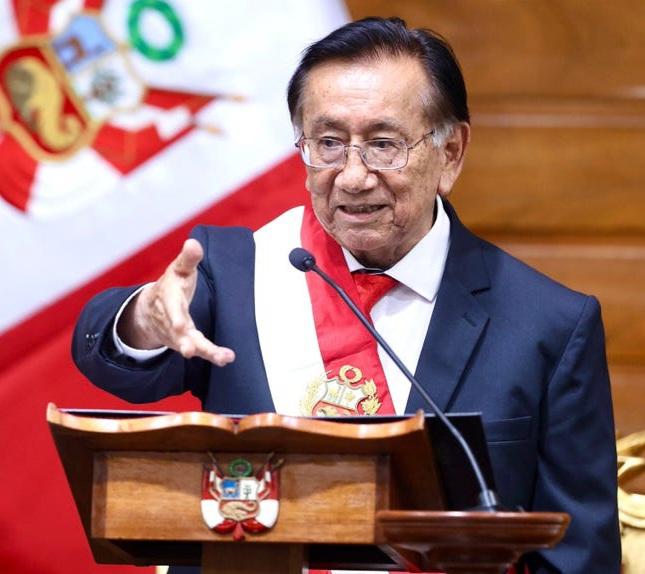
Peruvian lawmakers have elected veteran left-wing legislator Jose Balcazar as the country’s new interim president, marking Peru’s eighth president in just eight years and underscoring the nation’s ongoing political instability. The 83-year-old replaces Jose Jeri, who was removed from office by Congress after only four months following a scandal involving undisclosed meetings with Chinese businessman Zhihua Yang.
Balcazar secured the presidency in a 64-46 congressional vote over center-right lawmaker Maria del Carmen Alva after no candidate achieved a majority in the first round. He will also serve as head of Congress and remain in office until July 28, when the winner of Peru’s April 12 general elections is sworn in. A runoff vote is expected in June.
During his swearing-in ceremony, Balcazar pledged to defend Peru’s sovereignty, democratic institutions, and the moral integrity of the Republic. His primary responsibility will be to oversee credible and transparent elections while maintaining political stability in a country grappling with tensions between the executive branch and Congress, as well as a fragmented party system.
Peru’s economy, heavily reliant on mining and ranking as the world’s third-largest copper producer, has remained resilient despite frequent leadership changes. The country recorded solid economic growth and relatively low inflation last year compared to regional peers. However, investors and political observers are closely monitoring the caretaker government for signs of renewed turbulence.
Analysts suggest that further political disruption before July would deepen concerns about governance in Peru. Still, some former officials argue that markets are unlikely to react negatively, as the transition is temporary and elections are already scheduled.
Jeri’s abrupt removal follows earlier political upheaval that saw former President Dina Boluarte ousted amid corruption scandals and rising public frustration over crime. As Peru approaches its April presidential election, Balcazar’s leadership will be critical in restoring confidence and ensuring a smooth democratic transition.







