


 FxWirePro- Crypto Weekly Alpha: ETF Rebounds, L2 Rallies & Key Resistance Levels
  Europe can’t achieve space sovereignty alone. Here’s why
  China’s robots can run faster than Usain Bolt – now they are being prepared for war
  Synthetic data could ease people’s concerns about privacy breaches. But who gets to create it?
  What is Zionism? The different meanings of a contested term
  Banking scandal rocks Brazil’s politics and the country’s presidential election in October
  Who should own the knowledge that underpins AI technology?


 Add as a preferred source on Google
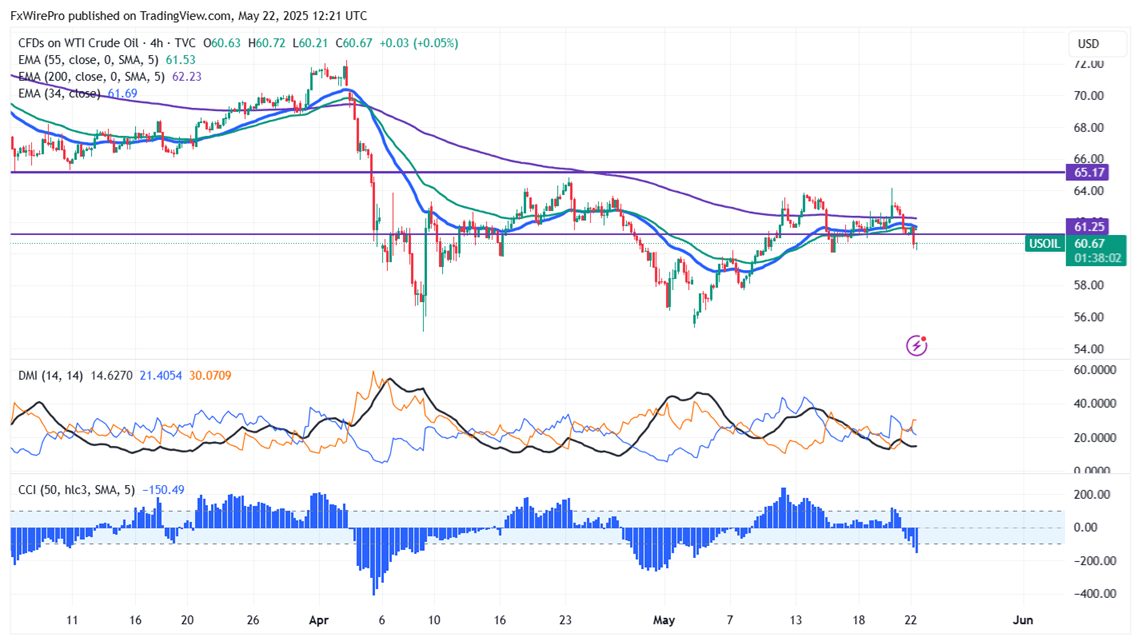
Crude oil prices showed a minor decline amid easing Middle East. It hits a low of $60.21 at the time of writing and currently trading around $60.60.
The EIA Crude Oil Inventories report from May 21, 2025, indicated a 1.3 million barrel increase in U.S. crude oil inventories, reaching 443.2 million barrels, contrary to expectations of a decline, though inventories remain below the five-year average and year-ago levels. Gasoline and distillate inventories also rose, while refinery crude inputs averaged 16.5 million barrels per day with a 90.7% utilization rate. Overall product demand for the past four weeks averaged 19.6 million barrels per day, down 2.8% year-over-year, with gasoline and distillate demand declining, but jet fuel demand increasing by 4%.
Recent declines in crude oil prices have been caused by easing geopolitical tensions and increased output from OPEC+, with Saudi Arabia leading the way by increasing output by 411,000 barrels per day starting June 2025. Due to the easing of tensions, as well as higher production and weaker demand in Europe and Asia amid global economic uncertainty, Brent crude prices have fallen to around $60.23 per barrel by early May 2025.
Price Resistance and Support Levels
The near-term resistance is around $61.75; any breach above this level could push prices higher to $62.25/$63/ $64.15/$65/$66. On the downside, immediate support is at $62.40 violation below targets $62/$61.60/$60.
It is good to sell on rallies around $61.75 with a stop-loss of around $63 and a target price of $57.65.







