


 What is Zionism? The different meanings of a contested term
  U.S. Imposes New Visa Restrictions Over South Africa Policies
  Trump Open to Chinese Automakers Building Cars in US
  Bill Gates Warns Governments Are Unprepared for AI Disruption
  Europe can’t achieve space sovereignty alone. Here’s why
  China’s Global Times Slams Anthropic CEO’s AI Slowdown Plan as ‘Cold War’ Strategy
  Vietnam, U.S. Firms Plan 29 Deals Across Energy, Tech and Aviation
  Ukraine Races to Counter Russia’s Faster Jet-Powered Drones
  US Confirms Weapons in Orbit as Space Tensions Rise
  Banking scandal rocks Brazil’s politics and the country’s presidential election in October
  Rodrigo Duterte Makes First Public Appearance at ICC in 18 Months
  Nvidia CEO Jensen Huang Expected at Trump-Xi State Dinner
  South Korea’s Cho Hyun to Meet Rubio in Washington
  US Immigration Arrests Surge as Deportations Lag Behind
  Lula, Flavio Bolsonaro Deadlocked in Brazil Election Polls
  Takaichi-Backed Koja Wins Okinawa Governor Race
  Ovechkin Faces Scrutiny Over United Russia Campaign Video


 Add as a preferred source on Google
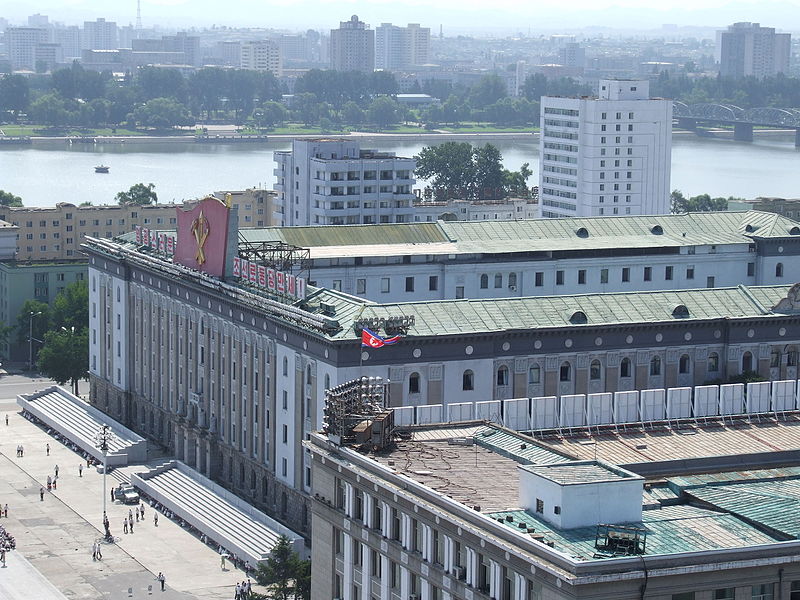
North Korea protested against Japan’s planned military buildup in light of the tensions in the Korean peninsula and the region. Pyongyang pledged to retaliate against Japan’s policy.
The North Korean foreign ministry condemned Japan’s unveiling of its $320 billion security strategy on Tuesday. The plan by Tokyo would be for its military to develop “counter-strike capabilities” in order to push back against the threats posed by Russia, China, and North Korea. The five-year military strategy would make Japan the third-largest military spender in the world, following the United States and China.
In a statement released by the North Korean state media outlet KCNA, the spokesperson for the foreign ministry said Japan has formalized a “new aggression policy” in its new security strategy, which would significantly change the security environment in East Asia. The spokesperson added that North Korea will respond to Japan’s “unjust and excessive ambition” by showing its continued displeasure with “practical action.”
North Korea also blamed Washington for Japan’s new strategy, saying the US is “exalting and instigating Japan’s rearmament and re-invasion plan.” Pyongyang added that Washington does not have the right to question the isolated nation’s efforts while boosting its own defenses.
This comes amidst a record number of missile launches by North Korea this year along with fears that the isolated nation is gearing up for its first nuclear weapon test in five years. Among those missiles that were tested were ballistic rockets that are capable of hitting the US mainland as well as South Korea and Japan.
On Sunday, South Korea’s Joint Chiefs of Staff reported that North Korea launched two medium-range ballistic missiles into the sea off the east coast of the Korean peninsula. The launches were 50 minutes apart from North Korea’s Tongchang-ri area.
The Japanese defense ministry said the missiles flew at an altitude of 550 kilometers and at a range of 250 kilometers. Japanese vice defense minister Toshiro Ino said the missiles landed outside Japan’s exclusive economic zone, and that there was no damage inflicted.
The latest launches came three days after North Korea tested a “high-thrust solid-fuel motor” engine, which experts say can allow quicker and more mobile launches of its ballistic missiles.







