


 Dollar Holds Steady Ahead of U.S. CPI as Oil Surge, Middle East Tensions Keep Markets on Edge
  FxWirePro: Daily Commodity Tracker - 21st March, 2022
  Goldman Sees Foreign Investors Driving India Stock Market Recovery
  China Home Prices Fall Again in June Despite Slower Pace of Decline
  Oil Prices Surge as U.S.-Iran Conflict Escalates and Strait of Hormuz Risks Grow
  Oil Prices Climb as Trump Escalates Iran Pressure, Strait of Hormuz Risks Grow
  South Korea Central Bank Set to Raise Interest Rates as Inflation Stays Elevated
  Gold Price Holds Near $4,000 as Middle East Tensions and Fed Rate Hike Bets Grow
  Asian Stocks Rally as Cooling U.S. Inflation Boosts Fed Rate Cut Hopes
  Asian Currencies Stay Rangebound as Middle East Tensions, Weak China GDP Weigh on Sentiment


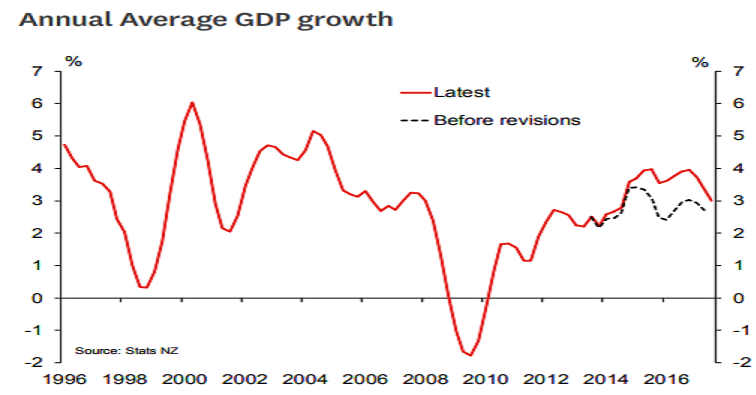
New Zealand’s gross domestic product (GDP) for the third quarter of this year beat market expectations, although in line with the median market forecast. GDP rose 0.6 percent in the September quarter and was also revised up in each of the two previous quarters of this year.
Construction made the biggest contribution to growth in the September quarter. Output rose by 3.6 percent, reversing the decline seen over the first half of this year that may have been due to wet weather delaying activity.
There were also surprisingly strong gains in transport (+1.4 percent) and mining (+3.2 percent). Agricultural output was about flat, as a drop in milk production was offset by gains in cattle farming. Retail spending was up, but accommodation and hospitality were down, as tourist numbers dropped back after the Lions rugby tour in June. Electricity demand was down due to a warmer than usual winter and spring.
"Our view remains that the September quarter will mark the low point for growth in 2017. Many of the factors that held back growth – in dairying, tourism and electricity generation – were temporary, and the indicators to date for the December quarter have been significantly stronger," Westpac Research commented in its latest report.
Meanwhile, FxWirePro launches Absolute Return Managed Program. For more details, visit http://www.fxwirepro.com/invest







