


 SpaceX Prioritizes Moon Mission Before Mars as Starship Development Accelerates
  NASA Partners with Katalyst to Save Swift Observatory with Innovative Docking Mission
  Tesla Q1 2026 Deliveries Miss Estimates as AI Strategy Takes Center Stage
  RBC Capital: European Medtech Firms Show Minimal Middle East and Energy Risk Exposure
  Gold Prices Surge to Three-Week High as Trump-Iran Ceasefire Weakens Dollar
  Asian Markets Hold Steady Ahead of Trump's Iran Deadline as Oil Tops $110
  Neuralink Plans High-Volume Brain Implant Production and Fully Automated Surgery by 2026
  European Stocks Hold Steady as Iran Ceasefire Deadline Looms
  Neuren Pharmaceuticals Surges on U.S. Patent Win for Rare Disorder Drug
  Deere & Company Agrees to $99 Million Settlement Over Right-to-Repair Dispute
  Elon Musk Ties SpaceX IPO Access to Mandatory Grok AI Subscriptions
  India's Central Bank Holds Rates Amid Iran War Energy Shock
  LG Electronics Posts Record Q1 Revenue Amid Strong Demand and Cost Improvements
  Asian Currencies Hold Steady as Trump's Iran Deadline Rattles Markets
  U.S.-China Trade Talks: Trump and Xi Set for Summit Amid Rare Earths Focus
  RBI Holds Interest Rates Steady Amid Middle East Tensions and Global Uncertainty


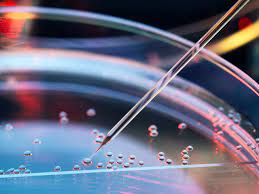
Scientists have obtained stem cells from pigs, sheep, and cattle without the need for serum, feeder cells, or antibiotics to pave the way for “manufacturing cell-cultured meat and breeding enhanced livestock”.
The researchers for the study were mainly from the University of Nottingham’s School of Biosciences in the UK, in collaboration with the Universities of Cambridge, Exeter, Tokyo, and Meijit.
According to the lead researcher, Ramiro Alberio, the ability to derive and maintain livestock stem cells under chemically defined conditions allows the development of novel food products, such as cultured meat.
He added that the newly-developed cell lines are a step-change from previous models for their unique ability to permanently grow to make muscle and fat.”
The stem cell lines can develop into multiple cell types, which can then be genetically manipulated through the Crispr/Cas9 gene-editing tool.
The results could broaden research into gene editing animals to improve productivity, adaptation to climate change, diet modifications, and the environmental impact of livestock production.
Alberio added the results allow gene editing to happen naturally over a long time selectively and rapidly to customize specific traits. This can accelerate the pace of genetic selection of livestock and cultured meat to improve productivity and the creation of healthier foods.
The research offers potential solutions that the food industry could use at scale amid a growing population to feed in a changing climate.
According to the study, the new chemically defined approach provides greater consistency and safety than the use of serum, making it an ideal solution for manufacturing new lab-grown food products.”.
It added that the use of serum has technical disadvantages, including its undefined nature, batch-to-batch variability in composition, and the risk of contamination.
The research, titled “Pluripotent stem cells related to embryonic disc exhibit common self-renewal requirements in diverse livestock species,” was published in the Development journal.
It was funded by BBSRC, EU (ERC), MRC and Wellcome Trust.







