


 Debate over H-1B visas shines spotlight on US tech worker shortages
  U.S. Probes Apex Logistics Over Nvidia AI Chip Shipments to China
  Google promotes ‘teacher approved’ apps for kids. Here’s what parents should know
  Columbia Student Mahmoud Khalil Fights Arrest as Deportation Case Moves to New Jersey
  Why have so few atrocities ever been recognised as genocide?
  Meta, U.S. States Discuss Settlement in Teen Addiction Trial
  Disaster or digital spectacle? The dangers of using floods to create social media content
  Heritage, desire and diplomacy: why China still values scotch whisky
  Glastonbury is as popular than ever, but complaints about the lineup reveal its generational challenge
  Britain has almost 1 million young people not in work or education – here’s what evidence shows can change that
  What’s the difference between baking powder and baking soda? It’s subtle, but significant
  Mercer International Stock Surges 45% on C$20 Million Canada Funding
  The American mass exodus to Canada amid Trump 2.0 has yet to materialize
  Trian Drops Wendy’s Take-Private Bid Plans, Shares Plunge 14%
  Yes, government influences wages – but not just in the way you might think
  Salesforce Shares Surge as AI Demand Powers Q2 Earnings Beat


 Add as a preferred source on Google
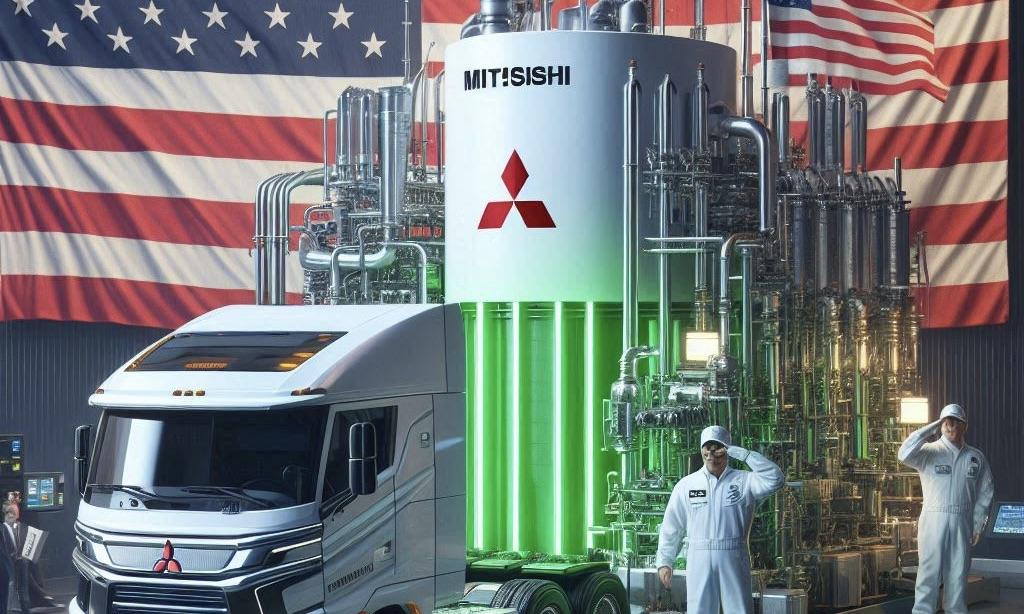
Mitsubishi Heavy Industries and Chevron have announced plans to begin commercial green hydrogen production in Utah by mid-2025. Their joint venture, ACES Delta, will use renewable energy to produce 100 tonnes of hydrogen daily, marking a significant step toward sustainable power generation.
ACES Delta to Produce 100 Tonnes of Hydrogen Daily in Utah’s Largest Renewable Storage Site
ACES Delta, a joint venture between the two corporations, will produce and store the gas at facilities in Utah. GIC, the Singapore sovereign wealth fund, and a significant Canadian pension fund are among the other investors, with Chevron being the largest shareholder.
ACES will assist the Intermountain Power Agency (IPA), a local electricity provider, in procuring surplus solar and wind power from other regions of the country and distributing it to ACES. By utilizing this excess power to generate hydrogen from water, ACES can produce 100 tonnes of hydrogen per day and receive processing and storage fees from IPA.
Salt dome caverns, a type of subterranean formation also employed to store natural gas and oil, will be utilized to store hydrogen. This is due to the underground formation's gas and liquid leakage resistance. IPA will extract hydrogen from natural gas for combustion in power facilities.
In a recent report by Nikkei Asia, the power company intends to terminate its coal plants and construct an 840-megawatt gas-fired facility, which is expected to commence commercial operations next year. The aim is to transition the new plant entirely to hydrogen by 2045, and it will initially operate on a blend of 70% natural gas and 30% hydrogen.
The salt dome caverns can store enough hydrogen to produce 300 gigawatt-hours of electricity, satisfying the annual energy requirements of 28,000 households in the United States. It is anticipated to be the world's largest renewable hydrogen storage site.
If successful, the site would be the world's first large-scale green hydrogen production, storage, and power generation initiative. The total expenses are anticipated to exceed billions of dollars.
Michael Ducker, president of MHI Hydrogen Infrastructure, a U.S.-based company, stated that the company is "looking at commissioning beginning later this year."
Mitsubishi Heavy Expands Hydrogen Power with U.S. Project, Backed by $500 Million Loan Guarantee
Mitsubishi Heavy has developed and manufactured a gas turbine for the power plant and will be responsible for maintaining and inspecting the equipment for 20 years. Mitsubishi Heavy also has a stake in a Norwegian company that manufactures the electrolyzer apparatus that will be employed to produce hydrogen.
Natural gas turbines are among Mitsubishi Heavy's strengths. The company is expanding its hydrogen power business, which it believes has more promising development prospects. As the United States endeavors to transition away from fossil-fuel-fired power plants to reduce greenhouse gas emissions, Mitsubishi Heavy intends to leverage its participation in the Utah project's production side as an opportunity to acquire expertise.
The facility can serve as a conduit for solar power that would otherwise be squandered. When the grid cannot accommodate the excess energy generated by solar farms in the western United States, they are frequently disconnected.
The administration of U.S. President Joe Biden has provided a $500 million loan guarantee for the Utah project to establish the United States as a significant player in the hydrogen industry.
Ducker stated, "A fundamental approach that we are taking is to engage with the different strategic companies out there in some of these hubs" when asked about potential partners for other hydrogen initiatives.







