


 Neuralink Expands Brain Implant Trials with 12 Global Patients
  SpaceX’s Starship Completes 11th Test Flight, Paving Way for Moon and Mars Missions
  NASA and SpaceX Target Crew-11 Undocking From ISS Amid Medical Concern
  NASA Artemis II: First Crewed Moon Mission Since Apollo Takes Four Astronauts on 10-Day Lunar Journey
  Eli Lilly’s Inluriyo Gains FDA Approval for Advanced Breast Cancer Treatment
  Blue Origin New Glenn Rocket Explodes During Launch Pad Test, Delaying Space Ambitions
  Cogent Biosciences Soars 120% on Breakthrough Phase 3 Results for Bezuclastinib in GIST Treatment
  SpaceX Pivots Toward Moon City as Musk Reframes Long-Term Space Vision
  Is space worth the cost? Accounting experts say its value can’t be found in spreadsheets
  FDA Pilot Program Eases Rules for Nicotine Pouch Makers


 Add as a preferred source on Google
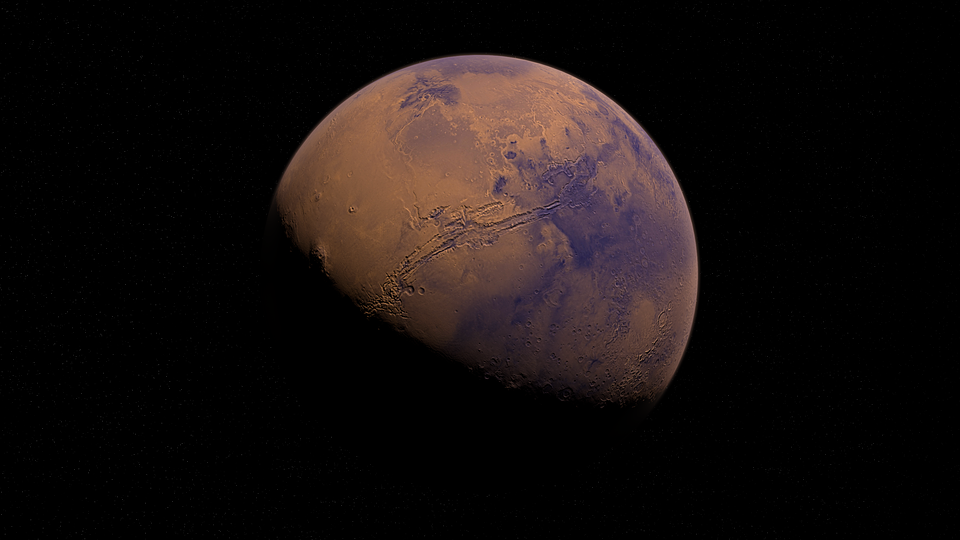
In recent years, many space agencies are turning their focus to our neighboring planet Mars. An analysis of a Martian meteorite may provide more insight into the Red Planet’s early years.
Astronomers from the University of Tokyo studied a meteorite from Mars, finding possible hints as to what might have transpired on the Red Planet long ago. The team analyzed the two meteorites that were found in North West Africa, named NWA 7034 and NWA 7533. One such discovery was that the minerals they found within the space rock have already oxidized. This appears to suggest that water was once present on the Martian landscape. With this discovery, experts believe that this could help provide more information on what the red planet was once like a long time ago, and how water shaped Mars’ formation.
“I study minerals in Martian meteorites to understand how Mars formed and its crust and mantle evolved,” Said Professor Takashi Mikouchi of the University of Tokyo. “This is the first time I have investigated this particular meteorite, nicknamed Black Beauty for its dark color. Our samples of NWA7533 were subjected to four different kinds of spectroscopic analysis, ways of detecting chemical fingerprints.”
Despite this finding, how water became present in certain planets such as our own, on Mars, and even on the Moon as it was previously discovered, remain a mystery. Some scientists believe that water was brought to these cosmic bodies through asteroid collisions. Other scientists say that water may be one of the substances that naturally form when a planet or body forms. The latest discovery adds weight to the latter theory.
Meanwhile, another group of astronomers has discovered an asteroid behind Mars that looks similar to our Moon. The unidentified space body is believed to have formed millions of years ago during the early days of our Solar System. The scientists from the Armagh Observatory and Planetarium in Northern Ireland traced the anomaly to a kind of asteroid known as Trojan asteroids that all share an orbit with the Red Planet.
Trojan-type asteroids are usually made up of remnants of the planets’ formations. According to NASA, Trojan asteroids are described as “time capsules from the birth of our solar system.”







