


 US, Japan and South Korea Back Taiwan Ahead of Trump-Xi Summit
  Oil Prices Extend Losses as U.S.-Iran Talks Ease Supply Fears
  Asia Stocks Rise on AI Demand as Oil Eases
  Dollar Hits Two-Month High as Fed Rate Hike Bets Rise
  Asian Currencies Muted as Dollar Firms Ahead of Trump-Xi Summit
  Gold Prices Hold Steady Ahead of Trump-Xi Summit, Middle East Risks
  Vietnam, US Trade Deal Could Be Signed Soon, To Lam Says
  RBA Says ASX Still Falls Short on Governance and Risk Controls
  Yen Weakens as Dollar Gains on Widening US-Japan Rate Gap
  Oil Prices Rise as U.S.-Iran Talks Fuel Diplomacy Hopes
  U.S. Dollar Hits Eight-Week High After Fed Rate Hike
  Gold Prices Rise as Oil Slide Eases Fed Rate Hike Fears
  Vietnam Stocks Join FTSE Emerging Market Indexes, Unlocking Billions in Foreign Investment
  U.S. Stock Futures Rise Ahead of Trump-Xi Summit, Middle East Risks Weigh
  UK Home Asking Prices Rise for First Time Since May


 Add as a preferred source on Google
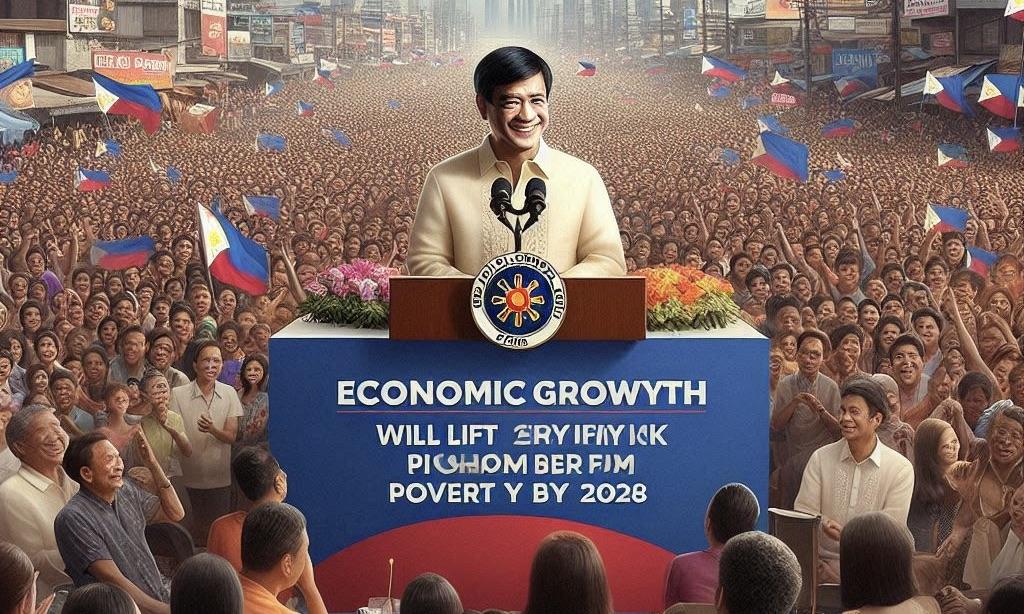
President Ferdinand Marcos Jr. announced on August 17 that the Philippines' upgraded investment rating and economic growth will help break the cycle of poverty, promising benefits for all Filipinos.
President Marcos Touts Economic Gains as Key to Breaking Poverty Cycle, Following Philippines' Credit Rating Upgrade
According to The Manila Times, on August 17, President Ferdinand Marcos Jr. declared that the Philippines, which is still grappling with the economic consequences of the COVID-19 pandemic, will reap the rewards of its enhanced economic development as it resolves the poverty cycle shortly.
The President's statement was released in response to the Philippines' investment grade rating being upgraded to "A-" by Japan-based Rating and Investment Information, Inc. (R&I) in light of its robust economic performance.
Marcos stated in his message on August 17 that the Philippine economy's highest rating to date is a testament to investors' confidence. He also noted that it is a positive development for ordinary Filipinos.
He stated that the most recent upgrade would reduce borrowing costs and ensure that the government, enterprises, and ordinary consumers could access affordable and low-cost financing.
Marcos stated that the government could allocate funds to public services, such as infrastructure, healthcare facilities, and the construction of school structures for young Filipinos, rather than paying interest.
"This will help us invest more in our people – paving the way for more Carlos Yulos in the near future," the President said.
"We will keep giving our best to make sure that every Filipino benefits from economic growth until we break the cycle of poverty," he added.
Philippines Achieves Credit Rating Upgrade Amid Economic Growth, Targets Single-Digit Poverty by 2028
The R&I upgraded the country's rating to "A-" in August last year, citing macroeconomic stability, a high economic growth trajectory, and the anticipated continuous development in the country's fiscal balance. This is a one-notch increase from the previous rating of "BBB+."
The credit rating firm also upgraded the Philippines from a "positive" classification to a "stable" outlook.
A poverty rate that is only one digit.
"Hopefully by the end of President Marcos' administration, our povery rate will be below 10 percent at single digit. So, we're on track actually to bring down poverty to single digit," Velasquez, the chief economist of the Department of Finance, said during the Saturday news forum in Quezon City.
Velasquez cited the Philippine economy's second-quarter gross domestic product development, which increased from 5.8 percent in the first quarter to 6.3 percent.
She stated that the government is proactively funding large-scale infrastructure projects to advance the Build Better More program, which has significantly increased investments and construction.
However, Velasquez stated that Filipino consumers continue conserving their spending habits.
Nevertheless, she anticipates that the government will engage in aggressive spending due to the favorable employment statistics and the remittances from Filipino laborers abroad.
"It seems low because don't you remember two years ago, when our inflation was actually high at 6 percent, it's 5.8 percent last year. But now it's going down so hopefully it'll be better, at least the outlook in terms of household consumption," she said.
Velasquez also stated that the Philippines' unemployment figures are satisfactory, noting that the most recent figure of 3.1 percent was lower than the pre-pandemic figure of approximately 5.1 percent.
In July of last year, the National Economic and Development Authority (NEDA) reported that the Philippines had made remarkable progress in reducing poverty levels between 2021 and 2023 despite facing domestic and external challenges. This achievement represents substantial progress toward the government's ambitious goal of reducing poverty incidence to a single-digit level by 2028.
The PSA released the 2023 Full Year Official Poverty Statistics last month. They reveal a substantial decrease in poverty among the population, from 18.1 percent in 2021 to 15.5 percent.







