


 Fed’s Hammack Says Bond Yield Surge Is Not Driven by Inflation Fears
  Oil Prices Mixed as Russia Diesel Deal and Houthi Attacks Raise Supply Concerns
  IMF Maintains 2027 Global Growth Forecast at 3.4% Amid Rising Risks
  BlackRock’s Rick Rieder Favors Bonds Over Stocks as Treasury Yields Surge
  Gold Prices Rise Above $4,200 as Russia-Ukraine Energy Truce Eases Oil Concerns
  Oil Prices Fall as Russia Signals Higher Diesel Exports
  Fed's Hammack Urges Faster Rate Hikes to Fight Inflation
  ECB May Stop Rate Hikes After December, Capital Economics Says


 Add as a preferred source on Google
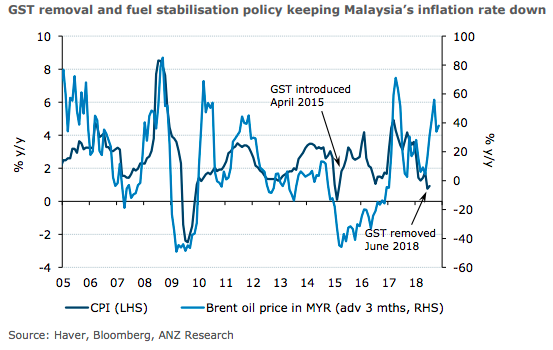
Malaysia’s headline consumer price inflation for the month of July increased only marginally, compared to that in June. Most components of the CPI index remained close to their June levels, barring electricity prices, which more or less reverted to May levels after dropping sharply in June. The headline figure remained buoyed because of an unfavourable base effect in fuel prices, though this is set to change in the coming months, ANZ Research reported.
Headline CPI inflation increased marginally to 0.9 percent y/y in July, from 0.8 percent y/y in June. The zero-rating of the GST since 1 June had resulted in a 1.2 percent m/m decline in the CPI index in June. Retailers and service providers do not seem to have reduced prices any further in July.
There was no dominant base effect, except for an unfavourable one in the case of fuel prices. The price of the commonly used RON95 grade petrol remains fixed currently at a subsidised level of MYR2.20 per litre, compared to an average of MYR1.96 per litre in July 2017.
"Given low inflation, the softer-than-expected growth outcome in Q2 and policy uncertainties, we expect BNM to maintain the ‘neutral’ tone and remain on hold for the rest of the year. The central bank will stay accommodative, but is unlikely to cut the Overnight Policy Rate (OPR) and jeopardise the relative resilience of the ringgit," the report commented.







