


 Gold and Silver Prices Slide as Dollar Strength and Easing Tensions Weigh on Metals
  Trump Endorses Japan’s Sanae Takaichi Ahead of Crucial Election Amid Market and China Tensions
  Bank of Japan Signals Readiness for Near-Term Rate Hike as Inflation Nears Target
  The UK is surprisingly short of water – but more reservoirs aren’t the answer
  LA fires: Long-term exposure to wildfire smoke is poorly understood − and a growing risk
  We combed through old botanical surveys to track how plants on Australia’s islands are changing
  Swimming in the sweet spot: how marine animals save energy on long journeys
  What’s so special about Ukraine’s minerals? A geologist explains
  Gold Prices Slide Below $5,000 as Strong Dollar and Central Bank Outlook Weigh on Metals
  How ongoing deforestation is rooted in colonialism and its management practices
  Parasites are ecological dark matter – and they need protecting
  Thousands of satellites are due to burn up in the atmosphere every year – damaging the ozone layer and changing the climate
  Singapore Budget 2026 Set for Fiscal Prudence as Growth Remains Resilient


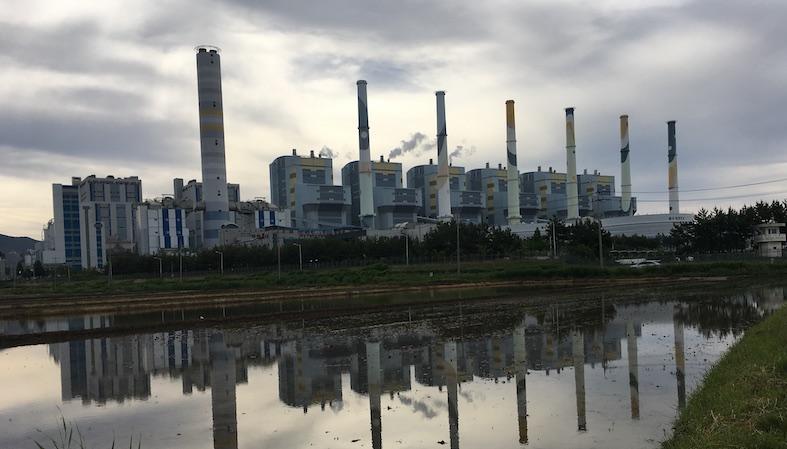
Environmental groups criticized the Presidential Committee on Carbon Neutrality for its poor skills in coming up with carbon neutrality plans that still emit greenhouse gas.
Only one of the three options unveiled by the committee for reducing carbon emissions by 2050 will achieve carbon neutrality.
The Korea Federation for Environmental Movements said that announcing carbon neutrality plans despite two of those still emitting greenhouse gas exhibits “poor skills.”
The Energy Justice Actions added that even the third plan that achieves carbon neutrality is not clear when coal-burning power plants and cars with internal combustion engines will come to an end.
The road map results in varying net emissions in 2050 from zero to 25.4 million metric tons.
Seoul National University’s environmental professor Yun Sun-jin, a co-chairperson of the committee, noted that they reviewed the scenario based on the principles of accountability, fairness, innovativeness, inclusiveness, and reasonableness.
Under the first plan, the country will continue fossil fuel use, including coal-fired power plants, which would produce 153.9 million tons of greenhouse gases in 2050. But 95 million tons will be eliminated using carbon capture, and absorbents such as forests will take out 24.1 million tons, while eco-friendly energy would offset it by 9.4 million tons.
It will lead to a total of 24.5 million tons of greenhouse gas emissions produced in Korea in 2050, down 96.5 percent from the 727.6 million tons in 2018.
The second plan will halt coal-fired power plant operations while maintaining liquefied natural gas power plants for emergency use, resulting in net carbon emissions of 18.7 million tons in 2050.
Under the third plan, it would shut down all coal-fired and LNG power plants while increasing renewable energy supply and green hydrogen technology use. It aims to eliminate all greenhouse gas emissions and achieve a “net-zero. The committee will collect feedback, where it would base its decision on coming up with a final blueprint in late October. maximizing the use of existing infrastructure.













