


 Russian Envoy Dmitriev Heads to US for Ukraine Talks
  Scott Bessent Eyed as Trump’s New AI Czar
  Trump Board of Peace Unveils $2.45 Billion Gaza Recovery Plan
  Burnham Eyes UK Leadership Role in AI Ahead of Trump Meeting
  Trump Administration Plans Faster FDA Reviews for Smoke-Free Nicotine Products
  Vietnam, US Trade Deal Could Be Signed Soon, To Lam Says
  Taiwan Vows to Advance US Arms Sales Ahead of Trump-Xi Meeting
  Trump Says ‘Freedom’ Is Coming to Cuba
  Macron, Trump Discuss Ukraine-Russia Energy Strike Moratorium
  Trump Says U.S.-Iran Peace Deal Near After UN Talks
  Venezuela Promises Elections as Delcy Rodriguez Pledges Democratic Transition
  Iran Vows ‘Crushing’ Response as US Talks Continue
  Europe Warns Russia Is Escalating Hybrid Attacks Across NATO
  Canada Unveils Bill to Fast-Track Major Resource Projects
  South Korea, US Discuss Warship Building Cooperation
  Marco Rubio to Meet Russia’s Lavrov in New York
  US Invites Putin to Miami G20, Opening Door to Trump Summit


 Add as a preferred source on Google
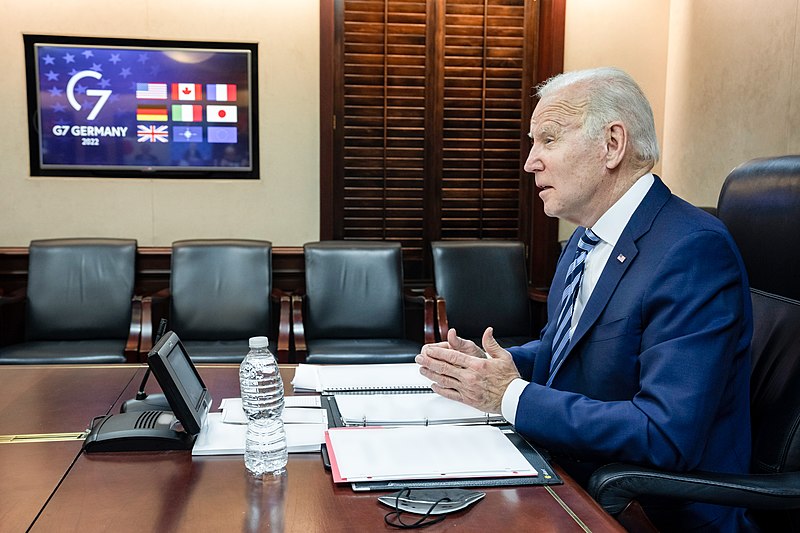
US President Joe Biden met with the Prime Minister of India, the UK, and Australia as part of the Quad alliance this week. The four world leaders met in a virtual conference Thursday, where they discussed the ongoing crisis in Ukraine.
Biden met with his counterparts in the Quad alliance: Indian Prime Minister Narendra Modi, Japanese Prime Minister Fumio Kishida, and Australian Prime Minister Scott Morrison in a virtual conference Wednesday. The leaders discussed the ongoing military conflict happening in Ukraine as Russian troops continue their attempts to invade under orders of Russian dictator Vladimir Putin.
During the daily news conference, White House Press Secretary Jen Psaki told reporters that Biden felt that the meeting was “constructive.” The four leaders also reaffirmed their commitment to the Indo-Pacific region, and all agreed to meet in person in Japan this year, according to the press release from the White House.
Aside from the ongoing crisis in Ukraine, the alliance will also have the situation in the Indo-Pacific region as part of the meeting’s agenda. India’s External Affairs Ministry Spokesman Arindam Bagchi said before the meeting that they would exchange their assessments regarding the developments in the region.
The alliance is still grappling with China, which it has accused of economic coercion and military maneuvering in the region, especially in the South China Sea, which China claims to control the majority of.
Meanwhile, a bipartisan group of 42 senators, 40 Democrats, and two Republicans are asking Biden to offer Temporary Protected Status visas to Ukrainians as a result of the invasion. In a letter, the lawmakers cite the Russian invasion in Ukraine as being “too dangerous” for Ukrainians in the US to return.
The push is led by Senate Judiciary Chair Dick Durbin, Senate Foreign Relations Committee Chair Bob Menendez, and Senate Homeland Security Committee Rob Portman.
“Ukraine clearly meets the standard for TPS as it is obviously too dangerous for Ukrainian nationals to return to Ukraine due to the ongoing armed conflict,” said the letter.
Should it be approved, around 29,500 Ukrainian nationals who are not permanent US residents would be affected, according to the State Department.







