


 Wall Street Ends Mixed as Micron Surges, Apple Drops After Price Hikes
  US Dollar Slips After PCE Inflation Data as Fed Rate Hike Expectations Stay Elevated
  Wall Street Ends Lower as AI Stocks Drag Markets, Fed Rate Outlook Shifts
  Oil Prices Drop as Middle East Supply Recovery Eases Market Concerns
  BOJ Hawk Signals Faster Interest Rate Hikes Amid Inflation Risks
  Japan Signals Preference for Low Interest Rates as BOJ Policy Debate Intensifies
  Oil Prices Drop as Strait of Hormuz Shipping Recovers
  World Bank Approves $1.1 Billion Emergency Funding for Bangladesh Amid Food and Energy Price Pressures
  South Korea’s KOSPI Plunges as Apple Price Hikes and OpenAI IPO Delay Shake AI Chip Stocks
  Gold Price Ends Lower for Fourth Week Despite Rebound as Fed Rate Hike Bets Strengthen


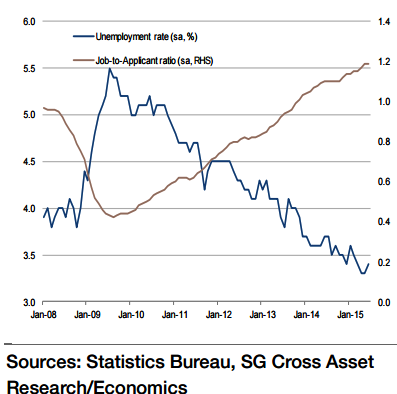
The number of job seekers that dropped out of the Japan's labour force increased in March and April, and these job seekers returned to the labour force in May and June. Most of them were absorbed by the increase in employment numbers.
"The Japan unemployment rate is expected to remain unchanged at 3.4% in July. Both the manufacturing and non-manufacturing sectors are feeling the labour shortage and are stepping up hiring. The unemployment rate is expected to continue to remain below 3.5%, corresponding to the NAIRU level. This in turn should underpin sentiment just as aggregate wages start to expand, thus enabling Japan to make a full exit from deflation", says Societe Generale.
However, if this situation fails to materialise, the BoJ's 2% price stability target will be difficult to achieve. The unemployment rate needs to fall below 3% for the target to be met, but this level currently seems very far away.
"The job-to-applicant ratio is likely to rise further to 1.20 in June from 1.19 in June. This is the highest level since 1992 and indicates that companies remain willing to increase their hiring", added Societe Generale.

- News

- Economy

- Central Banks
- Investing
- Research
- Roundups
- Digital Currency
- Insights
- Technical Analysis
- Technology
- Business
- Law
- Health
- Nature
- Fintech
- Science
- Topic
- Opinions
- ©Econometrics LLC . All Rights Reserved.
Japan's July unemployment rate likely to be unchanged at 3.4%
Thursday, August 27, 2015 5:44 AM UTC
Editor's Picks



- Market Data
Most Popular




