


 Dollar Rebounds as Euro, Pound Slip Ahead of Fed Minutes, Yen Near Intervention Zone
  Oil Prices Steady as U.S.-Iran Talks Ease Supply Fears Ahead of Holiday Weekend
  Best Gold Stocks to Buy Now: AABB, GOLD, GDX
  Goldman Sachs Raises USD/JPY Forecast, Sees Yen Weakness Persist Through 2027
  Moody’s Says Peru’s President-Elect Keiko Fujimori Could Boost Investor Confidence
  Goldman Sachs Flags 3 Key Risks Ahead of Europe’s Earnings Season
  Russia Stocks End Flat at Three-Year Low as MOEX Index Stalls, Gold Prices Climb
  Gold Price Today: Bullion Heads for First Weekly Gain as Weak U.S. Jobs Data Eases Rate Hike Fears
  Wall Street Ends Mixed as Weak Jobs Data Lowers Fed Rate Hike Bets, Chip Stocks Tumble
  Turkey Vehicle Sales Fall 11.4% in June as Auto Market Weakens


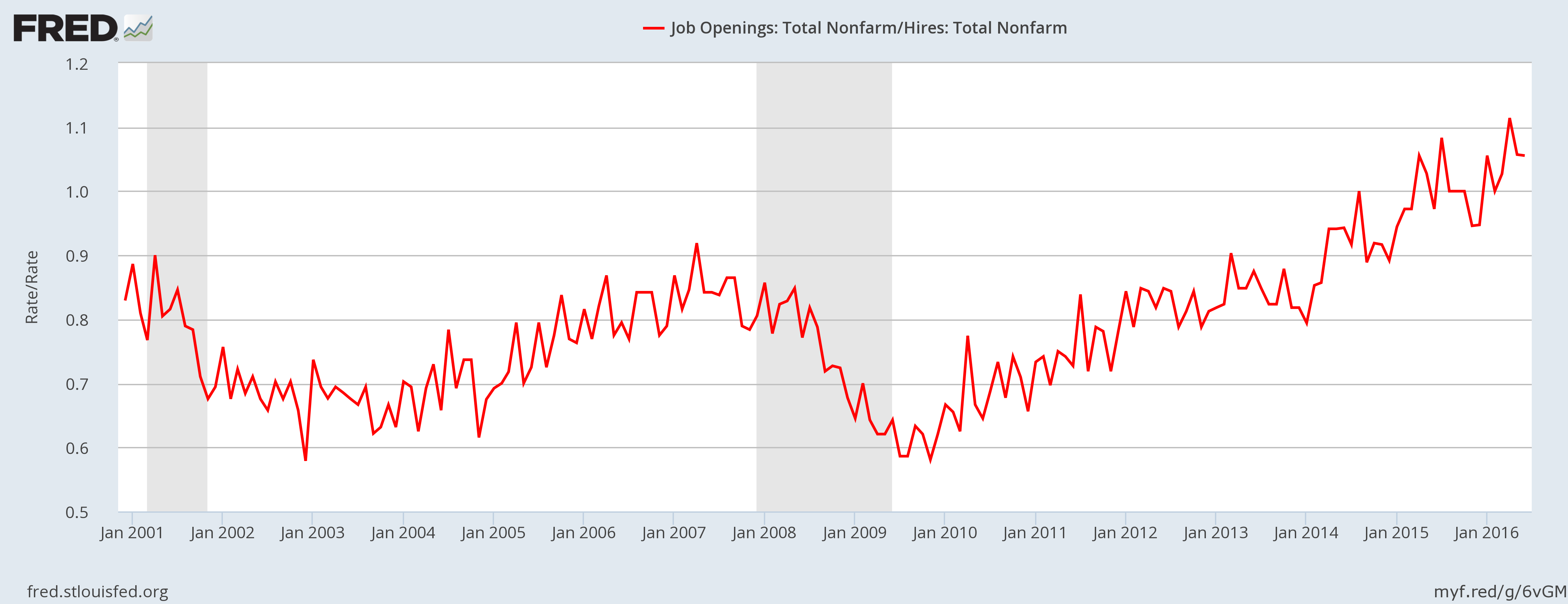
Latest data from JOLTS points at a deterioration in employment suitability ratio. This is a simple ratio calculated from the data of total job openings to total hires. Whenever the number reaches above 1, it means the economy is close towards maximum employability. It means that there are more job openings than hires, which basically means due to lack of suitable candidates, positions are not being filled. In the past 15 years of history (records go till 2001) this number has never gone above 1. This year, it has remained above 1.
This issue of structural unemployment can’t be solved by monetary easing. This could also lead to higher wages in some sections of the economy where the shortage of skilled labor is acute. The problem can be addressed mainly via two ways; one would be to introduce courses to improve skills and that would require some form of a fiscal stimulus cum reforms and the other one would be through immigrations, which is to bring in the skilled workers from outside. Given the political promises in this year’s election, the second one doesn’t seem to be an option and lawmakers in the U.S. don’t seem determined enough to pursue the reforms or the fiscal dosages needed. Hence this structural unemployment is here to stay in the States.







