


 Bank of Japan Eyes April Rate Hike Despite Inflation Dip, ING Says
  Taiwan Central Bank Expected to Hold Interest Rates Steady Through 2027
  J.P. Morgan Now Expects Two ECB Rate Hikes Amid Inflation Pressures
  U.S. Stock Futures Steady as Iran Reviews U.S. Ceasefire Proposal
  Time to buy local: war fuel price shocks reveal the folly of a long food supply chain
  Trump Tariffs Show Minimal Economic Impact but Boost Federal Revenue, Study Finds
  ECB Eyes Rate Hike Amid Iran Conflict-Driven Energy Price Surge
  Japan Eyes Oil Futures Intervention to Stabilize Yen Amid Middle East Crisis
  Gold Prices Fall Amid Rate Jitters; Copper Steady as China Stimulus Eyed


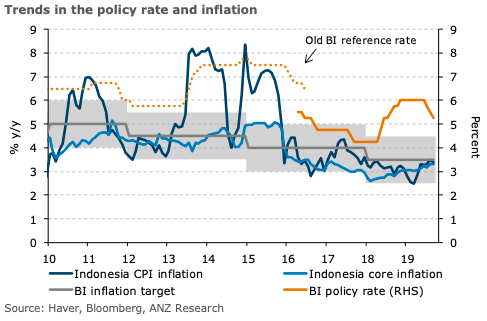
Indonesia’s headline inflation eased to 3.39 percent y/y in September, following two straight months of acceleration. A pullback in volatile food inflation more than offset a pick-up in administered prices and core inflation, ANZ Research reported.
On a sequential basis, headline CPI fell by 0.27 percent m/m in September, the first decline in seven months. The decline was led by food prices, which fell by 1.97 percent.
Most other major categories — such as housing, clothing, healthcare and education — saw prices rise further, but at a slower pace compared to the previous month.
Core CPI, which excludes volatile food and government-controlled prices, rose by 0.29 percent m/m in September, slower than the 0.43 percent gain seen in August. In y/y terms, core inflation edged up to 3.32 percent, the highest since February 2017.
The bottom line is that both headline and core inflation are likely to stay comfortably within the central bank’s 2.5-4.5 percent target band and will not prevent BI from easing monetary policy.
"We continue to see scope for at least one more 25bp cut in BI’s easing cycle, which will take its policy rate to 5.00 percent by end-2019," the report further commented.







