


 Smartphones are helping filmmakers tell the stories the movie industry overlooks
  Goldman Sachs Says China Competition Weighs More on EU Growth Than Trade Deficit
  Michael Burry Shorts Tesla at $416 as AI and Semiconductor Bearish Bets Expand
  Vietnam’s population hit the 100 million milestone. Where’s it headed?
  AI can be a personal trainer in your pocket – but is it safe?
  USA at 250: the Black American struggle for life, liberty and the pursuit of happiness
  Elon Musk is remaking the world, like Henry Ford before him – but more dangerously
  Goldman Sachs Raises USD/JPY Forecast, Sees Yen Weakness Persist Through 2027
  In a rebuke to Trump, the Supreme Court rules that birthright citizenship is the law of the land
  Bank of America Upgrades T-Mobile to Buy, Says LEO Satellite Fears Are Overdone
  State of emergency in Crimea as Ukraine focuses pressure on ‘jewel in Putin’s crown’


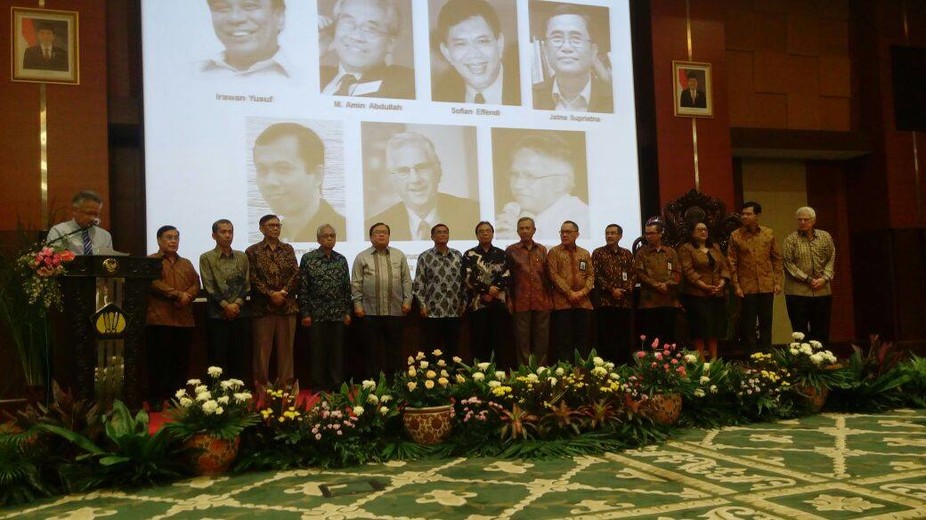
Southeast Asia’s biggest economy, Indonesia, with the support of Australia, US, and UK, finally has a multi-year funding scheme to finance long-term world-class scientific research.
The Indonesia Academy of Science, an honour society of distinguished scholars, yesterday launched the Indonesia Science Fund (ISF), the country’s first research funding organisation that provides multi-year grants for frontiers of science research.
Indonesian scientists seeking research funds from the government have had to rely on yearly grants that follow the annual budget cycle. This, according to the president of the Academy of Science, Sangkot Marzuki, has limited their ability to achieve the best research outcomes.
Despite having more than 3,000 universities and 400 research institutions, the world’s most populous Muslim country has been trailing behind its neighbouring countries in scientific research. Indonesia is ranked 57 in the number of academic journal articles produced, behind Thailand (43rd), Malaysia (36th) and Singapore (32nd).
A low-middle income economy, Indonesia spends less than 0.1% of its GDP on research and development, according to World Bank data. Indonesia’s percentage of research and development expenditure to GDP is similar to Senegal, one of world’s least developed countries.
“This [the Indonesia Science Fund] is an answer to our researchers' complaints, because they are also are being blamed for not being productive,” Indonesia Academy of Science vice president Satryo Soemantri Brodjonegoro.
“Money is not the only challenge [for researchers] but also the fact there’s not a conducive environment to do research,” Brodjonegoro added.

The Indonesia Science Fund provides multi-year funding for scientific research, freeing Indonesian scholars from relying on yearly grants that does not support long-term research planning.
ISF is supported by Indonesia’s Endowment Fund for Education under the Ministry of Finance, committed to provide a ballpark of US$3 million a year to disburse to researchers, according to Brodjonegoro. ISF is also supported by the US, UK and Australian governments.
ISF executive director J. W. Saputro said in the first year, ISF will provide grants for research in the areas of health and the environment.
Saputro said the organisation has eight areas of focus:
- Identity, diversity and culture
- Archipelago, maritime and bio-resources
- Life, health and nutrition
- Water, food and energy
- Earth, climate and the universe
- Disasters and community resilience
- Material and computational science
- Economy, society, and governance
Marzuki said that the launch of ISF is a milestone in Indonesia’s history. He said it will provide an ecosystem to support basic research, which has been neglected in the past 70 years.
 This article was originally published on The Conversation. Read the original article.







