


 Bessent Says U.S. Must Strengthen Supply Chains and Economic Security
  U.S.-Iran Diplomacy Helps Drive Gasoline Prices Down 15% From May Highs
  France Faces Long Road to Economic Rebalancing as Weak Demand and High Rates Weigh, Says Citi
  Oil Prices Fall as Iran Peace Talks Progress, Hormuz Reopens, and U.S. SPR Hits 1983 Low
  New Zealand Fast-Tracks Gold Mining as Industry Revival Gains Momentum
  Russian Stocks End Flat as MOEX Index Hits New 52-Week Low
  Australia Inflation Cools in May, But Core CPI Keeps RBA Rate Hike Risks Alive
  Asian Stocks Slip as Oil Rebounds Amid Fed Rate Hike Fears
  Japan Manufacturing Growth Accelerates in June as Orders Surge Despite Iran War Cost Pressures
  How AI prompting turned writerly description into an everyday skill


Inorder to increase inflows to India , the government has taken many steps in a major liberalisation of FDI regime. 15 sector's FDI regulations have been eased, limit on Foreign Investment Promotion Board(FIPB) is extended to INR50bn from INR30bn. These changes will lead to quicker FDI approvals, also by reducing paperwork.
Rules on FDI have also been diluted in wholesale and retail activities, defence sector, private banks and construction sector, helping improve job creation, boosting the sectors.
Capital account signals will be further opened up, which indicates government's willingness to undertake reforms, besides political setbacks recently.
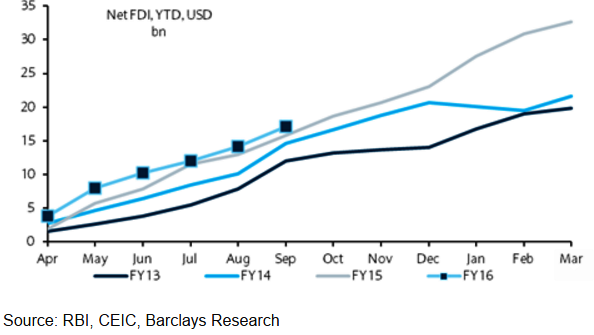
Government has been easing FDI regime since it took powers, USD17.1bn of net inflows are seen in first half of 2015, last year net FDI was USD 32 bn, following a series of liberalisation steps since September 2015, when Government in conjuction with Reserve Bank, announced opening of bond market to greater foreign paarticipation.
Indian government also started a bankruptcy draft code, with further fiscalisation of oil price profits by indirect taxes.
"The challenge remains in getting parliamentary approvals for key tax reforms such as the Goods & service tax, which requires two-thirds majority approval from both houses of parliament", says Barclays in a research note.

- News

- Economy

- Central Banks
- Investing
- Research
- Roundups
- Digital Currency
- Insights
- Technical Analysis
- Technology
- Business
- Law
- Health
- Nature
- Fintech
- Science
- Topic
- Opinions
- ©Econometrics LLC . All Rights Reserved.
Indian government takes major FDI liberalization moves, key reform approvals remains a challenge
Wednesday, November 11, 2015 5:37 AM UTC
Editor's Picks



- Market Data
Most Popular




