


 Fed Unveils Stablecoin Rules Under GENIUS Act
  China Consumer Stocks Near Decade Lows as AI Shares Surge
  US Stocks Face Jobs, Inflation Test as Fed Rate Hike Bets Rise
  ECB May Stop Rate Hikes After December, Capital Economics Says
  Oil Prices Jump 3% as Houthi Attack Revives Supply Fears
  Wall Street Ends Flat as Oil, Treasury Yields and Fed Jitters Rattle Markets
  US Comfortable With Canada Trade Standoff as Import Bans Loom
  Asian Stocks Fall as Surging Bond Yields Rattle Markets
  Japanese Bank Stocks Surge as Bond Yields Fuel Rate Hike Bets


 Add as a preferred source on Google
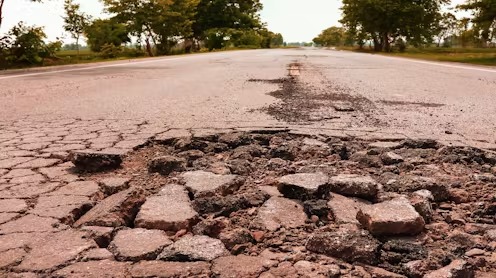


There are local councils in Australia that can’t afford to fix their roads, part of the problem is simply that they aren’t in Australia’s biggest states.
The problem arises from the archaic way grants to councils are handed out.
A federal parliamentary committee has just launched an inquiry into the sustainability of local government. One of the first places it should look is the distribution of federal funding.
Councils in remote locations rely heavily on grants.
Whereas a typical council in a city maintains a road network of about 600 kilometres over an area of 100 square kilometres, the Central Desert Regional Council in the Northern Territory has to maintain more than 1,700 kilometres, spread over 280,000 square kilometres.
Managing a massive road network is costly, as is providing services such as collecting bins and spraying weeds when residents are spread far and wide.
And remote councils find it harder than city councils to meet these costs. The Central Desert Regional Council has a population of just 4,000, compared to 100,000 for a typical suburban council.
High costs, low incomes
Fewer residents means fewer ratepayers to tax. The typical city council is able to raise nearly 90% of what it needs from rates and other fees. Remote councils raise less than half.
And remote councils can’t bring in income from other sources in the way that city councils can. It’s harder to charge for parking in Tennant Creek than in Sydney.
So remote councils rely on grants to make up the rest.
But there’s a problem: some states have more high-needs councils than others.
In New South Wales and Victoria, less than 1% of the population lives in remote areas, whereas in Western Australia it’s 6% and in the Northern Territory 40%.
It would make sense for federal government grants for councils to reflect this, but they don’t reflect it much.
The Commonwealth’s program of Financial Assistance Grants hands out more than A$3 billion of grants for councils each year.
There are two kinds of grants: general grants (about two-thirds) and roads grants. Separate grants from the Roads to Recovery program are allocated in the same way as roads grants.
Remote councils get less in the NT than NSW
For all three types of grants, the money is first divided between the states and territories, which then award grants to councils based on a set of principles.
But the general grants are divided between the states and territories on the basis of population.
This means NSW, which has fewer high-needs councils, gets just as much per person as the Northern Territory, which has many high-needs councils.
Because many NSW councils are almost self-sufficient, NSW is able to direct more of what it gets to the small number of councils with high needs.
States with more high-needs councils have to spread what they get more thinly.
The resulting disparity is stark: remote councils in South Australia get just one-quarter of the funding per resident that remote councils in NSW get. Remote councils in the Northern Territory get less than one-sixth.
Another problem is that the formula governing roads grants and Roads to Recovery grants is opaque and hard to understand. The reasoning behind it has been lost in the mists of time. It might date back to 1981 or even earlier.
It doesn’t take account of any changes to the road networks over the past 40 years.
Councils should be funded on the basis of need
This isn’t how the federal government normally distributes funds.
Revenue from the goods and services tax is distributed to states and territories in accordance with need.
Each year the Commonwealth Grants Commission uses up-to-date data to work out how expensive it is to provide the services each state needs and how much each state can raise itself.
Commonwealth funding for councils should be allocated in the same sort of way: on the basis of the needs of the councils and their ability to meet them.
The new inquiry presents an opportunity to put things right.







