


 Fast Retailing Raises Full-Year Forecast After Uniqlo Owner Beats Q3 Profit Estimates
  Oil and LNG Tankers Turn Back as Strait of Hormuz Security Risks Escalate
  Kioxia Bets on AI Memory Boom With Next-Gen NAND Production in Japan
  Samsung Chairman Lee Jae-yong Expected to Meet Nvidia CEO Jensen Huang on AI and Chip Partnership
  OpenAI GPT-5.6 Set for Wider Release After U.S. Commerce Approval, Report Says
  Japan Regional Bank Stocks Drop After Zentoshin Bankruptcy Sparks Credit Risk Concerns
  Wolfspeed Sues Navitas Over GaN and SiC Patent Infringement
  Elon Musk Says Anthropic Leads AI Race as Claude Models Challenge OpenAI
  SK Hynix’s $28 Billion U.S. Share Sale Draws Massive Demand Amid AI Chip Boom
  China 618 Smartphone Sales Drop 13% as Higher Prices Hurt Demand, Huawei Gains Market Share
  Oppenheimer Sees CNH Industrial as Top 2026 Agriculture Stock Pick on Dealer Consolidation Strategy
  Netflix, Disney, YouTube Eye FIFA World Cup TV Rights in Multi-Billion Dollar Battle
  SpaceX Stock Draws Bullish Wall Street Coverage Ahead of Nasdaq-100 Inclusion
  BHP Faces Port Hedland Strike Threat as Iron Ore Export Risks Grow
  Apple Tests China's CXMT Memory Chips as DRAM Maker Gains Global Market Share
  LG Energy Solution Q2 Profit Plunges 77% Despite Revenue Growth on Weak EV Demand
  Meta Cloud Ambitions Could Challenge AWS, Azure, and Google Cloud, Says Morgan Stanley


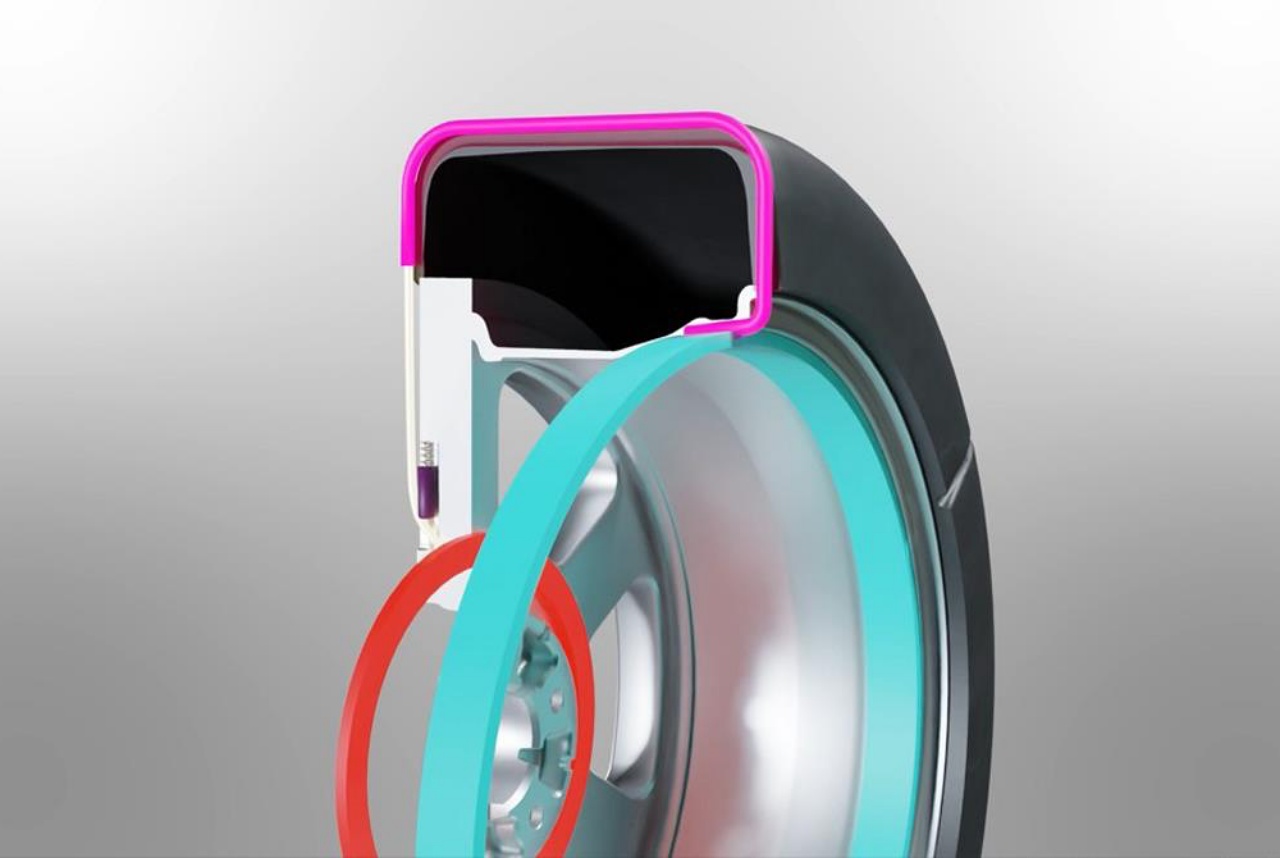
Hyundai Motor Company and Kia announced they have developed a special tire designed for roads during the winter season. They created the snow chain-integrated tire technology to boost safety while driving through slippery winter roads.
For their new tire innovation, Hyundai Motor and Kia said they used shape memory alloy modules that are integrated inside the wheel and the tire.
How the Snow Chain-Integrated Technology Works
The new tire innovation consists of a wheel and tire assemblage that features radial grooves at regular gap spaces. Inserted between these channels are modules made of shape memory alloy.
According to Korea Joongang Daily, once the driver presses the button, the modules will immediately jut out and will serve as a "snow chain." In normal driving conditions, the shape memory alloy inside the wheel is squeezed into the letter "L" shape and does not touch the surface of the road.
But when the driver deploys or activates the function, the shape memory alloy will form into a "J" letter shape and push the module out of the tire so it can touch the road's surface. This will enhance the tire's grip and stability, making the drive through the snow or icy road safer for drivers.
Having these snow chain-integrated tires developed by Hyundai Motor and Kia gets rid of the inconvenience of putting the snow chains on the tires every time the road is slippery or has snow on it.
"This innovation, which will hopefully be introduced on Hyundai and Kia vehicles someday, reflects our commitment to turning advanced technologies into real-world solutions that benefit customers," Hyundai Motor's head of Advanced Chassis Development Team, Park Joon Mo, said in a press release. "We will continue to develop technologies that enhance the safety and convenience of our vehicles and bring value to our customers."
Patent for the New Winter Tire Technology
Meanwhile, as this is a new creation, Hyundai Motor and Kia have applied for patents for the innovative snow tire technology. The companies filed their patent application in both South Korea.
The automakers are set to discuss the mass production of this new product after further technical development and tests to check its durability and overall performance. Regulatory reviews are also needed before Kia and Hyundai can proceed with the manufacturing in large quantities.
Photo by: Kia Media Center







