


 Baidu Approves $5 Billion Share Buyback and Plans First-Ever Dividend in 2026
  SpaceX Updates Starlink Privacy Policy to Allow AI Training as xAI Merger Talks and IPO Loom
  SoftBank Shares Slide After Arm Earnings Miss Fuels Tech Stock Sell-Off
  SpaceX Reports $8 Billion Profit as IPO Plans and Starlink Growth Fuel Valuation Buzz
  OpenAI Expands Enterprise AI Strategy With Major Hiring Push Ahead of New Business Offering
  Tencent Shares Slide After WeChat Restricts YuanBao AI Promotional Links
  Instagram Outage Disrupts Thousands of U.S. Users
  AMD Shares Slide Despite Earnings Beat as Cautious Revenue Outlook Weighs on Stock
  Elon Musk’s Empire: SpaceX, Tesla, and xAI Merger Talks Spark Investor Debate
  Google Cloud and Liberty Global Forge Strategic AI Partnership to Transform European Telecom Services
  Nvidia Nears $20 Billion OpenAI Investment as AI Funding Race Intensifies
  SoftBank and Intel Partner to Develop Next-Generation Memory Chips for AI Data Centers
  Elon Musk’s SpaceX Acquires xAI in Historic Deal Uniting Space and Artificial Intelligence
  Nvidia Confirms Major OpenAI Investment Amid AI Funding Race
  Oracle Plans $45–$50 Billion Funding Push in 2026 to Expand Cloud and AI Infrastructure
  Nintendo Shares Slide After Earnings Miss Raises Switch 2 Margin Concerns


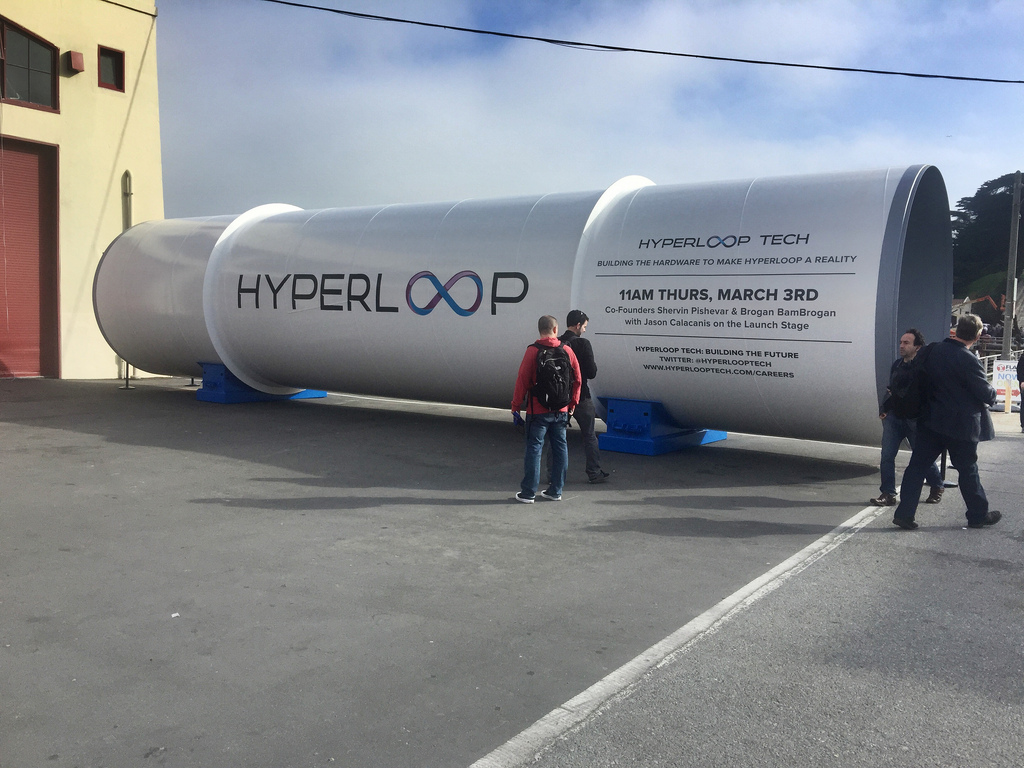
The tech industry is eagerly awaiting the day when passengers can hurtle from one end of the US to the other at the speed of sound on the Hyperloop. Based on the success of the most recent test, which involved the actual pod, this dream is one step closer to reality. Reaching speeds of 192mph, it’s not exactly supersonic, but it is a step in the right direction.
The whole premise behind the Hyperloop is putting a pod carriage inside a vacuum tube, where magnetic levitation (maglev) technology will propel it forward at top speeds of over 760mph. This would effectively cut land travel from Los Angeles to San Francisco in mere minutes. The recent test by Hyperloop One is still quite a bit slower than that, but it’s still impressive, WIRED notes.
Made of aluminum and carbon fiber, the pod that was placed inside the tube is 28 feet in length, has a semicircular circumference and has a front end that looks like a bird’s beak. The tube itself is made of concrete and spans 1,600 feet in length.
By reducing air pressure inside the tube to practically nothing and using maglev to reduce friction, the pod was able to hit near 200mph in five seconds. The crewmembers at Hyperloop One were incredibly happy with the results and CEO Shervin Pishevar even said that this marks the start of the transportation technology’s transition to commercialization.
"This is the dawn of the age of commercialization for the hyperloop,” he said.
Before anyone starts jumping in hysterics, however, it’s worth pointing out that the test highlighted quite a few compromises with regards to the technology’s initial goal. When Tesla CEO Elon Musk envisioned a day when transcontinental travel would only take a few hours, it involved a much smaller pod and an actual loop, hence the name.
As The Verge pointed out, however, some of these elements had to be changed. The pod is now the size of a bus and the vacuum tubes will likely not be a loop. This will significantly impact the efficiency and utility of the system, which might even make it more like a glorified bullet train than anything.













