


 Deere & Company Agrees to $99 Million Settlement Over Right-to-Repair Dispute
  Britain Courts Anthropic Amid US Defense Department Dispute
  Foreign Investors Pour $18.65 Billion into Japanese Stocks Amid Market Stabilization
  Disney Plans to Cut 1,000 Jobs Amid Ongoing Restructuring Efforts
  Pershing Square Bids €30.40 Per Share to Acquire Universal Music Group in $9.4B Deal
  LG Electronics Posts Record Q1 Revenue Amid Strong Demand and Cost Improvements
  Private Credit Under Pressure: Is a Slow-Motion Crisis Unfolding?
  China Vanke Seeks Bond Extension Amid Mounting Debt Crisis
  Pony.ai, Uber, and Verne Launch Europe's First Commercial Robotaxi Service in Zagreb
  Goldman Sachs, ANZ Cut Oil Forecasts Amid U.S.-Iran Ceasefire Hopes
  UAE's Largest Natural Gas Facility Suspended After Attack-Triggered Fire
  Bank of America Identifies Top Asia-Pacific Semiconductor Stocks Poised for AI-Driven Growth
  Ford Issues Major Recall on Over 422,000 Vehicles Due to Windshield Wiper Defect
  SpaceX IPO: Retail Investors to Play Historic Role in Record-Breaking Public Offering
  Paramount Skydance Secures $24B from Gulf Sovereign Wealth Funds for Warner Bros. Discovery Takeover
  China's AI Stocks Surge as Zhipu and MiniMax Hit Record Highs
  Kia Cuts EV Sales Target for 2030 Amid Slowing Demand and U.S. Policy Shifts


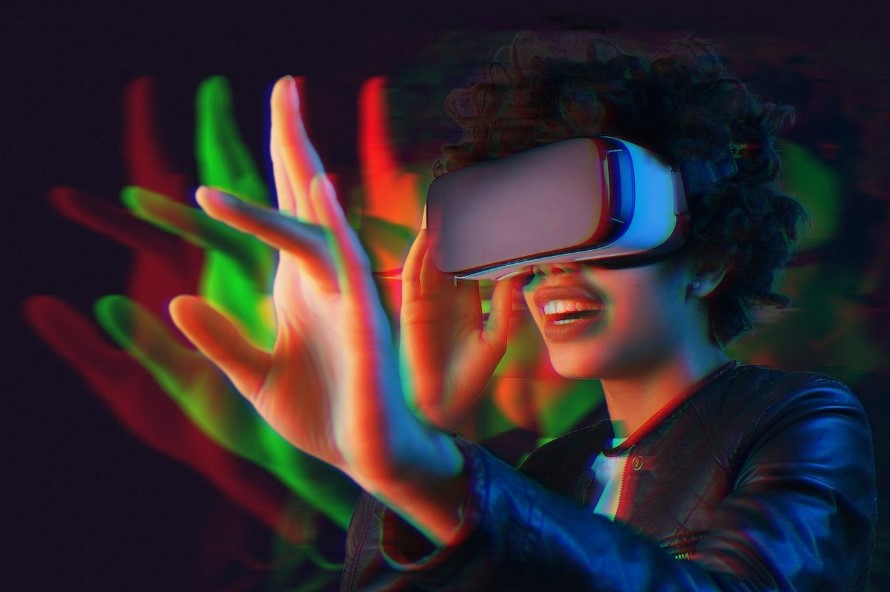
Decentraland, Ethlas, and Illuvium all have a metaverse project running. The games are among the first to throw a lot of resources into building a metaverse. The efforts are a reaction to monopolizing the metaverse.
Beyond the typical players in the metaverse that make games, nearly 98% of executives in the existing gaming industry believe that the metaverse will be the next frontier of virtual gaming. Their views arise from gaming virtual realities that have existed for a while. The immersive experience offered by the metaverse will create a big selling point for games within the decade, as already the virtual gaming industry has proved a monumental success. In addition, technologies like 4G and 5G will be imperative in accessing websites such as https://cryptobettings.net and other associated gaming technologies.
The metaverse goes beyond gaming. While gaming companies seem to be ahead of the pack in developing the metaverse, tech giants are the ones building the infrastructure to support many areas including business, virtual libraries, and virtual holidays. Regardless, the growth of the metaverse will have a significant influence on the gaming industry.
Influence of New Technologies on Gaming
The gaming industry is a packed space with new entrants coming up with new twists to invite more people to their products. Newer technologies in the metaverse increase the potential in gaming, making it go beyond the current scope that is highly saturated.
New technological frontiers such as the one witnessed when mobile phones shifted from dumb phones to smartphones create new revenue fronts for game developers. The mobile gaming industry might reach excesses of over $200 billion and will continue to grow as smartphones continue to become more affordable. In 2022, a snapshot of the gaming figures in smartphones averaged up to $1 billion worth of purchases from avid and non-avid gamers a week.
Smartphones went mainstream in the late 2000s, after which companies, especially those from China, picked up the mantle to provide affordable phones all over the world. Currently, smartphone gaming makes up 60 percent of the gaming industry.
The metaverse is now at a point where mobile technology was in the late 2000s, and the acceleration of 5G technologies that continue to deploy all over the world will make it accelerate much faster.
What Impact Will The Metaverse Have On Gaming?
The future of the metaverse with the gaming industry is easy to trace by looking at what smartphones did to the gaming industry within the last decade.
At the start of the smartphone era, mobile games were majorly Java-based, with simple UIs that were easy to create. The games had some subscription models, but not to the extent they do today. The technology then was primitive compared to what is there today.
Gaming companies wanting a piece of the smartphone market had to hire new skills to develop games in both iOS and Android. The two OS were relatively new in the market; so, many developers had to learn new coding skills and unlearn some that concerned the older technologies.
The same will happen to the current wave moving towards the metaverse. Companies looking to leverage the futuristic technologies will have to hire new developers that understand the basics and the complex issues to do with the blockchain, which might be the bridge to payments made in the metaverse.
In addition, gaming companies will have to invest a lot of money, resources, and time in research and development to build new business models around the metaverse.
Some research issues to consider will include methods of payment while using the metaverse. How customers will access individual games in the metaverses, and the manner multiplayer games will work in the highly immersive virtual environments.
Final Remarks
New technologies have always affected how existing technologies work. The metaverse, though not entirely game related, would have an immense sway on the direction the gaming industry will take in the future. That means, companies will hire new talents and reconfigure their business models to survive.
This article does not necessarily reflect the opinions of the editors or management of EconoTimes







