


 Cyber attacks? Bioterrorism? To ‘Pace the Frontier’ of AI effectively, we must improve our anticipatory thinking
  Hyundai Delays In-House ADAS, Turns to Nvidia
  Anthropic Eyes Second Straight Profitable Quarter Ahead of Potential IPO
  Unsustainable – or manageable? We don’t yet know how data centres will impact Australia’s environment
  Nvidia CEO Jensen Huang Expected at Trump-Xi State Dinner
  Physicists zoom into the birth of cosmic rainstorms with new CERN study
  Trump Vows to Keep U.S. Ahead of China in AI Race
  Synthetic data could ease people’s concerns about privacy breaches. But who gets to create it?
  Bill Gates Warns Governments Are Unprepared for AI Disruption
  Z.AI Shares Slide 7% After $5 Billion Fundraising
  Trump Rejects Calls for Tougher AI Regulation
  SoftBank Shares Jump 8% as SB Energy IPO Optimism Builds
  Cathie Wood Backs AI Slowdown as Safety Concerns Grow
  China’s robots can run faster than Usain Bolt – now they are being prepared for war
  Big AI wants to slow down AI research. Is it a safety pause or a strategic retreat?
  Meta CEO Zuckerberg Backs Independent AI Safety Reviews Over Development Slowdown


 Add as a preferred source on Google
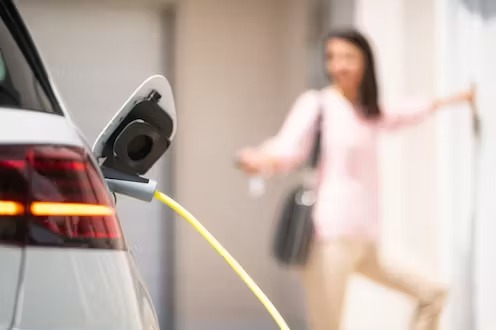

Cars that burn petrol and diesel must be replaced with renewable alternatives if the climate crisis is to be overcome. Electric vehicles (EVs) are widely viewed as the best option available.
This is because EVs can be powered by renewable electricity from the grid, avoiding the need for fossil fuels. They can store and release this energy with close to 100% efficiency, whereas the internal combustion engine in most modern cars can only usefully convert about 30% of the energy from fuel. EVs can also be recharged thousands of times, offering lifetime mileages similar to conventional cars.
This engineering feat is possible thanks to the rechargeable battery.
Lithium-ion is the highest performing battery technology commercially available. But demand for these batteries is rocketing and the cost of raw materials for making them is high – the price of lithium carbonate alone increased tenfold between late 2020 and 2022. With over 84% of known lithium deposits concentrated in Argentina, Australia, Chile and China, securing the raw materials for lithium-ion batteries can be difficult and expensive for manufacturers.
Thankfully, batteries based on sodium ions rather than lithium could overcome these problems – and ultimately lead to EVs that are cheaper to buy.
Sodium-ion versus lithium-ion
A battery can be thought of like a sandwich: its two electrodes (called the cathode and anode) are like bread slices containing an electrolyte filling. The electrolyte is typically a liquid which soaks each of the electrodes and holds a high concentration of ions dissolved within it.
When the battery is being recharged, the ions move towards the anode and are stored inside until the energy is needed. When the car is switched on they shift back the other way into the cathode, generating an electric current through the external circuit which powers the motors driving the car forward.
Lithium is the best element to use since the ions are small and light. This means they can be packed tightly inside the electrodes and move quickly, producing batteries capable of charging in as little as 20 minutes.
But in a close second place is sodium.
Positioned immediately beneath lithium in the periodic table, sodium shares many chemical properties, such as the ability to move as quickly through battery materials. But it benefits from being 1,000 times more abundant on Earth than lithium.
The key material for making sodium-ion batteries, sodium carbonate (or soda ash), can either be found in rocks and salt lake brines or it can be made in factories from limestone and salt. Both of these minerals are widely accessible and practically inexhaustible.

Sodium-containing materials are widely accessible and practically inexhaustible. Timo Volz/Unsplash, CC BY
Shifting from lithium to sodium-ion batteries could reduce dependence on critical minerals and yield cheaper battery packs. But are they good enough yet to power EVs?
With a single full charge, the newest lithium-ion batteries can power an EV for around 300-400 miles.
Unfortunately, sodium ions are three times heavier and a third larger than lithium ions. This means the electrodes in sodium-ion batteries must be thicker and heavier to hold the same amount of energy.
Cost benefits
Recent innovations mean that sodium batteries are beginning to rival some lithium-ion systems, in particular, those which use lithium iron phosphate cathodes, known in the industry as LFP. Although LFP-containing batteries cannot store energy as densely as the best-in-class technology, these batteries are of growing importance as they are typically around 20% cheaper.
While a range of sodium-ion cathodes are being developed, the batteries packing the most energy use layered oxide cathodes. These batteries are good enough to deliver cheaper passenger EVs capable of 150-250 miles. Recent analysis has shown that the latest sodium-ion battery packs can even undercut the cost of LFP batteries thanks to their cheaper raw materials.
The result is that sodium-ion technology can deliver low-cost EVs with sufficient range to suit commuters and city drivers in particular.
China has already recognised this potential. The Chinese battery company CATL recently revealed it intends to supply Chinese car manufacturer Chery with sodium-ion batteries for a new EV model. Two other Chinese manufacturers, HiNa and JAC group, have also announced a sodium-powered model capable of a 155-mile range, reportedly selling for around US$10,000 (£8,220) in China.
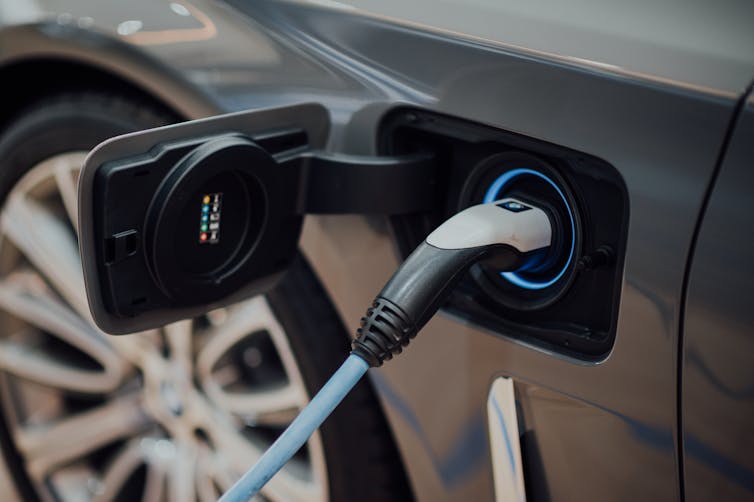
Sodium-ion batteries can produce cheaper (albeit lower-range) EVs. Chuttersnap/Unsplash, CC BY
The outlook for sodium-ion EVs
There is still significant scope to improve the energy density of sodium-ion batteries.
One bottleneck is the cathode. The best layered oxide cathode materials can only store about half as many sodium ions as the anode, effectively meaning twice as much cathode material must be used to balance both sides of the sandwich, adding to the battery weight.
Research is underway to develop new cathode materials which can store more sodium ions in their structure and deliver a higher voltage output, translating to improved EV driving ranges.
Sodium-ion batteries are now beginning to enter the EV market. Just how far they will go in competing with shorter-range lithium batteries remains to be seen and depend on economic headwinds and materials science advances.
You can be sure, at least, that you’ll be hearing a lot more about sodium-ion EVs.







