


 BlackRock Seeks FDIC Oversight Deadline Extension to March
  Intel Secures $8.5 Billion in New Funding Amidst Strategic Revamp and Government Support
  Qualcomm Gains on $60B Amazon AI Chip Deal
  Visa Expands Digital Wallet Capabilities with Visa Commercial Pay
  Japan, U.S. Discuss $19 Billion GlobalFoundries Chip Plant
  Standard Chartered Joins China's Digital Yuan Trials, Eyes Cross-Border Payments
  NASA, Boeing Discuss Expanding Starliner Missions
  Coinbase Refines Subpoena for SEC Chair Gensler Amid Ongoing Legal Battle
  Robinhood CEO Vlad Tenev: Blockchain Can Open Private Markets to Retail Investors
  Wizards of the Coast Balances High-Level Play in Final 5th Edition Dungeons & Dragons Campaign
  CFTC Asserts Authority Over Prediction Markets Amid Insider Trading Concerns
  Apple Pay Set for India Launch With Axis Bank
  Big AI wants to slow down AI research. Is it a safety pause or a strategic retreat?
  Databricks to Invest $350 Million in Singapore AI Expansion
  SK Hynix, Intel Discuss U.S. Memory Chip Production Deal
  Indian Banks Disburse Employee Benefits Through Digital Rupee, Boosting RBI's Target Transactions
  Crypto Markets Surge: Bitcoin, Ethereum, and Solana Lead Gains Amid Economic Optimism


 Add as a preferred source on Google
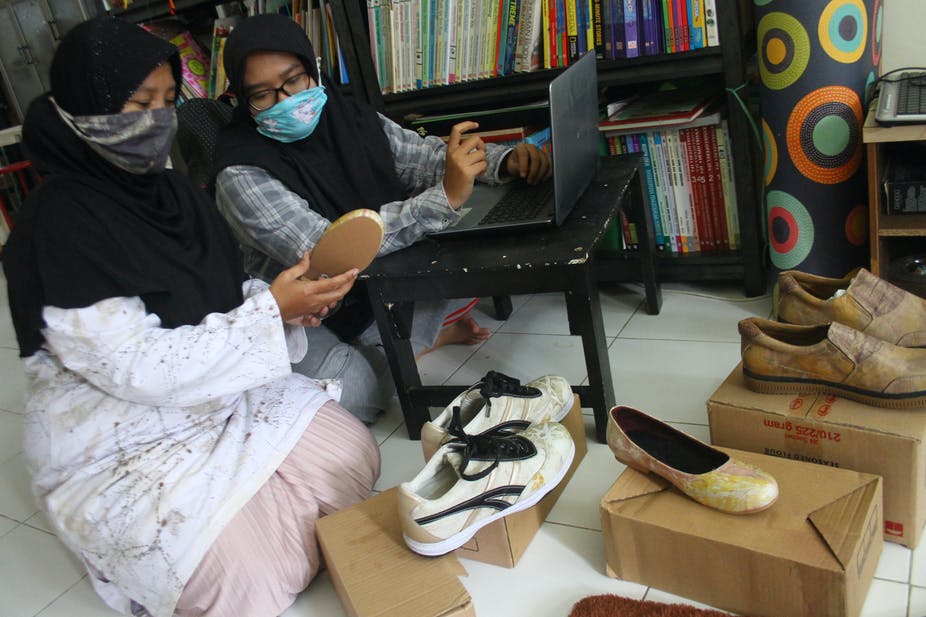


In Indonesia — Southeast Asia’s largest economy — small and medium enterprises (SMEs) contribute to around 60% percent of the nation’s economy and absorb 97% of its domestic workforce. However, while there are more than 60 million SMEs in Indonesia, only 12% can get financing or bank loans.
The COVID-19 pandemic has made the situation worse for these SMEs, as almost 50% (around 30 million SMEs) have been forced to close temporarily, as demand plumetted due to the pandemic.
That’s where fintechs can help. This term refers to a combination of financial services and technology that aim to make it easier for people to save, borrow and invest online.
Lending services offered by fintech companies like Investree and Tunaikita could help these small firms to get loans at a lower cost with digital-friendly services that outstrip conventional banks.
Peer to peer lending
Data from Indonesia’s Financial Services Authority showed almost 25% of the country’s population doesn’t have access to banks.
SME entrepreneurs suffer greatly from limited access to banks, which makes it difficult for to obtain loans and fund business expansion.
Currently, there are about 157 fintech lending firms in Indonesia, with a total asset of almost Rp 3.2 trillion, according to the country’s Financial Services Authority’s Report in August 2020.
One lending services offered by fintech firms is called peer to peer (P2P) lending. Under this loan mechanism, an individual or a company can lend money to others in return for an interest.
At least 54% of 12.8 million P2P borrowers are SMEs. The lending accounted for 55% from Rp 54.71 trillion of loans that the fintech sector disbursed last year.
A study by Universitas Indonesia shows P2P lending helps SMEs scale up their business, eventually helping them qualify for bigger bank loans.
Online sellers that borrowed from the P2P lending platform were able to increase their income from the initial average of Rp 807 million (US$57,046) to Rp 3.5 billion.
How the government can boost fintech expansion
The government needs to support the expansion of fintech so they can help more SMEs access loans and scale up their business. Supporting SMEs is important for the Indonesian economy, given their massive contribution.
Indonesia’s Financial Services Authority (OJK) also recently launched its “Digital Finance Innovation Road Map and Action Plan 2020-2024”.
This road map complements a “regulatory sandbox” operated by OJK, in which fintech startups can conduct live experiments to trial new products or business models in a controlled environment.
It also allows OJK to receive immediate feedback and test upcoming regulations. With a more diverse range of loan products, SMEs stand to benefit by finding products best suited to their business.
However, the government still needs to support this with the appropriate infrastructure, such as high-speed, affordable, and reliable internet connection.
The government must also ensure all SMEs are well informed about financial service options available for them, including those offered by fintech companies.
What’s needed is collaboration between all parties — including fintech firms, the banking industry and government — to support Indonesia’s SMEs during the pandemic.







