


 Qualcomm Stock Jumps on Amazon AI Chip Deal
  Anthropic IPO Marketing Expected to Start in Mid-October
  OpenAI Launches GPT-6 Astra With Advanced AI Agent Capabilities
  Tesla Cybercab Rides Launch in Austin as NHTSA Reviews Rollout
  Longsys Raises $903 Million in Hong Kong IPO as Shares Debut Flat
  Spire Healthcare Shares Jump on £1.03 Billion Takeover Deal
  Google Revamps EU Search Results to Meet DMA Rules
  Xiaomi Shares Jump on Europe EV Expansion Plan
  Novartis Shares Plunge After Muscle Drug Fails Phase III Trial
  South Korea, US Discuss Chip Investments Amid Tariff Plans
  GSM Eyes US, Europe Expansion Ahead of 2028 Hong Kong IPO
  Nvidia CEO Says AGI Has Arrived With OpenAI GPT-6 Astra
  Volkswagen Approves 50,000 More Job Cuts in Major Restructuring
  Adobe Names Anil Chakravarthy CEO as AI Push Accelerates
  Brazil Court Suspends Sigma Lithium Mine Operations
  SpaceX Turbine Push Unlikely to Threaten Howmet, Bernstein Says
  Milei Threatens Falkland Oil Firms With Sanctions


 Add as a preferred source on Google

British car company Jaguar Land Rover’s owner, the Indian conglomerate Tata, is expected to finalise a deal soon to build a multi-billion pound electric vehicle (EV) battery plant in the UK.
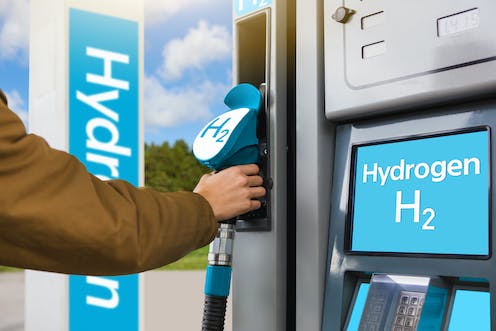
This is a welcome development that could propel the UK car industry into a new era. But if UK manufacturers could develop hydrogen-fuel vehicles and infrastructure alongside EVs, it could create a hydrogen economy with fuel costs below today’s petrol and diesel prices.
British car makers are trying to pivot to meet changing global demands. More than 300 million electric vehicles will be required by 2030 if the world is to reach net zero emissions by 2050, according to the International Energy Agency.
Assuming an average battery size of 60 kilowatt hours (the current capacity of a standard Tesla Model 3), a total of 18 million megawatt hours will be required to power those EVs by 2050. This would consume nearly 10% of total known global lithium resources.
But the environmental and social impacts of this amount of mining, the current low rate of mineral recycling from EV batteries (5% for lithium at the moment and the demand likely to be placed on electricity grids to power these vehicles all pose serious challenges to the world’s ability to transition to EVs before 2050.
This is why the means to develop hydrogen-powered vehicles should be developed alongside that for EVs in the UK. There are two types: hydrogen engines burn hydrogen, a zero-carbon fuel, in the same way as a gasoline engine burns petrol.
Alternatively, hydrogen fuel cell vehicles (HFCVs) are powered by generating electricity from hydrogen using a device called a fuel cell. They can drive for longer and refuel faster than EVs, making HFCVs a practical option for long-distance travel and especially for heavy goods vehicles such as lorries.
But hydrogen refuelling stations are costly to build and operate. They range from US$1.5 million to US$2.5 million (£1.2 million to £2 million), compared to the cost of an EV fast-charging station at US$75,000 to US$150,000.
Plus, the estimated annual running costs for a renewable electrolysis hydrogen refuelling station are between US$30 and US$35 per kw versus US$2 to US$6 per kW for an EV charging station.
This probably explains why, as of March 2023, there were only 11 public hydrogen refuelling stations open in the UK, compared to more than 57,000 public EV charging points. Indeed, under current conditions, only 0.01% of cars will run on hydrogen by 2050.
But some research suggests hydrogen could be used to decarbonise heavy vehicles for long-distance transport. And from there, a UK hydrogen economy could develop.
Building a hydrogen economy
Our research shows that blue hydrogen – which is produced using natural gas with emissions captured and stored – could presently be sold for £1.90 to £2.80 per kilogram, with nearly complete carbon capture.
And, as renewable energy costs continue to fall and there is further development in the electrolysis and seawater desalination techniques used to produce climate-neutral hydrogen, it could also fall in price by 2050 to below US$1.00/kg in Chile and the Middle East, and US$1.80-US$2.50/kg in Europe. The different costs across countries are due to differences in electricity prices for solar or other clean energy generation.
One kilogram of hydrogen contains roughly the same amount of energy as a US gallon or 3.8 litres of petrol (slightly less than one gallon of diesel fuel). This means the cost of hydrogen could become much cheaper than petrol or diesel fuel, which is priced at roughly £5.40 and £5.80 per 3.8 litres respectively in the UK right now.
To achieve these lower prices, a UK hydrogen economy would require technology innovation, supply chain optimisation and economies of scale to reduce costs. Companies, including BP, are already investing in this vision. Toyota, Hyundai and Honda were also among the 13 founding members of the Hydrogen Council launched in 2017 to explore and invest in hydrogen as a low-carbon technology.
There are currently 1,040 projects representing US$320 billion in direct investment due to complete between now and 2030, according to the Hydrogen Council. But it says this number needs to increase more than 20 times by 2030 to hit current net zero objectives.
Two hydrogen developers, H2 Green and Element 2, want to create a UK-wide network of 800 hydrogen refuelling stations for HGVs by 2027, rising to 2000 by 2030, with car access also available. And, by building on hydrogen infrastructure for HGVs, other industries could piggyback on the infrastructure, including public transportation, shipping, industrial applications and eventually cars.
Research into the hydrogen supply chain also hints at a brighter future for hydrogen-fuelled vehicles as all of these developments help to bring down the cost of this fuel. If this happens, hydrogen could become a major player in global energy markets by 2050.
This would require transportation capabilities. In many parts of the world, retrofitting existing pipelines for export would probably be more viable than building new pipelines. This would reduce investment costs by more than 65%. New technology also helps exporters to better store and transport hydrogen on barges, rail and trucks.
Of course, hydrogen fuel cell technology still requires massive nickel and cobalt mining, just like EV batteries do. So, co-developing EVs and hydrogen-powered vehicles – and the necessary infrastructure – would be sensible. This would put countries like the UK in a stronger position to transition to net zero.

Retrofitting existing pipelines to carry hydrogen will be easier and cheaper than building new new ones. FooTToo/Shutterstock
Regulators and businesses
In the next few decades, the UK government’s hydrogen strategy for transport focuses more on rail, aviation and freight transport (HGVs and trucks) than cars. Hydrogen-powered heavy trucks will rely on a relatively small number of refuelling stations that can be supplied by local production, rather than by public refuelling infrastructure.
The support is there to create a larger hydrogen economy. A 2021 UK government plan for a world-leading hydrogen economy aims to create more than 9,000 UK jobs and unlock £4 billion in hydrogen investment by 2030.
But hydrogen development requires even more supportive policies that encourage investment, stimulate demand, push technological boundaries and enable infrastructure access, while also bringing down costs. By creating a hydrogen economy alongside EV development, the UK can help unlock hydrogen’s full potential.







