


 Zcash Price Analysis: Can ZEC Rebound Above $1,300?
  Ethereum Foundation-Linked Wallets Move $11.13M in ETH to Kraken
  XRP Price Holds $1.35 Support as Bears Target $1.25
  XRP Ledger Agentic Payments Surge Past 13 Million Transactions
  Gold Prices Hit One-Week High as Oil Falls, Fed Rate Outlook Weighed
  UK Finance Minister Healey Calls for Fiscal Discipline Amid Global Risks
  Gold Prices Rise as Dollar Weakens, Treasury Yields Fall
  Dogecoin Price Rises as Bitwise Plans DOGE ETF Closure
  Trump Calls for Zelenskyy Replacement Amid Russian Diesel Deal
  S&P 500 Rally Masks Losses for Over 40% of Stocks in 2026
  Ledger Investigates Alleged $86 Million Crypto Wallet Theft
  Dollar Near 18-Month High as Euro, Yen and Pound Weaken
  US-Led Coalition Targets Global Factory Overcapacity
  Oil Prices Slip as Trump Rules Out Iran Strike Before Midterms
  Arthur Hayes Announces FLOP Testnet Launch Within Weeks
  US Dollar Rises for Fourth Week as Fed Rate Hike Bets Grow
  Evernorth Nasdaq Listing Nears as XRP Price Falls


 Add as a preferred source on Google
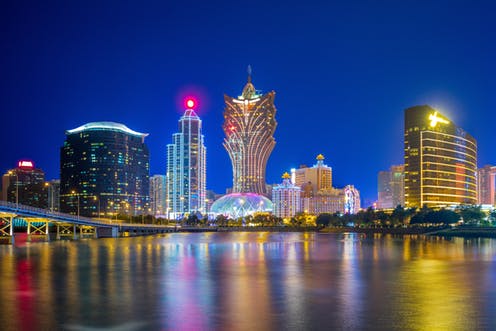

Macau is China’s answer to Las Vegas. But the former Portuguese colony has long surpassed the City of Lights as the world’s casino capital, with revenue from gambling receipts exceeding the entire state of Nevada back in 2010. As well as drawing in the punters, it has the glittering architecture to match.
The story of Macau is one of globalisation and the rise of China. It is a globalisation story because of the role played by foreign multinational casino companies. And it is a story of the rise of China because it has been the economic prosperity of its citizens that has allowed them in great numbers to travel, see the world, and gamble.
Macau returned to Chinese rule in 1999 as a special administrative region, which means it has different laws to the mainland. It is the only part of Greater China (which includes China, Hong Kong and Macau) where gambling is legal, making it the country’s sole gambling destination.
In the years before the 1999 handover, the environment in Macau was fraught, with organised crime a violent presence competing for access to the sub-contracted VIP gaming rooms. These VIP rooms, which host high stake games in a private setting, are another dynamic behind Macau’s success. They made the Macau gambling experience different from that of other casino destinations.
Macau’s focus on high-spending customers, with private rooms and special privileges – rather than mass market gamblers – is the source of much of the casinos’ revenue. Casinos were originally built around VIP rooms. These were sub-contracted to gambling promoters who shared in the profits from bringing in wealthy gamblers. These high rollers made up 66% of total casino revenues in 2013.
International investment
Casino operations generate substantial tax revenue for the government: in 2001 it was 40% of all tax revenue collected. Ten years later, government income from casino gaming taxes amounted to 81% of all tax revenue collected. This massive change is the result of the decision to open up the casino industry and invite foreign firms to compete for a casino license.
Until 2001, only one company was licensed to operate casinos and for four decades this was monopolised by a company called Sociedade de Turismo e Diversões de Macau, SA (STDM). From 2002, casino licences were awarded to several foreign multinational firms and joint ventures. This included big firms from Australia, Hong Kong and the US, with recognisable names from Vegas, such as Las Vegas Sands, MGM, Galaxy and Wynn Resorts.
They invested heavily in big new casino resort complexes, with luxury hotels and high-end shopping malls. Given Macau’s tiny size – it originally consisted of a mainland peninsula and two small islands measuring 11.6 square kilometres in 1912 – land reclamation projects were necessary to host the burgeoning industry. By 2010, the territory measured 29.7 square kilometres, including six square kilometres of new land connecting the small islands of Coloane to Taipa, which plays host to the big casino complexes.
These new casinos have provided some employment opportunities for local citizens, but the greater impact for the economy has been the tourist visitor numbers and the tax revenue generated. After a decade of ever-increasing growth in gaming revenue with the opening of new casinos, tax revenue from the sector peaked in 2014 and then declined after China’s president, Xi Jinping instituted a widespread anti-corruption campaign.
The VIP gaming rooms in Macau became seen by the government in Beijing as a massive leakage of capital from the Chinese economy. A large part of the big money being gambled by these VIPs was seen as the proceeds of corruption and bribery on the mainland.
In 2014, gaming tax revenue provided 84% of the Macau government’s total revenue; by 2017 it had declined to 79%. But these percentages conceal the decline in the actual amount available to the government, from US$20.1 billion in 2014 to US$15.7 billion in 2017. This is because a number of Chinese elites eschewed Macau’s casinos to avoid scrutiny during Xi’s corruption crackdown.
Casino revenue now appears to have stabilised, helped by a move in Macau away from relying on the VIP sector and towards mass market entertainment. The government has also encouraged diversification beyond the casino gaming room and, like Las Vegas, it is looking to attract exhibitions and events to be held there.
The new bridge connecting Macau with Hong Kong should support increasing tourist visits by easing travel to the territory, further supporting diversification. But Macau must increasingly contend with neighbouring rivals. The anti-corruption campaign encouraged Chinese gamblers to visit other Asian casino destinations, including new resorts in Singapore and Manila in the Philippines.
Modern Macau is built on China’s rise and the increased wealth of its citizens that this has brought. Macau’s continued success is contingent on its ability to attract the mass market gambler, along with other tourists, as a vacation destination. As China’s middle class continues to grow, it should guarantee a steady supply for years to come.







