


 ECB Warns of Rising Inflation Risks Amid Iran War Energy Shock
  Goldman Sachs Cuts 2026 Copper Price Forecast Amid Global Growth Concerns
  US Dollar Dips as Iran Rejects Ceasefire Amid Rising Middle East Tensions
  Gold Prices Surge to Three-Week High as Trump-Iran Ceasefire Weakens Dollar
  U.S.-China Trade Talks: Trump and Xi Set for Summit Amid Rare Earths Focus
  Sterling Slides as Dollar Holds Firm Amid U.S.-Iran Tensions
  Xi Jinping Pushes Demand-Driven Strategy to Modernize China's Service Sector
  U.S. Stock Futures Surge as Trump Announces Iran Ceasefire, Oil Prices Plunge
  U.S. Futures Slip as Iran Rejects Ceasefire and Trump Deadline Looms
  RBI Holds Interest Rates Steady Amid Middle East Tensions and Global Uncertainty
  Italy's Service Sector Contracts for First Time in 16 Months Amid Rising Costs and Weakening Demand
  Asian Stocks Surge as U.S.-Iran Ceasefire Deal and Samsung Earnings Boost Market Confidence
  Asian Markets Hold Steady Ahead of Trump's Iran Deadline as Oil Tops $110
  Trump-Iran Ceasefire Sends Dollar Tumbling as Global Currencies Surge
  China's Fermented Feed Push: Cutting Soybean Dependence Amid Trade War
  Asian Currencies Hold Steady as Trump's Iran Deadline Rattles Markets



A meeting of some of China’s most senior politicians at the end of April 2023 concluded with a fairly cautious assessment of the country’s economic recovery. Things are improving, they said, but domestic demand needs to improve.
The meeting in Beijing, headed by President Xi Jinping, was a review of China’s first-quarter economic performance and set the tone for how the Communist Party will respond. On this occasion, the key message was the need for a return to pro-growth policies.
Those policies, which will have enormous impact across the world, will be worked out over the coming months and years in a political system which can appear fairly bewildering to outsiders.
But there is a fixed structure in place, with key moments when China makes plans for its – and in effect the world’s – economic and political future. Here is a brief guide to some of the most important recurring events in China’s decision-making calendar.
Two sessions
The national legislature of China (around 3,000 delegates) meets for two weeks every March at the “two sessions”. A progress report of sorts, the two sessions often indicate the planned direction of Chinese policy.
For instance, after the 2019 event, I wrote about how the two sessions revealed China’s desire to improve its level of innovation. This involved major investment in research and development capability, a focus on modernising traditional industries through internet platforms, and becoming a major international player in artificial intelligence.
In 2023, the two sessions’ headline moment was the official declaration of President Xi Jinping’s third term as general secretary of the Chinese Communist Party. It was a historic moment, but entirely expected, as the move had already been agreed at the party’s congress last October.
The current Chinese policy focus on investing in technology and the urgent vying for microchip independence were both hinted at during two sessions events.
Study sessions of the politburo
The “politburo” is the name given to the top tier of the Communist Party’s “central committee”, and meets frequently to decide on relatively short term, day-to-day affairs. Its top ranking seven members also hold monthly meetings known as “study sessions”, where they learn from experts about subjects considered to be of strategic importance.
Afterwards the leaders publicly outline related policy preferences and priorities. For example, after years of studying new technologies to drive industrial policies and encourage investment, during one 2018 study session the focus turned to developing a new generation of artificial intelligence.
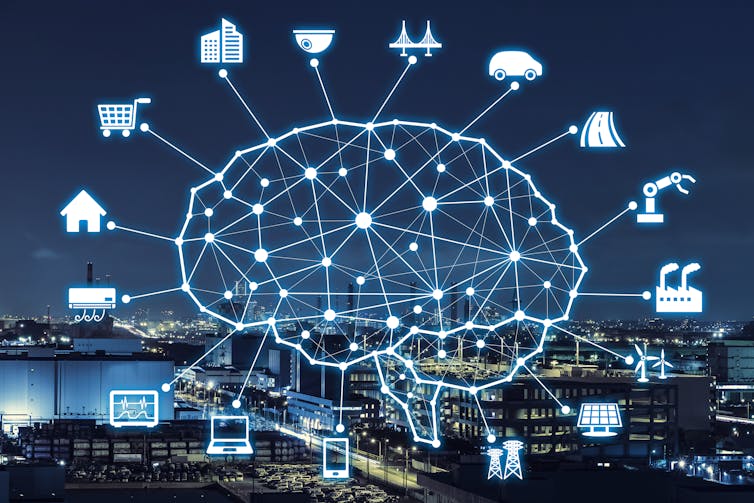
AI investment is a priority. metamorworks/Shuttterstock
This led to a marked increase in government investment and a boom for companies such as Sensetime, Hikvision and Dahua.
The plenums
Another key feature of the Chinese political calendar are the “plenums”, which follow the Chinese Communist Party congress. Seven plenary sessions, attended by a few hundred senior party officials, are convened over the five year period between each congress and are designed to establish a unified vision for China.
At one of the 2020 plenums, the perceived inequity of education was addressed. Later that year, a plan was proposed which essentially banned the private after school tutoring sector. This had global consequences, as almost overnight a whole sector of the economy, worth an estimated US$150 billion (£108 billion), and involving many tech companies providing software for tutoring millions of Chinese children, was wiped out.
Of particular interest is the third plenum, roughly two years in, which typically introduces the new leadership’s economic and political goals. Perhaps the most notable third plenum took place in 1993, kicking off China’s successful transition into a market driven economy.
The third plenary session of 2018 set the stage for increased cybersecurity measures, which were further strengthened in 2022, and again in April 2023. After each plenum, certain directions (normally formulated in ambiguous terms) go to the various government ministries. But before that happens, an important commission enters the stage.
The central financial and economic affairs commission
This leads the design of policy directives, before they are implemented as policies. The commission, which is chaired by President Xi and meets two or three times a year, represents the highest level of discussion on economic issues.
In April 2022, for example, the commission called for stronger investment in infrastructure to beef up the economy. Key projects included new energy production, new water systems and large scale transportation projects.
All of these will be expected to happen on Xi’s watch as he looks ahead to many more years leading China. But challenges abound.
A maturing economy after decades of high growth brings friction, as does the increasingly dominant and visible role that China is taking on the world stage. How Xi deals with these issues in the various decision-making gatherings his party stages will be carefully observed by politicians, business leaders and citizens across the world.







