


 Synthetic data could ease people’s concerns about privacy breaches. But who gets to create it?
  Big AI wants to slow down AI research. Is it a safety pause or a strategic retreat?
  Who should own the knowledge that underpins AI technology?
  What is Zionism? The different meanings of a contested term
  Banking scandal rocks Brazil’s politics and the country’s presidential election in October
  Gold Slides to $4,262 as Hawkish Fed Rate Hike Triggers Technical Breakdown
  Unsustainable – or manageable? We don’t yet know how data centres will impact Australia’s environment
  Physicists zoom into the birth of cosmic rainstorms with new CERN study


 Add as a preferred source on Google
Usually, gold prices rise when the US 10-year Treasury yield declines below important levels since the opportunity cost of holding non-interest-bearing gold lowers. Lower yields render gold more appealing as both a haven and an inflation hedge, especially when paired with expectations for Fed rate decreases and a depreciating US dollar. Though geopolitical events or sudden swings in inflation expectations might produce exceptions, this opposite link is most obvious when actual yields fall. Even while short-term variations may happen during times of financial or economic crisis, the fall in Treasury yields remains a major element favoring higher gold prices.
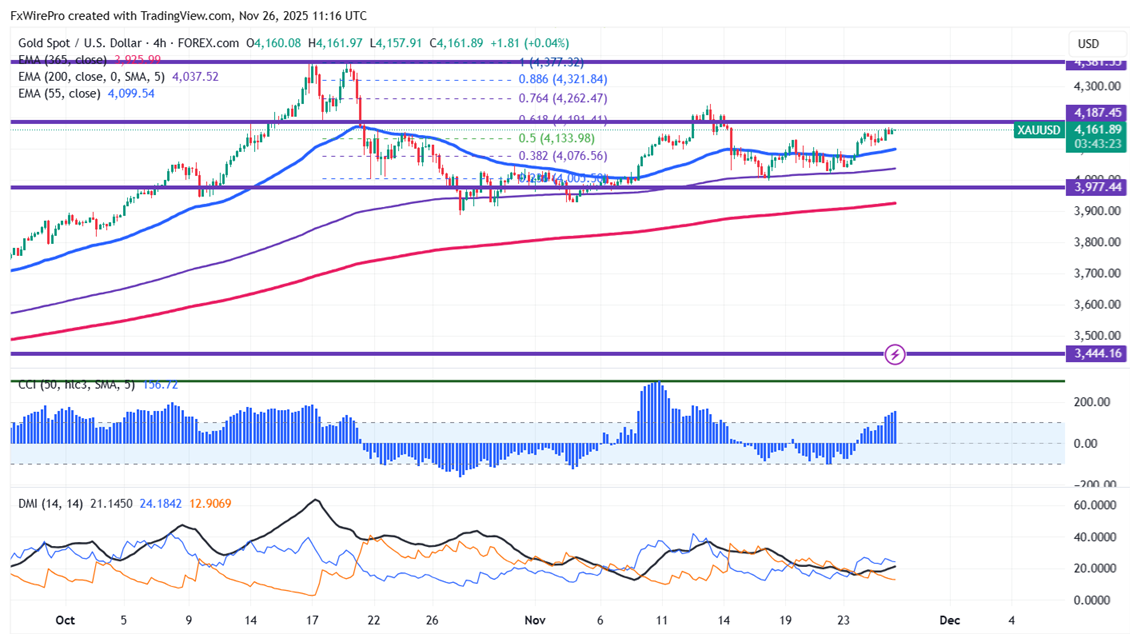
Gold cut some of its gains on the softening of the Fed rate. Presently at roughly $4033, it fell to an intraday low of $4021.
Near-term support - $4000. Any breach below will drag the yellow metal down to $3960/$3934/$3895/$3800/$3770/$3500.
Significant resistance - $4050. Any violation above this level will push the commodity to $4065/$4100/$4155.
It is good to buy on dips around $4058-60 with SL around $3985 for a TP of $4300.







