


 Oil Prices Jump 3% as Houthi Attack Revives Supply Fears
  Gold Drops Over 1% as Dollar, Treasury Yields Surge on Fed Rate Hike Bets
  Fed Unveils Stablecoin Rules Under GENIUS Act
  South Korea, US Discuss Warship Building Cooperation
  Trump, Xi Focus on Trade and AI at White House Summit
  Oil Prices Surge as U.S.-Iran Diplomacy Hopes Fade
  Asian Currencies Mixed as Dollar Holds Near Two-Month High
  U.S. 10-Year Treasury Yield Hits 2007 High as Fed Rate Hike Bets Rise
  US Dollar Hits Two-Month High as Fed Rate Hike Bets Rise
  Dollar Hits Two-Month High as Fed Rate Hike Bets Rise
  Fed Unveils Stablecoin Rules Under GENIUS Act
  European Stocks Slip as Iran Tensions Offset Strong Eurozone Data
  Wall Street Falls as Treasury Yields Surge, Oil Rebounds on Iran Tensions
  Mexico-US Trade Talks Delayed to October as Tariff Negotiations Continue
  US Stock Futures Fall as Treasury Yields Surge Ahead of Trump-Xi Summit
  RBI Uses $10 Billion Currency Swaps to Drain Excess Rupee Liquidity


 Add as a preferred source on Google
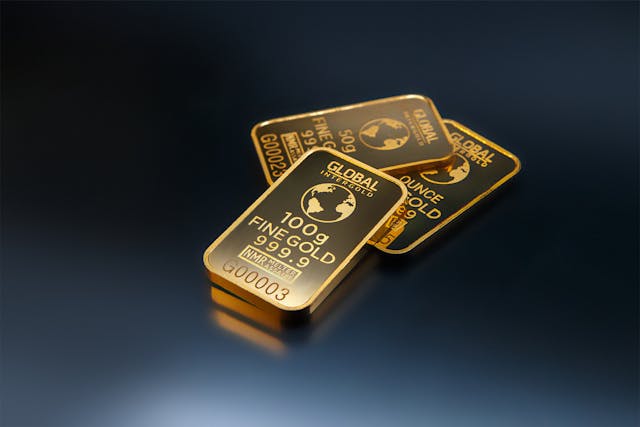
Gold prices fell sharply on Tuesday as investors adopted a cautious stance ahead of crucial U.S. inflation reports that could influence Federal Reserve interest rate policy. At the same time, escalating geopolitical tensions in the Middle East added uncertainty to global financial markets.
Spot gold declined 1.6% to $4,260.20 per ounce, while U.S. gold futures dropped 1.8% to $4,284.09 per ounce. Although gold had previously reached its lowest level since late March, losses were partially trimmed before the end of the trading session.
Market attention is now focused on the upcoming U.S. Consumer Price Index (CPI) report for May, followed by the Producer Price Index (PPI) release. These inflation indicators are expected to provide important clues about the Federal Reserve’s next policy moves. Strong labor market data released last week, combined with concerns that rising oil prices linked to the Iran conflict could fuel inflation, have strengthened expectations that the Fed may keep interest rates elevated for longer or potentially raise rates again.
Analysts at JPMorgan noted that recent employment data supports the view that global business activity remains resilient. They forecast another increase in U.S. inflation, projecting headline CPI growth of 0.58% month-over-month and 4.3% year-over-year. Core inflation is expected to rise 0.27% monthly and 2.9% annually. Such figures could reinforce expectations for tighter monetary policy, a factor that typically pressures gold prices because the precious metal offers no yield.
Meanwhile, geopolitical developments also weighed on investor sentiment. U.S. President Donald Trump stated that Iran had shot down a U.S. Apache helicopter operating near the Strait of Hormuz and promised a response. According to Trump, both pilots were safely rescued, but he emphasized that the incident would require action from the United States.
The remarks reduced optimism that Washington and Tehran were close to achieving a diplomatic breakthrough. Earlier hopes for regional de-escalation had emerged after Iran and Israel signaled a halt in hostilities following recent military tensions involving Hezbollah in Lebanon.
As traders await inflation data and monitor developments in the Middle East, gold prices are likely to remain highly sensitive to both economic and geopolitical headlines throughout the week.







