


 Central Banks Eye Gold, Reduce Dollar Exposure as AI Adoption Accelerates: OMFIF Survey
  Gold Prices Fall Amid Rate Jitters; Copper Steady as China Stimulus Eyed
  Dollar Slips Ahead of Key U.S. Jobs Data as Fed Rate Outlook, ECB, and Iran Talks Shape Forex Markets
  Yen Falls to 40-Year Low as Markets Watch Japan Intervention and U.S. Jobs Report
  FxWirePro: Daily Commodity Tracker - 21st March, 2022
  Oil Prices Rise as U.S.-Iran Talks Keep Geopolitical Risks in Focus
  Best Gold Stocks to Buy Now: AABB, GOLD, GDX
  Trump Questions Housing Bill as He Prioritizes SAVE America Act
  Global Financial Firms Shift Asia Expansion Focus to South Korea as China, India Face Caution
  Asian Stocks Mixed as South Korea Slides on Profit-Taking, Japan and China Gain on Strong Factory Data


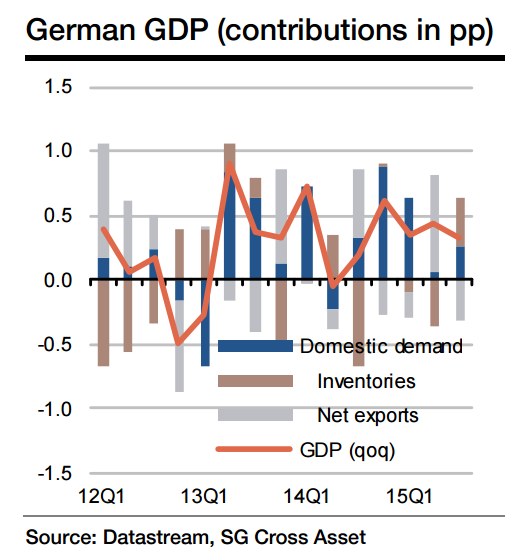
In Q3, German GDP grew by 0.32% qoq, according to the preliminary release, which compared with 0.44% in Q2 and was lower than the 0.36% forecast. This week's release will provide the first breakdown of growth, which should confirm that domestic demand is back as the key driver of growth, after net exports were the dominant driver in Q2.
Private and government consumption is expected to have increased by 0.4% and 0.3% qoq, respectively, while net exports should have made a negative contribution. According to the qualitative information in the flash release, investment is likely to have been the main reason for the weaker-than expected GDP growth. Contrary to the expectation of a rebound, investment appears to have declined slightly.
Looking to Q4, while further headwinds are expected to trade and investment stemming from the weaker global outlook, consumption should remain buoyant, in line with the strong labour market and increased fiscal spending in relation to the high refugee inflows.

- News

- Economy

- Central Banks
- Investing
- Research
- Roundups
- Digital Currency
- Insights
- Technical Analysis
- Technology
- Business
- Law
- Health
- Nature
- Fintech
- Science
- Topic
- Opinions
- ©Econometrics LLC . All Rights Reserved.
German domestic demand back on track in Q3
Monday, November 23, 2015 11:15 PM UTC
Editor's Picks



- Market Data
Most Popular




