


 Fed’s Logan Signals 50 Basis Points More in Rate Hikes
  Visa Wins China Approval to Prepare Domestic Payments Expansion
  RBA Set for September Rate Hike as Inflation Stays High
  BOJ Signals Faster Rate Hikes as Inflation Risks Grow
  BlackRock’s Rick Rieder Favors Bonds Over Stocks as Treasury Yields Surge
  RBA Hikes Interest Rate to 4.60% as Inflation Risks Rise
  Fed Unveils Stablecoin Rules Under GENIUS Act
  RBI Uses $10 Billion Currency Swaps to Drain Excess Rupee Liquidity


 Add as a preferred source on Google
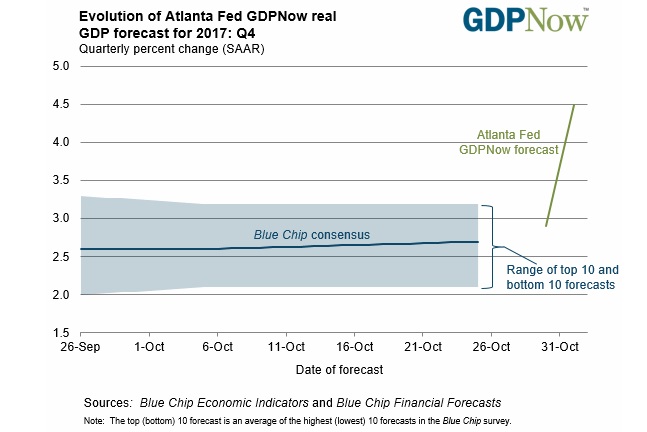
Atlanta Fed’s ‘GDPNow’ model is projecting 4.5 percent growth in the fourth quarter after yesterday’s release of ISM manufacturing PMI report for the month of October. ISM manufacturing PMI for October came at 58, while prices paid index came at 68.5 for the month.
The ‘GDPNow’ model forecast for real GDP growth (seasonally adjusted annual rate) in the fourth quarter of 2017 is 4.5 percent on November 1, up from 2.9 percent on October 30. The forecasts of real consumer spending growth and real private fixed investment growth increased from 2.8 percent and 4.4 percent, respectively, to 4.1 percent and 8.8 percent, respectively. According to flash reading, the economy grew at 3 percent in the third quarter, marginally down from its 3.1 percent growth in the second quarter, which was the strongest growth since the first quarter of 2015.
U.S. Treasury has forecasted that under the current administration the U.S. growth would hit 3 percent mark. After U.S. third-quarter growth hit 3 percent mark, the U.S. Commerce Secretary Wilbur Ross said, “Today’s release of the gross domestic product growth for Q3 2017 proves that President Trump’s bold agenda is steadily overcoming the dismal economy inherited from the previous Administration. This is a remarkable achievement in view of the recent hurricanes which have shattered so many lives. As we work together to help those areas recover, I am confident that they will rebind stronger than ever before. And as the President’s tax cut plan is implemented, our entire economy will continue to come roaring back.”







