


 China Reviews Broadcom Switch Use in State Data Centres
  Colombia Extradites FARC Dissident Leader ‘Spider’ to US
  Synthetic data could ease people’s concerns about privacy breaches. But who gets to create it?
  Yemen Violence Displaces 130,000 as Civilian Toll Rises
  CNN, MS NOW and Politico Sue Trump Over White House Media Ban
  DaVoice Sues Perplexity AI Over Trade Secrets
  US Supreme Court Revives Trump Administration Voter Citizenship Database
  Venezuela Nears Deal to Move $4 Billion in Gold to New York Fed
  Trump, Xi Focus on Trade and AI at White House Summit
  Trump, Xi Visit US National Archives After White House Summit
  EU Defence Build-Up Too Slow for 2030 Russia Readiness Goal
  Trump Asks Supreme Court to Restore Third-Country Deportations
  Evan Gershkovich Says FSB Set Trap for 2023 Russia Arrest
  Pope Leo Backs Press Freedom After White House Media Ban
  Sara Duterte Posts Bail Over Grave Threats Case
  Najib Razak Seeks Stay of 15-Year 1MDB Prison Sentence


 Add as a preferred source on Google
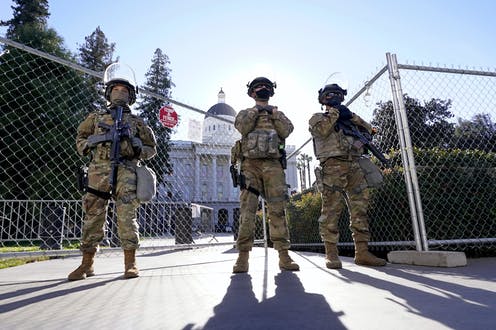
Federal judges in Portland, Oregon, and Washington, D.C., held key hearings Friday over President Donald Trump’s controversial deployment of National Guard troops to U.S. cities — a move critics say oversteps presidential authority and undermines state rights.
In Portland, Justice Department lawyers urged U.S. District Judge Karin Immergut to lift her order blocking Trump from sending troops to the city. The request follows a 9th U.S. Circuit Court of Appeals decision suggesting the president likely has the authority to deploy the National Guard. Immergut, however, has yet to issue a ruling and plans to decide by Monday.
Immergut previously blocked Trump from seizing control of Oregon’s National Guard on October 4, later expanding her order to ban troop deployments from any state. Her rulings, based on limited evidence that protests in Portland disrupted federal law enforcement, remain in effect. The 9th Circuit paused her first order, but the second still prevents deployment.
The Justice Department, represented by attorney Jacob Roth, argued that the appeals court’s ruling justifies lifting the restrictions. Oregon’s attorney, Scott Kennedy, countered that the state’s rights under the 10th Amendment are being violated, urging the judge to preserve the status quo until a full trial next week.
Meanwhile, in Washington, D.C., U.S. District Judge Jia Cobb heard a similar case challenging Trump’s deployment of 2,500 National Guard troops. The D.C. government contends the move breaches the Home Rule Act, effectively turning the Guard into a “federally run police force.” City lawyers said the deployment has instilled fear among residents, while federal lawyers dismissed the claims as politically motivated.
Trump has already stationed troops in Los Angeles and D.C., with plans to expand to cities like Chicago. Multiple lawsuits argue that these deployments, justified by exaggerated crime claims, violate federal law.







