


 RBI Uses $10 Billion Currency Swaps to Drain Excess Rupee Liquidity
  Philippines Current Account Deficit Seen at $19.1 Billion in 2026
  Asian Stocks Plunge as AI Chip Selloff Hits South Korea and Japan
  Oil Prices Mixed as Russia Diesel Deal and Houthi Attacks Raise Supply Concerns
  Zcash Price Drops 30% as ZEC Tests Critical $1,120 Support
  US Dollar Slips From 18-Month High Ahead of Key Inflation Data
  Australia Consumer Confidence Plunges as RBA Rate Hike Hits Households
  Dogecoin Price Rebounds as DOGE Defends $0.08 Support
  Ethereum Whale Moves $15.95M ETH to Kraken After Nine Years
  ECB May Stop Rate Hikes After December, Capital Economics Says
  Cardano Hits Five-Year Transaction Record as ADA Price Falls
  Binance to Shut Down Crypto Mining Pool Services on November 10
  China Bank Lending Rebounds in September, Beats Forecasts


 Add as a preferred source on Google
Data released by Eurostat’s earlier on Wednesday showed that Eurozone inflation stayed decidedly flat in August, rising just 0.2 percent in the August month, missing analysts' expectations of a rise to 0.3 percent. The more important core inflation which strips out energy and food slipped for the first time in three months to 0.8 percent from 0.9 percent in July. A separate release showed euro-area unemployment remained unchanged at 10.1 percent.
Today's inflation report follows European Commission survey on Tuesday which showed declines in economic confidence declined across most euro area countries. August inflation figures suggest there is plenty of slack in the Eurozone economy and coupled with unchanged unemployment numbers suggest that wage pressures will remain subdued. The International Monetary Fund has already cut its forecast for euro-area growth next year, and the European Central Bank will release new projections after its meeting next week.
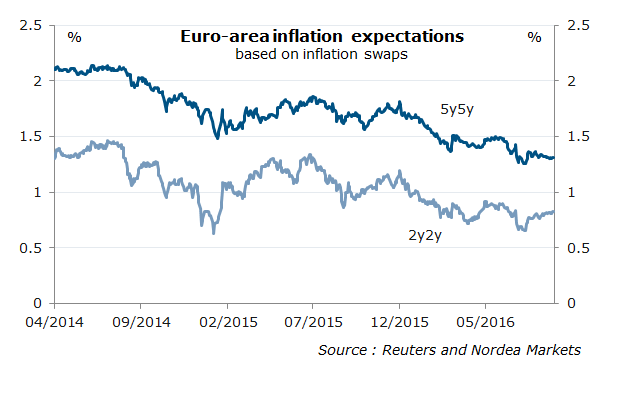
Despite massive stimulus measures from the central bank, which included large-scale asset purchases, negative interest rates and long-term loans that see banks getting paid for extending credit to companies and households, inflation still remains far below the ECB’s goal. The ECB will remain uneasy surrounding inflation trends with the headline rate still substantially below the target rate.
“Today’s data are a small negative surprise and highlight once more the ECB’s difficulties in reaching its goal,” said Holger Sandte, chief European analyst at Nordea Markets in Copenhagen. “It suggests that the ECB isn’t yet done.”
Low inflation rates will inevitably be a key focus at next week’s European Central Bank (ECB) policy meeting. The weaker-than-expected inflation data could mean the ECB is forced to move. That said, while the ECB has indicated that interest rates could possibly go lower, there is clearly heightened concern over the impact that negative/low interest rates are having on Eurozone banks.
"As inflation expectations are still far below the ECB’s 2%-target, we think that the ECB is not done easing monetary policy. Given that policy rates are already so low, the main focus will be on asset purchases. QE for longer, announced, as we see it, in December rather than next week. Later this week, we will publish our ECB preview for the policy meeting on 8 September." Nordea bank said in a report.
There was little immediate market reaction to the data with EUR/USD holding just below 1.1150. The German 10-year bund yields continued to hover between -0.05 percent to -0.10 percent mark Wednesday as markets look to be holding steady ahead of ECB monetary policy meeting scheduled next week.







