


 Japan Wholesale Inflation Jumps as Energy Shock Drives Import Costs Higher
  Gold Prices Slip as Stronger Dollar, Fed Rate Outlook Weigh on Bullion
  Chinese Chip Stocks Jump as Apple Reportedly Tests CXMT Memory Chips for China Devices
  Bernstein Raises 2026 Nickel Price Forecast as Indonesia Tightens Supply
  Oil and LNG Tankers Turn Back as Strait of Hormuz Security Risks Escalate
  Oil Prices Rise as U.S.-Iran Conflict Fuels Strait of Hormuz Supply Fears
  US Back-to-School Spending Seen Falling as Families Focus on Essentials
  Gold Prices Fall Amid Rate Jitters; Copper Steady as China Stimulus Eyed
  Asian Currencies Slip as Stronger US Dollar, Iran Tensions Pressure Regional FX
  Fed Chair Kevin Warsh Launches Task Forces to Overhaul U.S. Monetary Policy Framework
  Japan Regional Bank Stocks Drop After Zentoshin Bankruptcy Sparks Credit Risk Concerns
  US Launches New Iran Strikes as Strait of Hormuz Conflict Escalates, Oil Prices Rise


Last week’s report showed that the inflation rate in the Eurozone quickened. The Inflation rate is set to rise to 1.1 percent in December after rising to 0.6 percent in November. Eurozone’s largest economy, Germany saw inflation quicken to 1.7 percent, while some region reported as high as 1.9 percent. This has already sparked a debate whether the European Central bank (ECB) should cut down on its easing commitments or not, which just in December announced an additional purchase of bonds worth €540 billion.
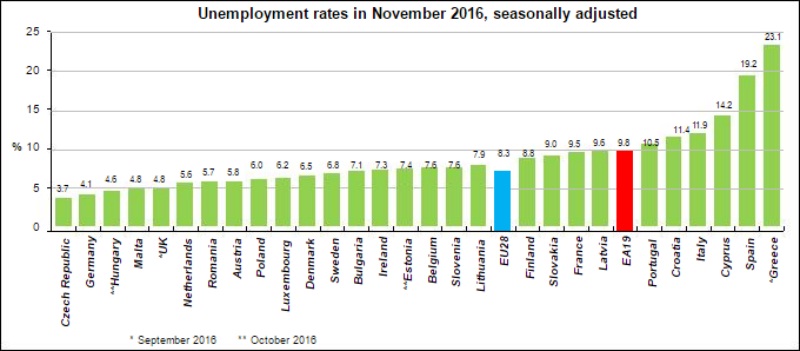
One of the biggest challenges the European Central bank (ECB) faces is the fragmented labor market. Not all labor market across the Eurozone benefited or recovered the same way since the debt crisis of 2011. Today’s unemployment report showed that the unemployment rate at 9.8 percent, 7-year low. But, while German unemployment has declined to post-reunification low of 4.1 percent, the unemployment rate in Greece remained at 23.1 percent. The unemployment rate even in the third and fourth largest economy of the Eurozone; Italy and Spain are as high as 11.9 percent and 19.2 percent.
The biggest risk ECB runs is the deterioration of economic condition in these economies, if it is forced to raise rates amid a quickening of inflation.







