


 Trump has made more than $1 billion from crypto in a year. How?
  Elon Musk is remaking the world, like Henry Ford before him – but more dangerously
  Vietnam’s population hit the 100 million milestone. Where’s it headed?
  Goldman Sachs Raises USD/JPY Forecast, Sees Yen Weakness Persist Through 2027
  State of emergency in Crimea as Ukraine focuses pressure on ‘jewel in Putin’s crown’
  Smartphones are helping filmmakers tell the stories the movie industry overlooks
  Gold Pulls Back After Hitting $4,180 as Geopolitical Risk Sends Crude Higher
  Goldman AM Sees Strong Buyout Opportunities in Japan, South Korea and Australia
  USA at 250: the Black American struggle for life, liberty and the pursuit of happiness
  Gold Surges Past $4150 on Dovish Fed Signals and Weak Jobs Data; Bullish Outlook Prevails
  Alcohol is one of the most dangerous drugs, yet its presence is ubiquitous in social settings and celebrations


How much would you think that rate and FX liquidity worsen as the bond market sell-off extends?
The huge European bond selloff in 2015 so far that has already wiped out $300 billion from the market, according to options prices on German bond futures.
The brief answer has been mystified since the regulatory environment that has contributed to these conditions is unprecedented.
The premium for puts over calls on what is Europe's bond bellwether shrunk last week to as little as 0.4% it was at 0.74%, the smallest on a closing basis since bunds and bund futures began their plunge. The spread was as high as 1.78% point on May 13.
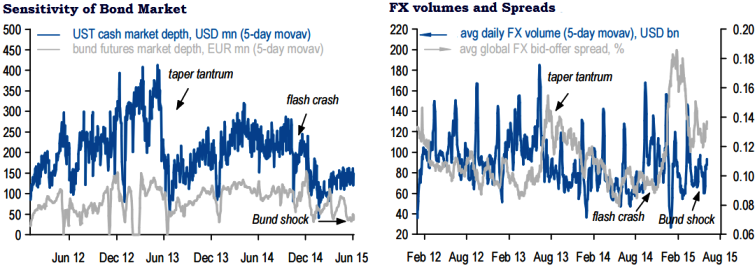
Here are few things that matter FX markets: VaR (Value at Risk) shocks are occurring more frequently; As shown in the 1st chart the bond market's performance in depth seems to decline during each of the episodes (policy changes); While second 2nd chart shows FX volumes sometimes rise and sometimes fall during these shocks.
FX bid-off spreads almost always widen in 2nd chart.
So what could be the genuine reason for such movements..?
Yes indeed, the reaction is to somewhat modest inflection points in data or central bank policy, liquidity conditions seem biased to worsen much more during a policy process like Fed tightening that could run for a year or more.

- News

- Economy

- Central Banks
- Investing
- Research
- Roundups
- Digital Currency
- Insights
- Technical Analysis
- Technology
- Business
- Law
- Health
- Nature
- Fintech
- Science
- Topic
- Opinions
- ©Econometrics LLC . All Rights Reserved.
European Bond’s uproar seems to matter much on derivatives markets
Tuesday, June 9, 2015 7:19 AM UTC
Editor's Picks



- Market Data
Most Popular




