


 MediaTek Unveils 2nm Dimensity 9600 Pro AI Chip
  Apple Pay Set for India Launch With Axis Bank
  Burnham Eyes UK Leadership Role in AI Ahead of Trump Meeting
  US Federal Register Drops Alibaba Qwen AI Search Tool
  SoftBank Launches $11 Billion Bond Sale to Fund OpenAI Investment
  Westinghouse Targets $50 Billion Valuation in U.S. IPO
  Meta Partners With Shopify to Bring Shop Pay Checkout to Muse AI
  China Vanke Shares Jump as Beijing Moves to Ease Debt Pressure
  Who should own the knowledge that underpins AI technology?
  China Reviews Broadcom Switch Use in State Data Centres
  Goldman Sachs Names Simon Lyons UK Investment Banking Co-Head
  OpenAI Urges US-Led Global Standards for Frontier AI
  FCC Approves Foreign Investment in $110B Paramount-Warner Bros. Deal
  Microsoft Stock Upgraded as Stifel Sees Stronger Azure Growth
  Telix to Acquire Germany’s ITM in $1.65 Billion Radiopharma Deal
  Hyundai CEO Warns Chinese Automakers Could Disrupt US Market


 Add as a preferred source on Google
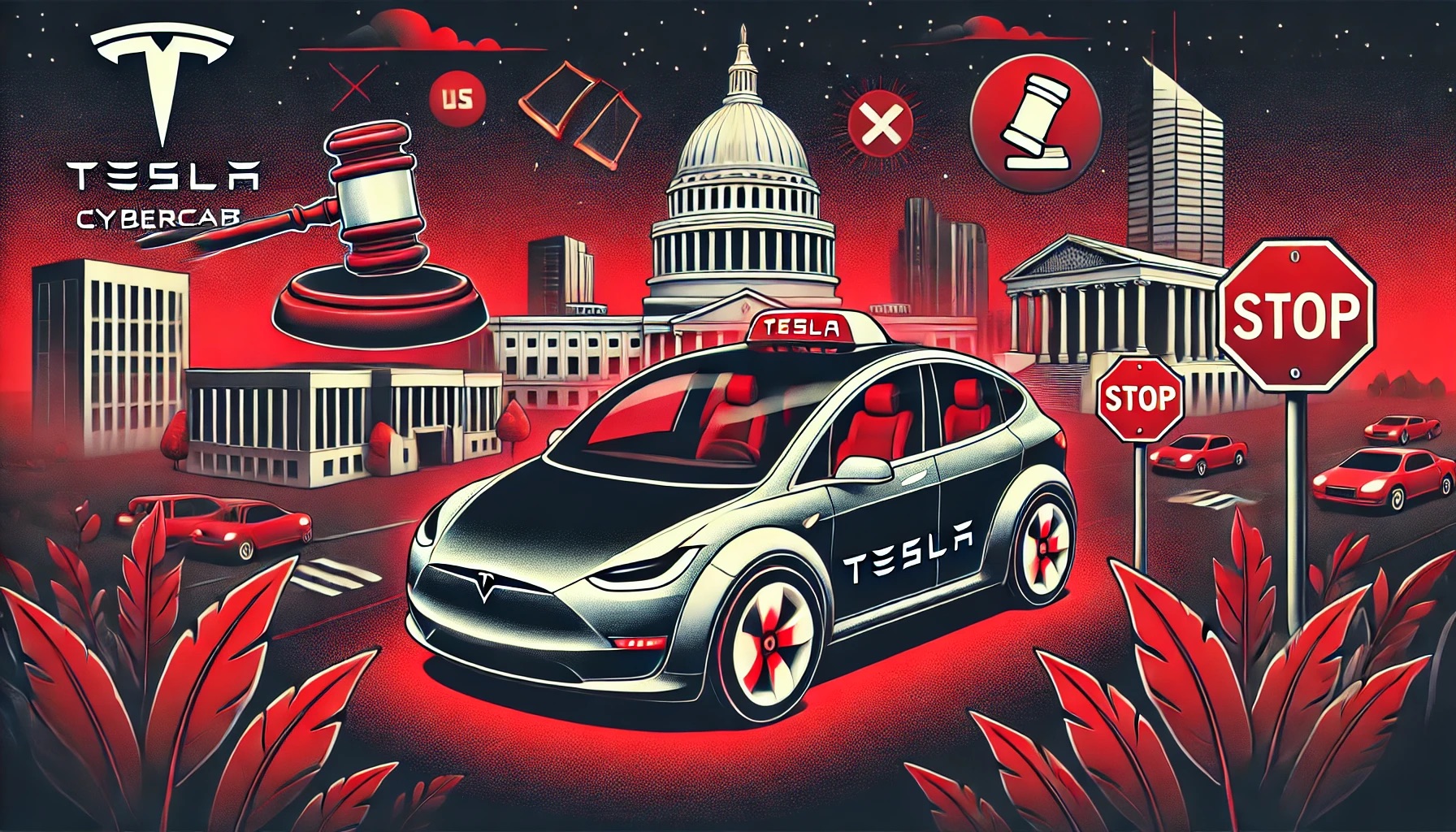
Elon Musk showcased Tesla's futuristic Cybercab, aiming for mass production by 2027. However, strict U.S. laws governing autonomous vehicles may render mass production illegal, putting Musk's ambitious timeline in jeopardy.
Musk Unveils Cybercab and Robovan
At a glamorous event in Los Angeles last week, Elon Musk, CEO of Tesla, revealed his plans for a future where cars drive themselves. The Robovan, an autonomous bus, and the Cybercab, a self-driving taxi developed by Tesla, were unveiled at the event.
Musk claims that by 2027, the business intends to release a fleet of these autonomous vehicles; however, there are several challenges that Tesla must first resolve.
Full Self-Driving Tech Faces Crucial Refinement
According to Bloomberg, the first challenge will be for the business to perfect its Full Self-Driving tech, which it claims would be the foundation of the new Cybercab. The second will be to persuade Congress to reconsider its stance on the introduction of autonomous taxis.
Musk has grand plans to make the Cybercab a best-seller, but American lawmakers have imposed stringent regulations limiting the mass manufacture of autonomous vehicles:
“Unless Congress increases this limit, as several failed bills would have done, exemptions aren’t a viable route for a mass manufacturer,” said Bryant Walker Smith, a University of South Carolina law professor and autonomous vehicle expert.
Regulatory Hurdles Threaten Musk’s Ambitious Timeline
Regulatory hurdles were one of multiple issues Musk sidestepped during his much-anticipated unveiling of the robotaxi, billed as a pillar of the Tesla chief executive officer’s push into robotics and artificial intelligence.
NHTSA has long permitted manufacturers to deploy 2,500 vehicles per year under a granted exemption, a tiny total for a company that sold nearly half a million cars last quarter alone. Such a low number also contrasts with what Musk told investors last week, when he said Tesla would “make this vehicle in very-high volume.”
Congressional Limits Overshadow Cybercab Rollout
During his presentation at last week's We, Robot event, Musk, predictably, avoided discussing the limitations imposed by Congress. Additionally, Musk has been vague on how his business would transition from developing driver aid technologies to distributing fully autonomous vehicles.
Cybercab Production Delays Echo Previous Promises
While presenting the Cybercab, Musk made the ambiguous claim that production will begin in 2026 and that customers should begin receiving their orders by 2027.
Jalopnik notes, however, that he has been promising Tesla self-driving taxis for nearly a decade, has failed to release the long-awaited Tesla Roadster, and delayed the first Cybertruck delivery by many years.







