


 Dollar Rebounds as Euro, Pound Slip Ahead of Fed Minutes, Yen Near Intervention Zone
  China 618 Smartphone Sales Drop 13% as Higher Prices Hurt Demand, Huawei Gains Market Share
  Japan Revises Economic Blueprint to Reassure Markets on BOJ Independence
  South Korea’s KOSPI Plunges as Samsung, AI Chip Stocks Trigger Market Sell-Off
  Asian Currencies Slip as Stronger US Dollar, Iran Tensions Pressure Regional FX
  Iran Targets U.S. Bases in Bahrain, Kuwait as Hormuz Conflict Escalates and Oil Prices Jump
  FxWirePro: Daily Commodity Tracker - 21st March, 2022


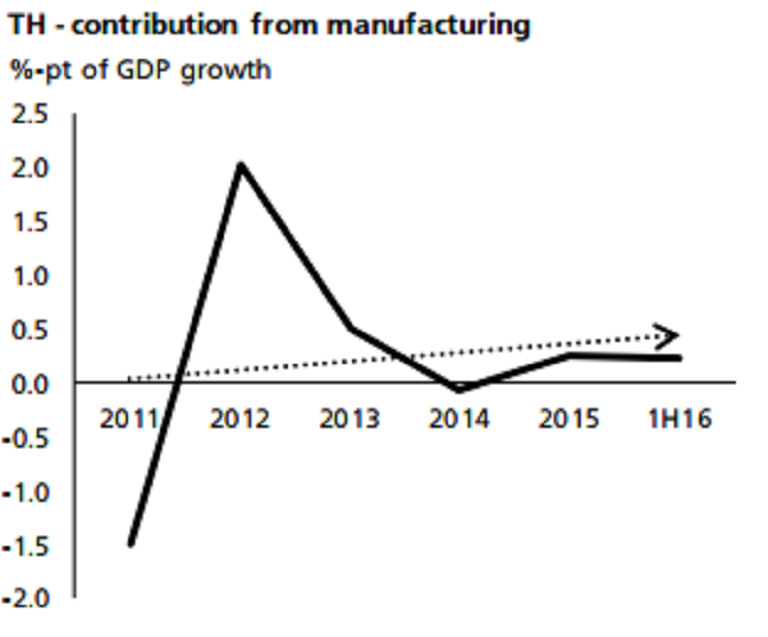
Downside risks continue to hover around Thailand’s gross domestic product (GDP) growth following the drag on the country’s manufacturing sector. While it accounts for almost 30 percent of GDP, contribution from manufacturing came in a mere 0.25 percentage point in 1H16. That is equivalent to slightly over 7 percent of overall GDP growth.
Any improvement since 2014 has been limited and it is not hard to explain why. Exports are likely to contract again this year, keeping capacity utilization some way off from its normal level. A quick look at the balance of payments also suggests that more Thai companies have been stepping up on their overseas investment.
It is crucial to see a sustained recovery in the sector before we get more upbeat on the economy’s overall growth potential. Manufacturing employs about 16 percent of the workforce. Coupled with the similarly weak agriculture sector, it is little wonder that wage growth is trending at a mere 2 percent annual pace. GDP growth may remain stuck in the 3-3.5 percent range for longer than initially expected.







