


 Vietnam, US Trade Deal Could Be Signed Soon, To Lam Says
  Kremlin Says No Grounds Yet for Ukraine Peace Talks
  CNN, MS NOW and Politico Sue Trump Over White House Media Ban
  China Tightens Fentanyl Rules Ahead of Trump-Xi Summit
  Paramount-Warner Bros $110 Billion Deal Draws Antitrust Backlash
  Lula Meets Mamdani in New York as Elections Approach
  Carney Condemns Belleville Synagogue Shooting That Wounded Police Officer
  Zelenskiy Warns Russia Preparing Major Attack on Ukraine
  Trump to Press Xi on Release of US Nuclear Expert Held in China
  US, Japan and South Korea Back Taiwan Ahead of Trump-Xi Summit
  Macron, Trump Discuss Ukraine-Russia Energy Strike Moratorium
  Marco Rubio to Meet Russia’s Lavrov in New York
  Trump Says U.S.-Iran Peace Deal Near After UN Talks
  Burnham Eyes UK Leadership Role in AI Ahead of Trump Meeting
  Russian Strikes Kill Eight Across Ukraine as Energy Sites Hit
  Canada Unveils Bill to Fast-Track Major Resource Projects
  Scott Bessent Eyed as Trump’s New AI Czar


 Add as a preferred source on Google
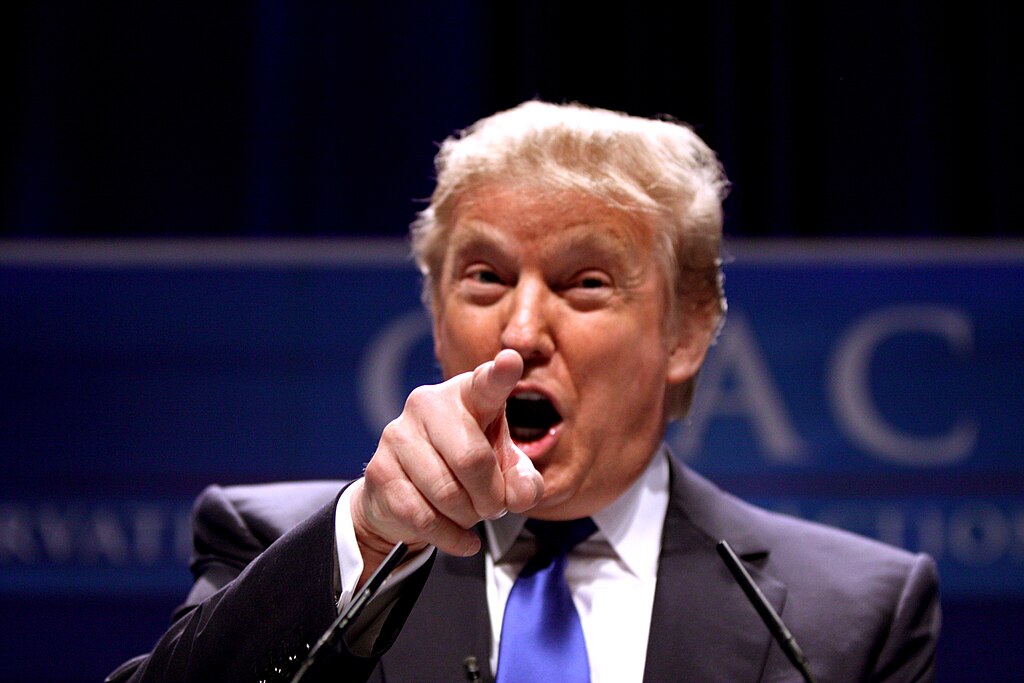
A recent op-ed in The New York Times has sparked widespread amusement and disbelief among political commentators, following an assertion that former President Donald Trump’s path to victory in the 2024 election could be based on his character. The piece, penned by Rich Lowry, editor of the conservative National Review, suggested that Trump could gain an advantage over Vice President Kamala Harris by focusing on her perceived weaknesses rather than policy-based critiques.
The op-ed, titled "Trump Can Win on Character," has drawn sharp reactions from both political pundits and academics. Georgetown Law professor Josh Chafetz, for instance, was quick to highlight the irony of the headline, noting that the idea of Trump winning on character is, in his words, "laugh-out-loud funny."
The commentary did not stop there. Many pointed out the stark contrast between Trump’s public persona and the attributes typically associated with strong character. Trump, the son of a wealthy real estate developer, has faced multiple legal challenges, including a recent conviction for falsifying business records. Critics argue that positioning him as a candidate with superior character is a stretch, particularly when compared to Harris, who has a background as a prosecutor and comes from a family of academics.
Political observers like Professor Michael E. Mann of the University of Pennsylvania were particularly scathing in their critique. Mann questioned both the editorial judgment of The New York Times and Lowry’s perspective, calling the article a low point for the publication. He went on to label Lowry, whom he knows personally, with less-than-flattering terms, underscoring the depth of his disdain.
Health economist Eric Feigl-Ding joined the chorus of critics, pointing out the absurdity of the headline and expressing disappointment in The New York Times for what he sees as a decline in editorial standards. He, like many others, found it hard to believe that such an argument could be presented seriously in a mainstream publication.
Social media was also abuzz with reactions, as commentators and everyday readers alike shared their incredulity. Some responses were steeped in humor, with Dmitry Grozoubinski, a former Australian diplomat, likening Trump to a villain in a 1990s James Bond video game, incapable of winning on character even with an advantage. Political commentator Anand Giridharadas took the humor further, joking that the only way Trump could win on character would be by time-traveling and "unborning" himself.
This latest debate underscores the deep divisions in American political discourse, with Trump remaining a highly polarizing figure. While his supporters may rally around his persona, the idea that character is his strongest asset is met with skepticism from many quarters. As the 2024 election approaches, the question of what qualities will resonate most with voters remains a key issue.







