


 S&P Affirms Brazil’s BB Credit Rating with Stable Outlook Amid Fiscal Challenges
  Asian Currencies Trade Mixed as Yen Hovers Near 40-Year Low, Dollar Holds Firm on Fed Outlook
  Trump Requests $11 Billion More in Farm Aid as Rising Costs Pressure U.S. Farmers
  South Korea’s KOSPI Plunges as Apple Price Hikes and OpenAI IPO Delay Shake AI Chip Stocks
  Australia Jobs Growth Strengthens Rate Hike Outlook
  Gold Falls Below $4,000 as Strong Dollar and Fed Rate Hike Expectations Weigh on Prices
  World Bank Approves $1.1 Billion Emergency Funding for Bangladesh Amid Food and Energy Price Pressures
  Japan Signals Preference for Low Interest Rates as BOJ Policy Debate Intensifies
  Asian Stocks Sink as Apple Price Hikes Spark AI Valuation Fears, South Korea and Japan Lead Selloff


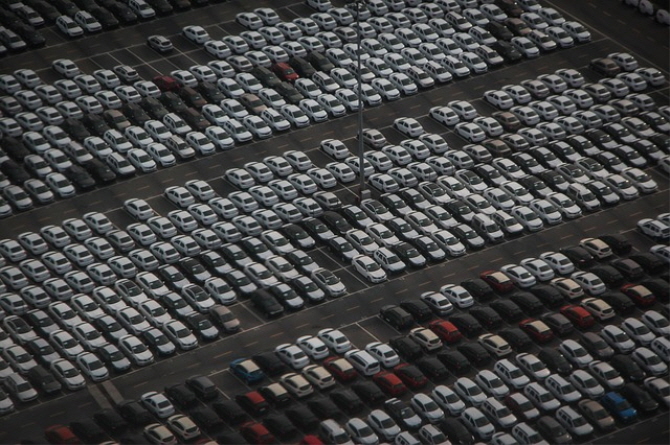
Global car sales advanced a slower-than-expected 2% in the first half of 2015, but remain on target to climb to the sixth consecutive annual record. Purchases are being supported by strengthening job creation in developed markets, improving household balance sheets, low interest rates and rising consumer confidence across much of the globe.
Despite periodic bouts of financial market volatility, most economic and financial risk indicators still remain supportive of the ongoing economic expansion. Household purchasing power is being buoyed by rising incomes and low gasoline prices, while wealth creation is being bolstered by appreciating house prices in many nations and gains in global equity markets. Even with the recent weakness in equities in China, the capitalization for global equities has advanced 6% over the past year.
Car sales in Western Europe accelerated to an 8% y/y increase in the first half of 2015, and will approach a full-year total of 13 million units for the first time in five years. In fact, Western Europe has become the industry’s growth leader in 2015, with volumes advancing in fifteen of the eighteen countries in the region. The improvement reflects strengthening labour markets and household balance sheets. Wages and salaries across the euro zone are advancing at the fastest pace since 2008. Income gains are much stronger in the United Kingdom, leading to a record 1.4 million cars sold in the first half of 2015, exceeding the 2004 peak.
Car sales in China have softened from the double-digit pace of the past decade, dampening overall gains across Asia and prompting concern about the outlook. The 30% plunge in the Shanghai Stock Exchange since mid-June reduced car sales below a year earlier for two consecutive months and slashed the increase in overall vehicle purchases (including heavy trucks) to only 0.4% so far this year. While there is potential for further short-term weakness, especially if consumer confidence declines significantly.
"We believe that the downdraft will be temporary, as only a small proportion of Chinese households invest in the equity market," shared a research note from Scotiabank.
According to the China Household Finance Survey, less than 10% of households own equities. Furthermore, stocks represent only a small fraction of household assets. Real estate makes up a much larger share of overall wealth, and improving residential real estate prices have a more powerful effect on household finances. In addition, automakers have launched significant price reductions to woo customers back into showrooms, and are increasingly willing to sacrifice margins in order to sell more cars.
Auto sales in India have advanced by 6% this year and will be supported going forward by an easing bias for monetary policy, strengthening economic growth and declining fuel prices. India has overtaken China to become the fastest growing major economy, with economic growth expected to average 7.5% this year and potentially even faster in 2016. In contrast, auto sales and economic conditions continue to weaken in Russia and Brazil. Unemployment is on the rise in both countries alongside high interest rates and rising inflation.







