


 SpaceXAI to Double Nvidia Chips at Colossus 2 by Year-End
  Airbus Finds A321neo Fuselage Quality Issue
  Almonty Industries Shares Jump 8% After Stifel Sets $25 Target
  BMW 2028 Margin Target Could Fall Below Consensus, UBS Says
  Oracle Shares Fall as New Mexico AI Data Center Faces Power Delays
  DaVoice Sues Perplexity AI Over Trade Secrets
  Jeff Bezos Invests $32 Billion in Blue Origin as Space Firm Targets Major Growth
  Novo Nordisk Strikes €1.17 Billion Nanexa Drug Delivery Deal
  BlackBerry Shares Rise as Q2 Earnings, Revenue Beat Estimates
  Select Water Solutions Shares Surge on $700 Million Pilot Water Deal
  US Appeals Court Upholds Anthropic AI Supply Chain Ban
  SMBC Eyes 20% VPBank Stake in Vietnam Expansion
  Meta Found Liable in New Mexico Facebook Data Privacy Case
  Apple Extends Qualcomm Patent Licensing Deal
  EQT Plans €1.7 Billion Sale of Parques Reunidos Stake
  AMD Hits $1 Trillion as BofA Raises Price Target to $720


 Add as a preferred source on Google
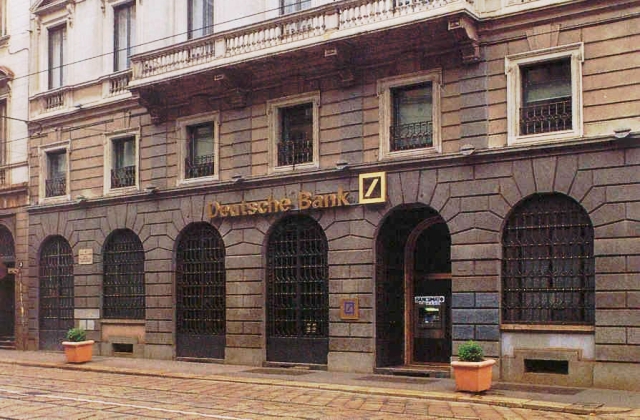
Deutsche Bank has been named as one of the four banks that Taiwan penalized for speculation. The past weekend, Taiwan’s central bank announced that it banned the German multinational investment bank and financial services company.
Why Taiwan penalized Deutsche Bank
Taipei Times reported that the investment bank was forbidden from trading Taiwan dollar deliverable and non-deliverable forwards. It was also suspended for two years from trading forex derivatives, and this resulted from the country’s latest crackdown on speculation.
Based on the report, the other three banks that were slapped with punishment are ING Bank, Citibank Taiwan Ltd, and Australia & New Zealand Banking Group. These were allegedly assisting at least eight grain traders to speculate in NT Taiwan dollar-deliverable forwards, which is against the forex policy.
The Central Bank of the Republic of China publicly revealed the penalty via its website. It said that it already canceled Deutsche Bank’s Taipei branch’s license to trade NT dollar deliverable and non-deliverable forwards.
Moreover, the branch was also forbidden from forex transactions, and it can only apply for a license again after two years. On the other hand, both Australia & New Zealand Banking Group Ltd and ING Bank NV were only suspended by the central bank for nine months. The penalties are effective immediately after the announcement.
Taiwan’s dollar rates
The currency speculation is said to be amount to $11 billion since 2019. This was carried out with assistance from the said bank branches and six foreign lender subsidiaries. Its wrongdoing was undetected for some time because it was done under the pretense of routine currency transactions.
Deutsche Bank and the others violated Taiwan’s NT dollar regulations, so the penalty was imposed. It was added that two of the lenders involved have immediately stopped the wrong practice prior to the start of the central bank’s investigation, and they settled the case in November 2020. But the four mentioned banks suffered from strict consequences.
Meanwhile, Reuters noted the Taiwan dollar is at its highest rates in the last 23 years. The rate against the U.S. dollar soared as the region’s trade developed, leading to economic booms. Countries worldwide have been demanding tech products and supplies, so the NT dollar is getting stronger. Most recently, the global chip shortage was also solved by Taiwan’s TSMC that promised to produce more chips to end the scarcity in supply and help companies to open again.







