


 Moderna Wins FDA Approval for mFLUSIVA mRNA Flu Vaccine for Adults 50+
  SK Biopharmaceuticals Secures Global Rights to Biohaven Epilepsy Drug Opakalim
  Hims & Hers Shares Fall as GLP-1 Costs Widen Q2 Loss
  AstraZeneca Q2 Earnings Beat Forecasts as Oncology Growth Supports 2026 Outlook
  Trump Administration Bars U.S. Travelers From Congo Flights Amid Ebola Outbreak
  FDA Investigates New Cyclospora Outbreak as U.S. Cases Continue to Rise
  Trump Signs Order to Cut Routine Childhood Vaccines
  Eli Lilly Eyes AtaiBeckley Acquisition to Expand Psychedelic Mental Health Pipeline
  3 clinical-grade skincare creams you really shouldn’t buy online
  Novo Nordisk Strikes €1.17 Billion Nanexa Drug Delivery Deal
  Venezuela Earthquake Health Risks Rise as Disease Monitoring Intensifies
  Novo Nordisk Eyes Turnaround as Oral Wegovy Challenges Eli Lilly in Weight-Loss Drug Race
  Alcohol is one of the most dangerous drugs, yet its presence is ubiquitous in social settings and celebrations
  Hanmi Pharm Soars 30% on $2.3 Billion Genentech Obesity Drug Deal
  France Battles Mediterranean Wildfires as Heatwave Fuels Fire Risk


 Add as a preferred source on Google


The daily use of low dose aspirin has been a mainstay of preventing strokes for decades. While there has always been a risk of bleeding associated with aspirin use, the benefits were thought to outweigh the risk.
Now new research led by Monash University has shown daily, low-dose aspirin doesn’t prevent strokes in relatively healthy people aged over 70. And it increases their risk of bleeding on the brain after falls or other injuries.
But if you’re taking aspirin, it doesn’t mean you should abruptly stop. It may still have a role to play in treating people at high risk of stroke. Or, after talking to your doctor, there might be better options available.
Why has aspirin been used to prevent strokes?
Aspirin is an anti-platelet medicine, which is commonly known as a blood-thinner. Platelets are the component of blood primarily responsible for its clotting action. They are what stop you from continuously bleeding any time you have a cut or scrape on your skin.
A stroke is when oxygen can’t get into the brain because of a burst or blocked blood vessel. A blockage can occur when platelets in the bloodstream form a clot and it gets stuck in the artery.
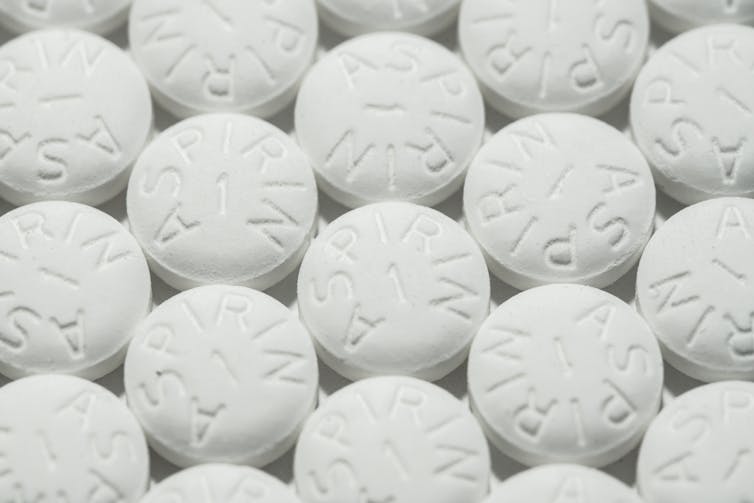
Aspirin is a blood-thinner. Shutterstock
Because aspirin acts on platelets, it can help prevent the clots that can lead to a stroke.
But because aspirin acts on platelets, it can also increase the risk of unwanted bleeding, usually in the stomach. It can also increase your risk of bleeding more when you have another injury, like hitting your head.
Aspirin isn’t just used for the prevention of strokes. It is also the first aid treatment for someone undergoing a heart attack.
Findings of the Monash trial
New research from Australia and the United States reports results from the Aspirin in Reducing Events in the Elderly (ASPREE) trial.
The researchers examined the protective use of daily low-dose aspirin (100 mg) in nearly 2,000 people who were aged 70 years and older and had no history of heart disease or stroke and whose blood pressure and cholesterol were well managed.
When compared with placebo, aspirin didn’t reduce or increase the risk of stroke. Of the participants who took the aspirin, 195 or 4.6% had a stroke. Of those who took the placebo, 203 people or 4.7% had a stroke.
But it did statistically increase the rate of non-stroke bleeding in the participants’ brains, for example when they injured their head. Those on aspirin showed a rate of bleeding in the brain of 1.1% (108 participants) compared with 0.8% (79 people) for those on placebo. This is a relatively, low but serious, risk.
These findings are not entirely new. Research published five years ago based on the same ASPREE trial showed a similar result: a higher rate of bleeding among those taking low-dose aspirin compared with placebo.
However as the study authors note, aspirin continues to be widely used for the prevention of stroke.
What are the study’s limitations?
The researchers examined aspirin in mostly people of white European heritage.
So we don’t know whether the results are translatable to people with different ethnic backgrounds. Genetics and ethnicity can significantly impact the efficacy and safety of some drugs.
The clinical trial only included people who were not significantly at risk of a stroke, and had no history of heart disease.
Younger age groups were not studied either, so we cannot make any conclusions about their use of low dose aspirin to prevent stroke.
It’s also possible the potential benefits and risks are different for those who have underlying heart problems or who have previously had a stroke and are therefore at higher risk of another stroke.
People who have previously had a stroke are at higher risk of another stroke. Shutterstock
I’m taking aspirin, what should I do?
If you’re taking daily low-dose aspirin and are concerned by the results of the study, it’s important you don’t just stop taking your medicine. Speak to your doctor or pharmacist.
For people who are at high risk of having a stroke, or have previously had one, low-dose aspirin may remain their treatment of choice despite the slight bleeding risk.
If you’re at high risk of bleeding, for example because of falls and other accidents due to advanced age, frailty, or another underlying condition, your doctor may be able to reduce the amount of aspirin you take by adding in dipyridamole or prescribing a different medicine completely, such as clopidogrel.







