


 U.S. Condemns South Africa’s Expulsion of Israeli Diplomat Amid Rising Diplomatic Tensions
  U.S. Lawmakers to Review Unredacted Jeffrey Epstein DOJ Files Starting Monday
  Federal Judge Blocks Trump Administration Move to End TPS for Haitian Immigrants
  Trump Family Files $10 Billion Lawsuit Over IRS Tax Disclosure
  Trump Lawsuit Against JPMorgan Signals Rising Tensions Between Wall Street and the White House
  U.S.-India Trade Framework Signals Major Shift in Tariffs, Energy, and Supply Chains
  TrumpRx.gov Highlights GLP-1 Drug Discounts but Offers Limited Savings for Most Americans
  TrumpRx Website Launches to Offer Discounted Prescription Drugs for Cash-Paying Americans
  Ohio Man Indicted for Alleged Threat Against Vice President JD Vance, Faces Additional Federal Charges
  South Korea Assures U.S. on Trade Deal Commitments Amid Tariff Concerns
  Google Halts UK YouTube TV Measurement Service After Legal Action
  New York Legalizes Medical Aid in Dying for Terminally Ill Patients
  Norway Opens Corruption Probe Into Former PM and Nobel Committee Chair Thorbjoern Jagland Over Epstein Links


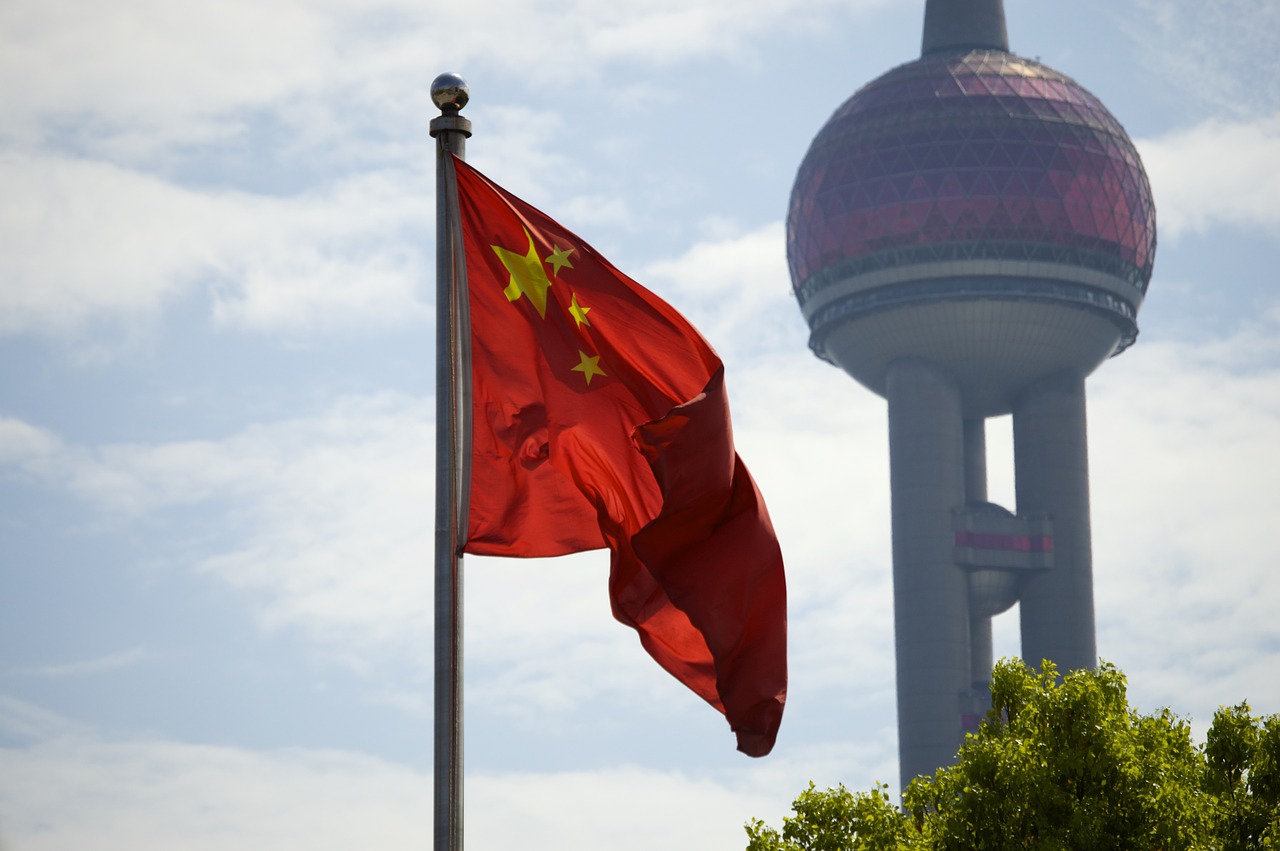
In 2014 alone, more than 70 top executives of China’s state owned enterprises (SOEs) were investigated for corruption, as part of China’s anti-corruption campaign.
If this happened in western economies, corruption allegations would have sent the values of the affiliated firms south. But things are somewhat more complicated in China. If the sharemarket reaction is of any indication, then Chinese investors did not seem to care much about things like that.
China’s anti-corruption effort features an extensive reach. The authority targets not only government and military officials, but also executives of SOEs. Data collected by the Asia Society shows that 175 people from SOEs have been penalised so far.
Many of the implicated SOEs are big players in strategic sectors like energy and resources, finance, media and telecommunication.
Corruption charges are commonly expected to impact on the share price of the related firm. A reason is that they reveal poor corporate governance. Moreover, companies' brand name and reputation are damaged. That in turns may affect business dealing or access to credit. In the context of Chinese economy, there are additional potential factors at play.
Executives of SOEs in China by nature are politically well-connected. Their prosecution therefore may signal that they, and possibly the affiliated firms as well, have lost the support of their political patrons. It is also possible that the patrons themselves have lost their power.
Furthermore, in China firms with better political connections are able to obtain bank loans more easily. Therefore a loss of the political capital also means a squeeze on the finance.
Corruption news is not necessarily all bad news though. Suppose the prosecuted executives are indeed guilty, rather than merely on the wrong side of a political struggle as some see it. Then their removal should provide their companies an opportunity to improve corporate governance and thus business performance in the future.
If the positive factor dominates the negative factors, the affected SOEs may even see their share price rising instead of falling. There is no straightforward prediction on a firm’s share prices from the outset when corruption news broke. So we recently did some data crunching.
We first collected announcements on investigations or prosecutions against SOE executives. These announcements were the first public release about the government’s action against the alleged corrupted executives. Typically, the executives in question would have been penalised and removed from their positions.
We gathered the information from the websites of all provincial departments of supervision in China. The data spans nearly three years from January 1, 2013 to August 31, 2015. A total of 231 firms were implicated in over 300 announcements. Amongst them 45 firms were listed on the Shanghai or Shenzhen Stock Exchange.
We then examined how the announcements moved the share prices of these 45 firms using the “event study” method. This method is commonly used in finance to test if a particular event – a new announcement in our study – has any noticeable effects on asset prices.
No two firms are identical. To compare like-with-like, we adjusted for firm differences in size (measured by market capitalisation), investment returns (measured by price-to-book ratio), and leverage level. We also considered the possibility of the news was leaked days before the official announcement or the market took days to fully comprehend the implications.
We consistently found that there were no systematic differences in share price movements between the SOEs in questions and other companies on China’s two Stock Exchanges. In other words, the market did not seem to bother about the announcements.
Why did Chinese investors appear to be indifferent to the news? Some possible explanations are:
- The market got wind of the investigation long before the announcements were made;
- The market has long priced in the possibility of SOE executives stepping down for political reasons;
- Large SOEs’ monopolistic power and profitability have a much deeper root than just one politically connected executive;
- The market expects the new executives to be equally well-connected politically; and
- Chinese investors were more interested in betting on capital gains than monitoring companies’ management.
Started three years ago, China’s anti-corruption campaign still shows no sign of slowing down. It was reported that since 2015 the anti-corruption authority has shifted its focus from local governments towards SOEs and most recently the financial sector.
It will be interesting to see if this muted market reaction will continue amid a larger clean-up.
 The authors do not work for, consult, own shares in or receive funding from any company or organization that would benefit from this article, and has disclosed no relevant affiliations beyond the academic appointment above.
KK Tang, Associate Professor, School of Economics, The University of Queensland
Haishan Yuan, Lecturer, The University of Queensland
This article was originally published on The Conversation. Read the original article.













