


 LA fires: Long-term exposure to wildfire smoke is poorly understood − and a growing risk
  Parasites are ecological dark matter – and they need protecting
  SoftBank Plans Record $6.3 Billion Bond Sale to Fund OpenAI Investments
  Rise of the Zombie Bugs takes readers on a jaw-dropping tour of the parasite world
  Swimming in the sweet spot: how marine animals save energy on long journeys
  New Zealand Moves to Ban Social Media for Children Under 16
  How to create a thriving forest, not box-checking ‘tree cover’
  Extreme heat, flooding, wildfires – Colorado’s formerly incarcerated people on the hazards they faced behind bars
  The world’s biggest trees could hold the secret to coping with drought
  Nvidia AI Server Prices Set to Rise as Memory Costs Surge
  Trump Buys SpaceX Shares After Record IPO
  OpenAI AI Agent Swarm Behind Hugging Face Hack
  The UK is surprisingly short of water – but more reservoirs aren’t the answer
  Samsung Shares Tumble 8% as $79 Billion Return Plan Disappoints
  New Zealand Labour Backs Social Media Ban for Under-16s


 Add as a preferred source on Google


When an unexpected rainstorm leaves you soaking wet, it is an annoyance. When a drought leads to fires, crop failures and water shortages, the significance of weather becomes vitally important.
If you could control the weather, would you?
Small amounts of rain can mean the difference between struggle and success. For nearly 80 years, an approach called cloud seeding has, in theory, given people the ability to get more rain and snow from storms and make hailstorms less severe. But only recently have scientists been able to peer into clouds and begin to understand how effective cloud seeding really is.
In this episode of “The Conversation Weekly,” we speak with three researchers about the simple yet murky science of cloud seeding, the economic effects it can have on agriculture, and research that may allow governments to use cloud seeding in more places.
Katja Friedrich, a professor of atmospheric and oceanic sciences at the University of Colorado, Boulder in the U.S., is a leading researcher on cloud seeding. “When we do cloud seeding, we are looking for clouds that have tiny super-cooled liquid droplets,” she explains. Silver iodide is very similar in structure to an ice crystal. When the droplets touch a particle of silver iodide, “they freeze, then they can start merging with other ice crystals, become snowflakes and fall out of the cloud.”
While the process is fairly straightforward, measuring how effective it is in the real world is not, according to Friedrich. “The problem is that once we modify a cloud, it’s really difficult to say what would’ve happened if you hadn’t cloud-seeded.” It’s hard enough to predict weather without messing with it artificially.
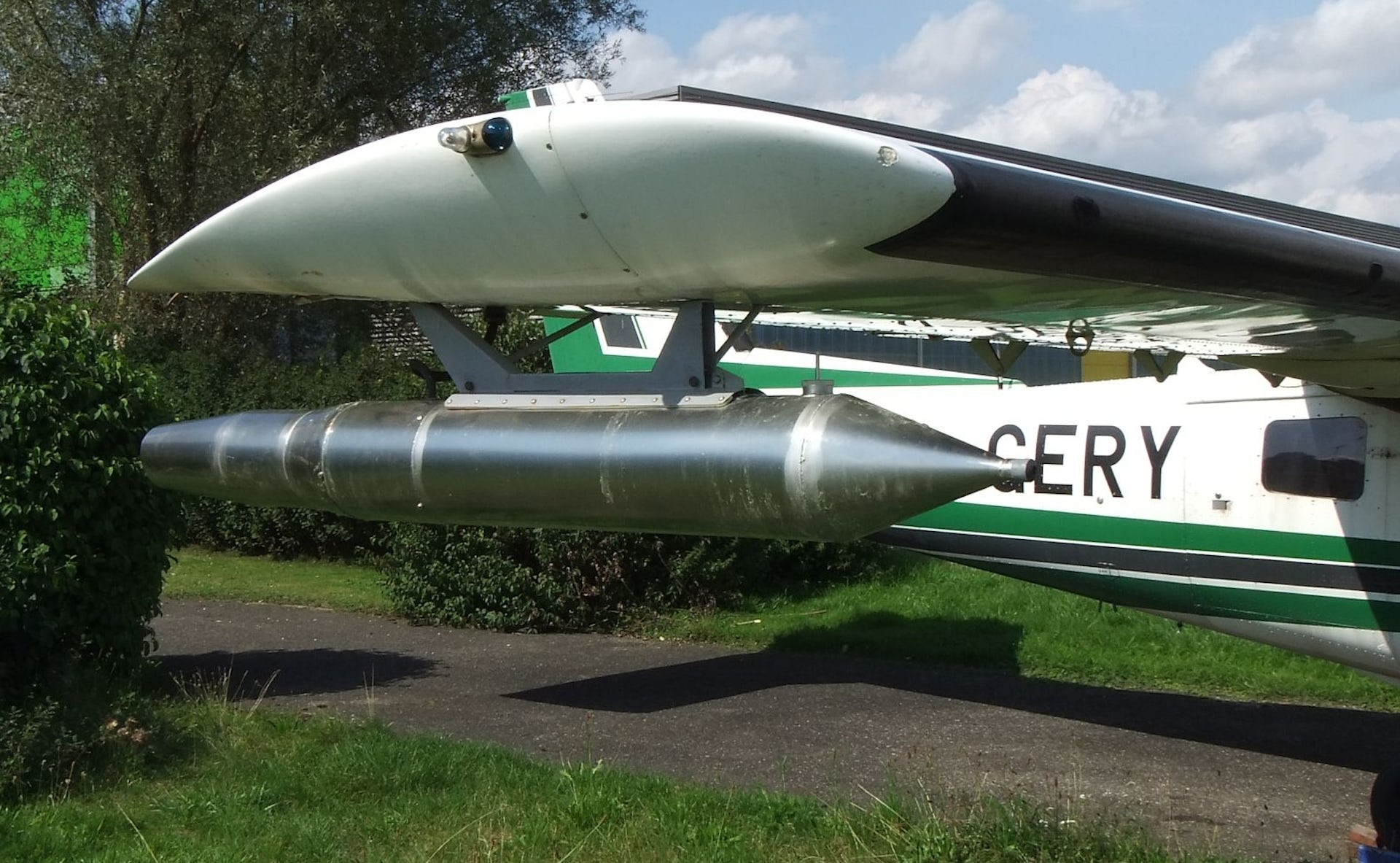
In 2017, Friedrich’s research group had a breakthrough in measuring the effect of cloud seeding. “We flew some aircraft, released silver iodide and generated these clouds that were like these six exact lines that were downstream of where the aircraft were seeding,” she says. They then had a second aircraft fly through the clouds. “We could actually quantify how much snow we could produce by two hours of cloud seeding.” That effect, according to research on cloud seeding, is an increase in precipitation of somewhere around 5% to 20% or 30%, depending on conditions.
Measuring the effect on precipitation – whether rain or snow – directly may have taken complex science and a bit of luck, but in places that have been using cloud seeding for long periods of time, the economic benefits are shockingly clear.
Dean Bangsund is a researcher at the University of North Dakota who studies the economics of agriculture. “We have a high amount of hail damage in North Dakota,” said Bangsund. For decades, the state government has been using cloud seeding to reduce hail damage, as cloud seeding leads to the formation of more pieces of smaller hail compared to fewer pieces of larger hail. “It doesn’t 100% eliminate hail; it’s designed to soften the impact.”
Every 10 years, the state of North Dakota does an analysis on the economic impacts of the cloud seeding program, measuring both reduction in hail damage and benefits from increased rain. Bangsund led the last report and says that for every dollar spent on the cloud seeding program, “we are looking at something that is anywhere from $8 or $9 in benefit on the really lowest scale, up to probably $20 of impact per acre.” With millions of acres of agricultural fields in the cloud seeding area, that is a massive economic benefit.
Both Freidrich and Bangsund emphasized that cloud seeding, while effective in some cases, cannot be used everywhere. There is also a lot of uncertainty in how much of an effect it has. One way to improve the effectiveness and applicability of cloud seeding is by improving the seed. Linda Zou is a professor of civil infrastructure and environmental engineering at Khalifa University in the United Arab Emirates.
Her work has focused on developing a replacement for silver iodide, and her lab has developed what she calls a nanopowder. “I start with table salt, which is sodium chloride,” says Zou. “This desirable-sized crystal is then coated with a thin nanomaterial layer of titanium dioxide.” When salt gets wet, it melts and forms a droplet that can efficiently merge with other droplets and fall from a cloud. Titanium dioxide attracts water. Put the two together and you get a very effective cloud-seeding material.
From indoor experiments, Zou found that “with the nanopowders, there are 2.9 times the formation of larger-size water droplets.” These nanopowders can also form ice crystals at warmer temperatures and less humidity than silver iodide.
As Zou says, “if the material you are releasing is more reactive and can work in a much wider range of conditions, that means no matter when you decide to use it, the chance of success will be greater.”
This episode was written and produced by Katie Flood. Mend Mariwany is the executive producer of The Conversation Weekly. Eloise Stevens does our sound design, and our theme music is by Neeta Sarl.
You can find us on Twitter @TC_Audio, on Instagram at theconversationdotcom or via email. You can also subscribe to The Conversation’s free daily email here.
Listen to “The Conversation Weekly” via any of the apps listed above, download it directly via our RSS feed or find out how else to listen here.







