


 Oil Prices Rise as Strait of Hormuz Risks Offset OPEC+ Supply Increase
  Iran Begins Oil Sale Talks With Japan Under U.S. Sanctions Waiver Amid Shipping Risks
  US Stock Futures Rise as Investors Eye Fed Minutes, AI Stocks, and Q2 Earnings
  Dollar Rebounds as Euro, Pound Slip Ahead of Fed Minutes, Yen Near Intervention Zone
  Gold Prices Fall Amid Rate Jitters; Copper Steady as China Stimulus Eyed
  Japan Regional Bank Stocks Drop After Zentoshin Bankruptcy Sparks Credit Risk Concerns
  Cuba Power Grid Collapse Triggers Nationwide Blackout Amid Deepening Energy Crisis
  Chinese Chip Stocks Jump as Apple Reportedly Tests CXMT Memory Chips for China Devices
  US Stock Futures Slip as Fed Minutes, Earnings Season Take Center Stage
  FxWirePro: Daily Commodity Tracker - 21st March, 2022
  South Korea’s KOSPI Plunges as Samsung, AI Chip Stocks Trigger Market Sell-Off
  RBNZ Raises Interest Rates to 2.50%, Signals More Tightening as Inflation Risks Persist
  Gold Price Rises as Softer Dollar and Fed Rate Expectations Boost Bullion Demand


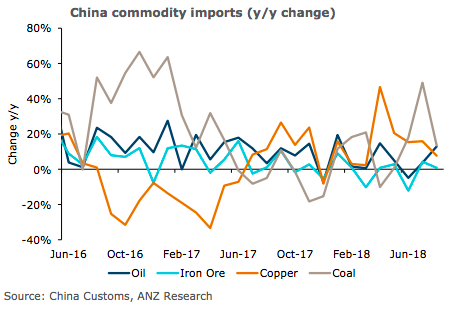
China’s imports is expected to moderately decline in months ahead owing to higher inventories in the country, according to the latest report from ANZ Research, after the release of the country’s trade balance data for the month of August.
China’s imports for August were strong, defying expectations of weaker demand amid the ongoing US-China trade tension. Most of the major commodities recorded both a m/m and y/y gain, suggesting domestic demand remains strong. The pick-up in imports is all the more impressive considering it has occurred despite a depreciating currency.
With China taking a more proactive fiscal policy stance, we expect imports of commodities to remain robust for the remainder of the year despite any ongoing trade tension. Oil demand from independent refiners rebounded strongly in August as rising fuel prices and improved margins saw many refiners ramp up their purchases following summer maintenance.
This pushed August’s oil imports to three-month high. LNG imports remained strong, rising by 37 percent y/y in August. They are now up 35 percent in the first eight months of the year as authorities continue to encourage the use of the cleaner burning fossil fuel. Ongoing curbs on steel production dampened iron ore demand, with imports up only 0.8 percent y/y.
However underlying domestic demand appears to be strong, underlined by strong growth in copper imports (+7.7 percent y/y). And disruption to trade due to US sanctions on Russia continues to benefit Chinese aluminium exporters, with volumes rising 26.1 percent y/y in August, the report added.







