


 S&P 500 Hits Record High as Soft Inflation Data Eases Fed Rate Hike Fears
  Asian Stocks Rise as AI Chip Rally Lifts South Korea, Japan
  Gold Prices Retreat From Two-Month High as Softer Inflation Eases Fed Rate Hike Bets
  S&P 500 Retreats From Record High as AI Stocks Slide, Retail Sales Disappoint
  Asian Currencies Steady as Dollar Holds Firm After U.S. Inflation Data
  Asian Currencies Steady Ahead of US CPI as Oil Prices Rise
  China Automakers Accelerate Global Expansion as Domestic Car Sales Slump
  Asian Stocks Rally as Cooling US Inflation Boosts Fed Rate Outlook
  Gold Prices Slip From 10-Week High as Fed and Hormuz Risks Shape Outlook
  European Stocks Rise as U.S. Inflation Data Eases Fed Rate Hike Fears
  France Inflation Rises 2.4% in July as Consumer Prices Increase
  Oil Prices Slide as OPEC, IEA Cut 2026 Demand Forecasts
  US Dollar Slips as Softer PPI Data Eases Fed Rate Hike Expectations
  Strait of Hormuz Shipping Near Standstill After New Vessel Attacks
  Oil Prices Fall as U.S. Crude Inventories Surge and Hormuz Tensions Persist
  Gold Prices Slip From Two-Month High as Inflation and Fed Outlook Drive Markets


 Add as a preferred source on Google
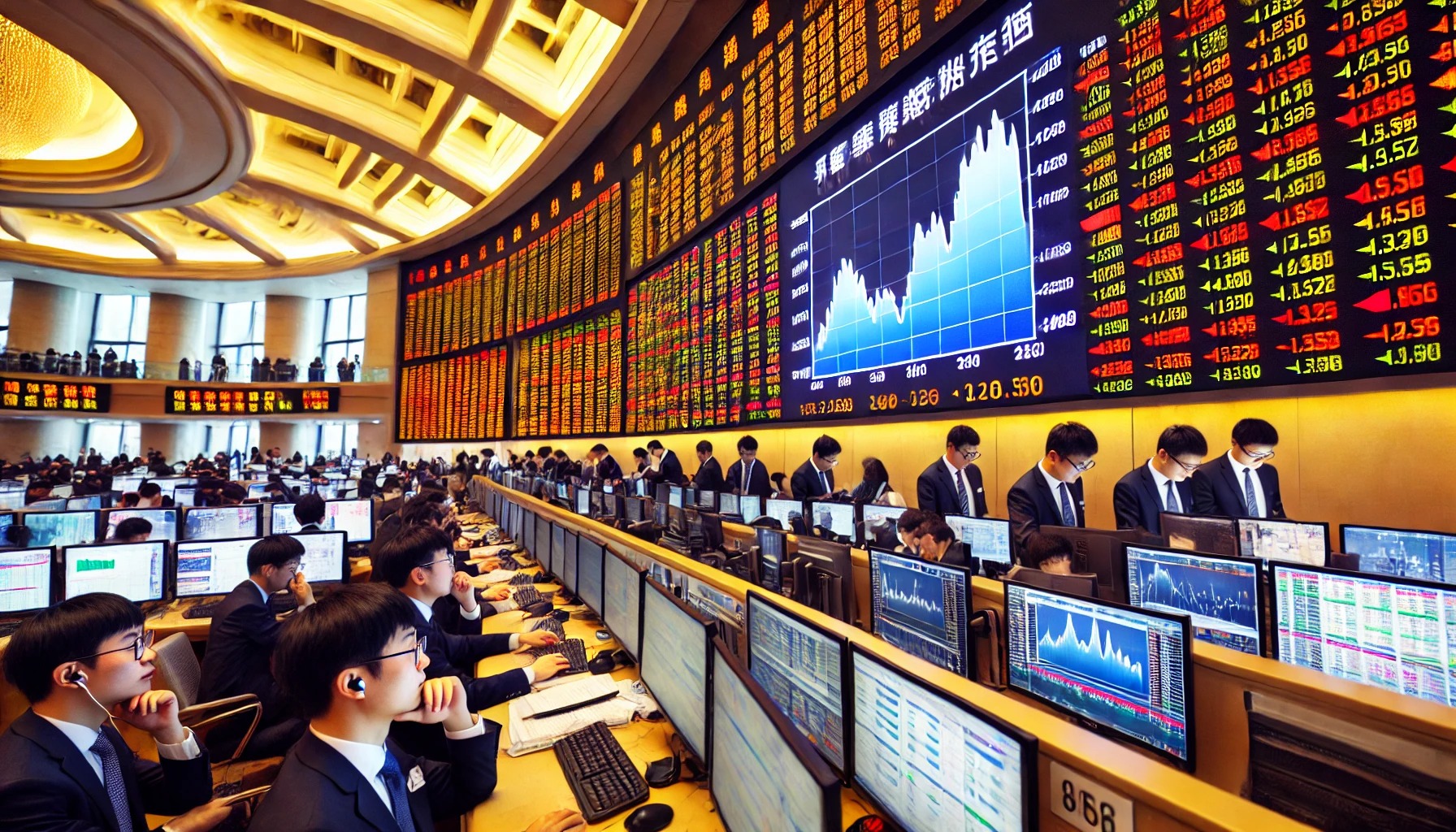
Chinese stocks extended a powerful rally on Monday, with mainland markets poised for their best month in nearly a decade. Beijing's stimulus efforts to halt an economic slowdown have fueled investor optimism, driving shares higher.
Benchmark indexes in mainland China surged at the start of the week after recording their strongest weekly performance in nearly 16 years. The CSI300 blue-chip index gained over 6.22%, while the Shanghai Composite Index jumped 5.7%. Hong Kong's Hang Seng Index climbed 3.34%.
Property Sector Leads Rally
Property shares led the rally after China's central bank announced on Sunday that it would encourage banks to lower mortgage rates for existing home loans by October 31. This is part of wider policies to support the country's struggling property sector. Additionally, Guangzhou city lifted all home purchase restrictions, while Shanghai and Shenzhen eased property buying curbs.
"The market is still surprised by China's policy support, and momentum is continuing," said Kenny Ng, a strategist at China Everbright Securities International in Hong Kong.
Mainland-listed property stocks surged 6.4%, and the Hang Seng Mainland Properties Index gained 8.4%. Shares of consumer staples traded 7% higher, while the smaller Shenzhen index soared 8.2%.
Markets Post Decade-High Gains
The CSI300 index is set for a monthly gain exceeding 18%, marking its best performance since December 2014. The Shanghai Composite is on track for a 14.8% rise, the strongest since April 2015. The Hang Seng Index could achieve its best month since November 2022, with a 14.7% increase.
"A coordinated stimulus blitz suggests that China has reached a 'whatever it takes' moment," said Eli Lee, Chief Investment Strategist at the Bank of Singapore. "This could potentially mark the start of a sustainable bull market if Beijing delivers sufficient stimulus to drive a turnaround."
Further Stimulus and Market Support
China has introduced a slew of stimulus measures in the past week, including rate cuts and fiscal support, to bolster its weakening economy. In addition, the People's Bank of China (PBOC) rolled out new tools to boost capital markets, including a swap program to improve funding access for buying stocks.
The CSI300 index soared nearly 16% last week, while the Shanghai Composite climbed almost 13%. Both recorded their largest weekly gains since November 2008. Meanwhile, the Hang Seng Index achieved its biggest weekly rise since 1998 and its fifth-largest in the past half-century.







