


 RBA Raises Interest Rates by 25 Basis Points as Inflation Pressures Persist
  Bank of Japan Signals Readiness for Near-Term Rate Hike as Inflation Nears Target
  South Africa Eyes ECB Repo Lines as Inflation Eases and Rate Cuts Loom
  Gold Prices Fall Amid Rate Jitters; Copper Steady as China Stimulus Eyed
  Jerome Powell Attends Supreme Court Hearing on Trump Effort to Fire Fed Governor, Calling It Historic
  FxWirePro: Daily Commodity Tracker - 21st March, 2022


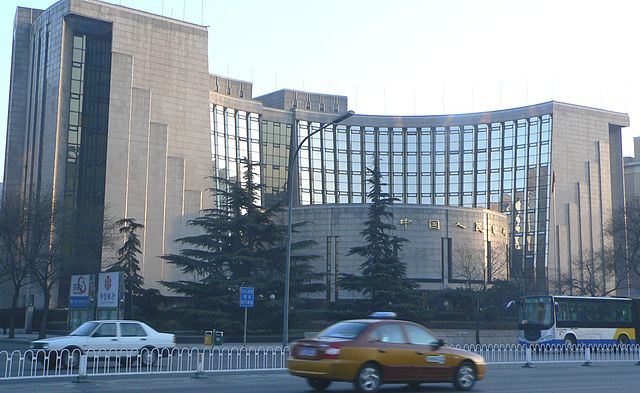
The People Bank of China recently stated that RRR will be lowered by 50bp effective 1 March 2016. This move was taken by the PBoC just after the G20 meeting and Governor Zhou's comment regarding prudent but moderately loose monetary policy. However, this decision comes before the country's annual NPC meeting, before which the central bank is likely under pressure to ease. Moreover, the reduction in RRR took place on back of temporarily steadying CNY expectations, weak January PMIs and trade, and liquidity pressures coming from maturing OMOs, and also sizable stock market correction.
"PBoC's move matches our baseline monetary policy forecasts of two 50bp RRR cuts and two 25bp benchmark interest rate cuts in H1 2016, and should help to support market sentiment in the near term, in our view. Following the latest move, we add another 50bp RRR cut (a total of 100bp), and continue to look for two rate cuts (25bp each in Q1 and Q2 respectively) in H1 2016", says Barclays.
The expected further easing of monetary policy is based on certain factors; firstly, the bearish view regarding economic fundamentals, such as worries regarding deflation risks, below-consensus GDP growth forecast and the self-fulfilling downward spiral on investment, corporate profit and effective demand; secondly the view of continuous liquidity pressures and upward pressures on interest rates because of huge local government debt swap, persistent capital outflows, expectations of additional proactive fiscal policy and consequently additional supply of government bonds; and lastly the lack of confidence for 'fiscal stimulus' to be implemented effectively and executed to stimulate growth.
"Risks to our 6.0% baseline GDP growth forecast in 2016 remain tilted to the downside", says Barclays.
The Chinese central bank's latest easing is consistent with persistent below projected economic activity and downside threats to growth. China has posted disappointing foreign trade data, while the flash February PMIs for Japan and the US indicated a sharp drop, stressing on the uncertainty of global demand for China's exports. The Jan-Feb industrial production growth data is likely to moderate further. Meanwhile, the reduction in RRR will release about CNY 600-700 billion of liquidity.
However, even if the Chinese government is expected to announce additional fiscal measures in 2016, the impact is not expected to reverse the growth moderation trend. Overall, the PBoC's move showed the government's need to stabilise growth and to clam the market before the NPC.

- News

- Economy

- Central Banks
- Investing
- Research
- Roundups
- Digital Currency
- Insights
- Technical Analysis
- Technology
- Business
- Law
- Health
- Nature
- Fintech
- Science
- Topic
- Opinions
- ©Econometrics LLC . All Rights Reserved.
China’s central bank lowers RRR, likely to further lower rates in H1 2016
Tuesday, March 1, 2016 6:49 AM UTC
Editor's Picks









- Market Data
Most Popular




